Open E tuning: gauges, the slide setup, and the best strings
Written with AI help · Updated
Open E tuning (E-B-E-G#-B-E) retunes a standard set so the open strings ring an E major chord, a cornerstone slide sound documented for Duane Allman and Derek Trucks. It is open D moved up a whole step, so three strings tune UP, which adds tension and raises the risk of a snapped string or neck stress. Lighter gauges help, or tune to open D and capo the 2nd fret to reach open-E pitch without the strain. Barre or slide any fret for an instant major chord.
The sound: a major chord in the open strings
Open E tuning lowers and raises your guitar so the six open strings ring an E major chord. Low to high it is E-B-E-G#-B-E. Strum without fretting anything and you get E major; lay a slide or barre straight across any fret and you get that same chord at a new pitch. Chords collapse into one-finger or one-bar shapes, and the open strings drone underneath the melody.
It is a cornerstone slide tuning, documented behind Duane Allman's slide work and Derek Trucks's modern vocabulary. It is the same chord shape as open D, just a whole step higher in pitch and brighter in feel. The trade-off is tension: where open D drops four strings, open E raises three, so it sits tighter and asks for a more careful setup.
How to tune it from standard
Three strings move up, three stay. Raise the 5th string from A to B, the 4th from D to E, and the 3rd from G to G#. Leave the 6th (E), 2nd (B), and 1st (E) where they are. Because three strings rise in pitch, total neck tension climbs above standard, which is the opposite of most alternate tunings and the reason open E asks for a little caution.
Tune up slowly. The 4th and 5th strings each climb a whole step and carry the most added load, so bring them up gradually, stretch them, and recheck. The 3rd string only rises a half step to G#, which is easy to overshoot, so tune it last and confirm it against the open chord.
| String | Standard | Open E | Change | |
|---|---|---|---|---|
| 6th | E | E | No change | |
| 5th | A | B | Up a whole step | |
| 4th | D | E | Up a whole step | |
| 3rd | G | G# | Up a half step | |
| 2nd | B | B | No change | |
| 1st | E | E | No change |
Strings and gauges
Open E is the one tuning where heavier is not automatically better. Three strings tune up, so a heavy set can climb to uncomfortable tension and put real stress on the neck and the strings themselves. A standard .010 to .046 set is the sensible default, and the Cobalt wrap keeps the droning open strings clear.
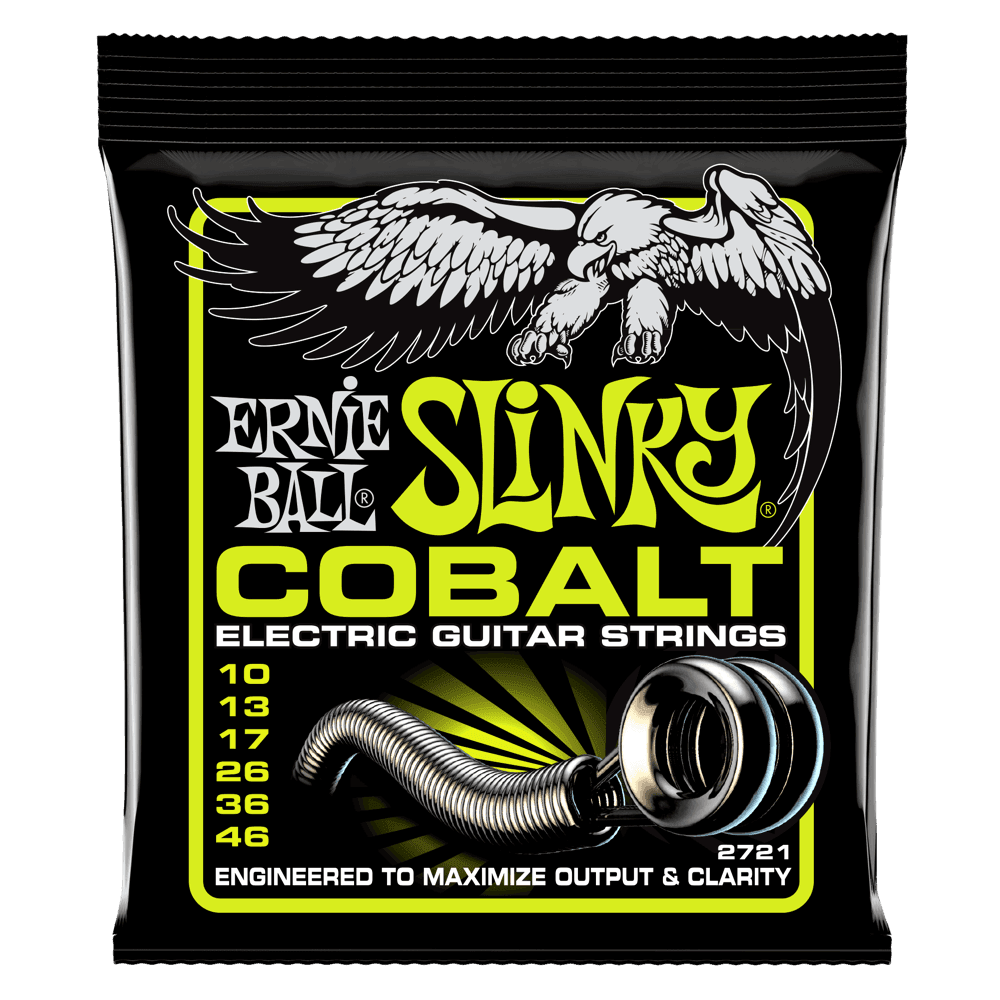
Regular Slinky Cobalt (.010–.046)
Why this one: The default open-E set for fretted playing and light slide. Standard gauges handle the three up-tuned strings without climbing to harsh tension, and the Cobalt wrap keeps the open E, B, and G# strings ringing clearly.
If a .010 set feels too tight in open E, or you keep a guitar in open E permanently, step down to a lighter set. The reduced tension offsets the three up-tuned strings and is easier on the neck.

Super Slinky Cobalt (.009–.042)
Why this one: The tension-relief choice for open E. Tuning three strings up tightens any set, so a lighter gauge keeps the feel comfortable and reduces neck stress while still tracking cleanly under a slide.
Slide players who want a heavier, louder ring are usually better served tuning to open D and capoing the 2nd fret, which reaches open-E pitch without the tuning-up strain. See the gauge and scale-length reference for how tension scales with gauge and pitch.
Open E vs open D: the slide player's choice
Open E and open D share the same shape; open E is just open D raised a whole step (E-B-E-G#-B-E versus D-A-D-F#-A-D). The difference is the route. Open D tunes four strings down, so it is gentle on the guitar and forgiving of heavier slide gauges. Open E tunes three strings up, which adds tension, brightens the feel, and raises the odds of a snapped string or extra neck stress. The common workaround is to tune to open D and capo the 2nd fret, landing you in open-E pitch with none of the strain. A lot of slide parts that sound like open E were recorded that way.
Open E minor: the one-string flip
Drop the G# 3rd string one half step to G and the open strings ring E minor: E-B-E-G-B-E. That single change flips the tuning from major to minor, the same relationship open D has with open D minor. Because only one string moves, players who work in open E often switch to the minor mid-set with a quick tweak of the third string.
Slide and setup notes
For slide in open E, a touch more action keeps the note clean under the bar, and a wound third survives the move between open E and standard better than a plain G. Watch tuning stability: the up-tuned 4th and 5th strings take longer to settle and are the first to drift, so stretch them in before you record. Not every well-known slide player works in an open tuning: George Harrison's signature slide sound, including his best-known work on All Things Must Pass, is documented as standard tuning, proof that the open-string drone of open E is a choice, not a requirement, for a recognizable slide voice.
Next steps
- The physics of gauge and tension: string gauge and scale length reference.
- The gentler sibling tuning: open D.
- The other classic slide tuning: open G.
- A documented open-E slide player: Derek Trucks.
- Make the open strings last: coated vs uncoated strings.
String gauge by tuning + scale length
Safe gauge ranges by tuning across Gibson (24.75"), Fender (25.5"), and baritone (27"+) scales. A dash in any cell means that scale length isn't recommended for the tuning, not that data is missing.
| Tuning | Gibson scale (24.75") | Fender scale (25.5") | Baritone (27"+) |
|---|---|---|---|
| E Standard | 10–46 | 9–42 | – |
| Drop D | 10–52 | 10–52 | – |
| Eb Standard | 11–48 | 10–52 | – |
| Drop C# | 11–54 | 11–48 +52 | – |
| D Standard | 11–54 | 11–48 | 10–52 |
| C Standard | 12–56 | 12–56 | 12–56 |
| Drop C | 12–56 | 11–54 +56 | 11–56 |
| Drop B | 12–64 | 12–62 | 11–54 |
| B Standard | 13–68 | 13–64 | 12–54 |
| Drop A | 13–70 | 12–68 | 12–62 |
| Drop G | – | – | 13–70 |
Source: CYS in-house tension-and-scale reference, built by Phil (luthier) and Wright (tension/scale). For scale lengths between categories (e.g., 25" PRS), split the difference between the two nearest columns.
Frequently asked questions
How do you tune to open E?
From standard tuning, raise three strings: the 5th (A up to B), the 4th (D up to E), and the 3rd (G up to G#). The 6th (E), 2nd (B), and 1st (E) stay put. Read low to high it is E-B-E-G#-B-E, and strumming the open strings sounds an E major chord. Because three strings go up in pitch, tune up slowly and watch the 4th and 5th strings, which carry the most added tension.
What strings work best for open E?
Because open E tunes three strings up, the extra tension argues for lighter rather than heavier gauges. A .010 to .046 set works but tightens noticeably; many slide players who live in open E use a .009 to .042 set to keep the feel comfortable and reduce neck stress. If you want the firmer slide tone of a heavier set, the safer route is to tune to open D and capo the 2nd fret instead.
Open E vs open D, what is the difference?
Same chord shape, different pitch. Open E (E-B-E-G#-B-E) is open D (D-A-D-F#-A-D) moved up a whole step. The catch is how you get there: open E tunes three strings UP, which adds tension and risk, while open D tunes down, which is gentler on the guitar. Many players tune to open D and capo the 2nd fret to play in open-E pitch without the strain. Plenty of recorded parts that sound like open E were cut exactly that way.
Why is open E good for slide?
Lay a slide straight across all six strings at any fret and you get a full major chord, which makes melodic slide lines and chord slides simple. Open E is one of the cornerstone slide tunings: Duane Allman and Derek Trucks both built signature slide vocabularies on it. The slightly brighter, higher-tension feel compared with open D is part of its cutting slide tone.
Does open E stress the guitar?
More than most tunings, because three strings tune up. The 4th and 5th strings each rise a whole step, which meaningfully increases total neck tension over standard. Most necks handle it, but if you keep a guitar in open E permanently, check the neck relief and intonation, consider lighter gauges, and make sure the nut slots are not pinching. Tuning to open D and capoing the 2nd fret avoids the added strain entirely.
What is open E minor?
Lower the G# 3rd string one half step to G and the open strings ring E minor: E-B-E-G-B-E. That single change flips the tuning from major to minor, the same relationship open D has with open D minor. Switching between open E and open E minor moves only one string, so it is a fast way to turn a slide piece from major to minor mid-set.