Drop B tuning: string gauges, tension, and the best strings for the low metal tuning
Written with AI help · Updated
Drop B (B-F#-B-E-G#-C#) tunes a guitar down two and a half steps with the lowest string dropped to a power-chord B, the heavy tuning behind Slipknot and modern metalcore. A standard set turns to spaghetti this low, so you need heavy strings: at least a .011 to .054, and a .012 to .060 keeps the riffs tight and articulate. The dropped low string makes the bottom power chord a one-finger barre.
- Gibson scale (24.75")
- 12–64
- Fender scale (25.5")
- 12–62
- Baritone (27"+)
- 11–54
Gauge ranges from CYS's in-house tension-and-scale reference, built by Phil (luthier) and Wright (tension/scale).
The lowest of the common drop tunings
Drop B sits two and a half steps below standard, with the lowest string dropped to a low B. Low to high it is B-F#-B-E-G#-C#. Like every drop tuning, the bottom two strings are a fifth apart, so the lowest power chord becomes a one-finger barre, the mechanic that makes fast, chugging low riffs physically easy. It is just much lower than Drop D or Drop C, which is why string choice stops being optional and becomes the whole game.
How to tune it
The cleanest path is to tune to C# standard first, dropping every string a step and a half, then drop the lowest string a further whole step to B. The result, low to high, is B-F#-B-E-G#-C#. A clip-on tuner makes this painless; just watch that the low B reads solidly and is not drifting, since a too-light string will not hold pitch cleanly down here.
Gauges: why you need heavy strings
String tension falls with the square of pitch, so dropping the low string from a standard E all the way to B sheds most of its tension. A normal .046 low string at B is unusably slack. Sweetwater's detuned-gauge guide makes the general point: the lower you tune, the heavier the string you need to keep usable tension and clear pitch.
| Low-B gauge | Feel at B | Best for | |
|---|---|---|---|
| .052 | Loose, floppy under muting | Light leads, not heavy rhythm | |
| .056 | Playable, still soft | Entry-level drop B | |
| .060 | Tight, articulate | Heavy rhythm and palm muting | |
| .064 and up | Very tight, piano-like | Baritone tone, lowest riffs |
The takeaway: aim for a set with a .056 to .060 low string for drop B on a standard scale, and heavier if you want a true baritone chug.
Scale length matters
A longer scale stretches the same gauge to higher tension, so a baritone (26.5 to 27 inches) keeps the low B tight without going to extreme gauges. On a standard 25.5-inch guitar you compensate with heavier strings instead. Either works; the physics is in our gauge and scale length reference.
Recommended sets
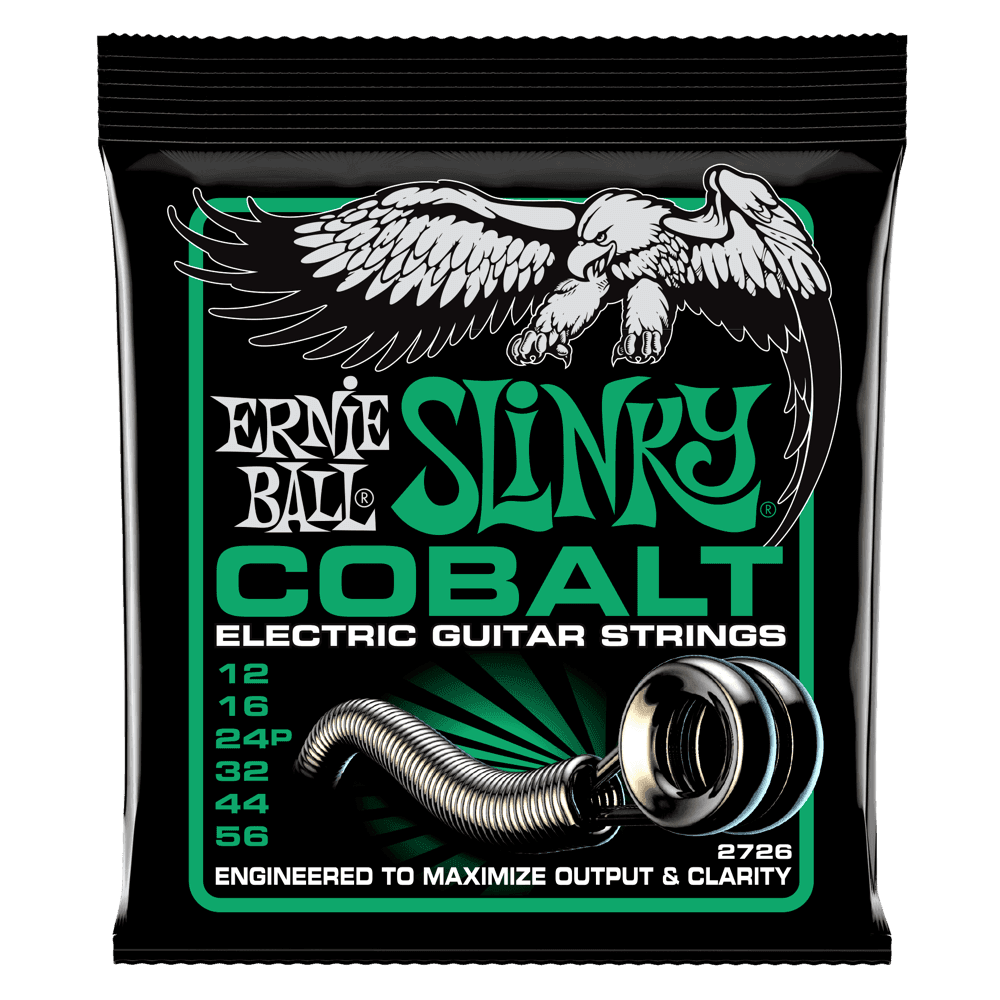
Not Even Slinky Cobalt (.012–.056)
Why this one: A strong drop-B starting point. The .056 low string holds tight enough for palm-muted riffing on a 25.5-inch scale, and the Cobalt wrap keeps the low B articulate under high gain where a lesser string blurs.
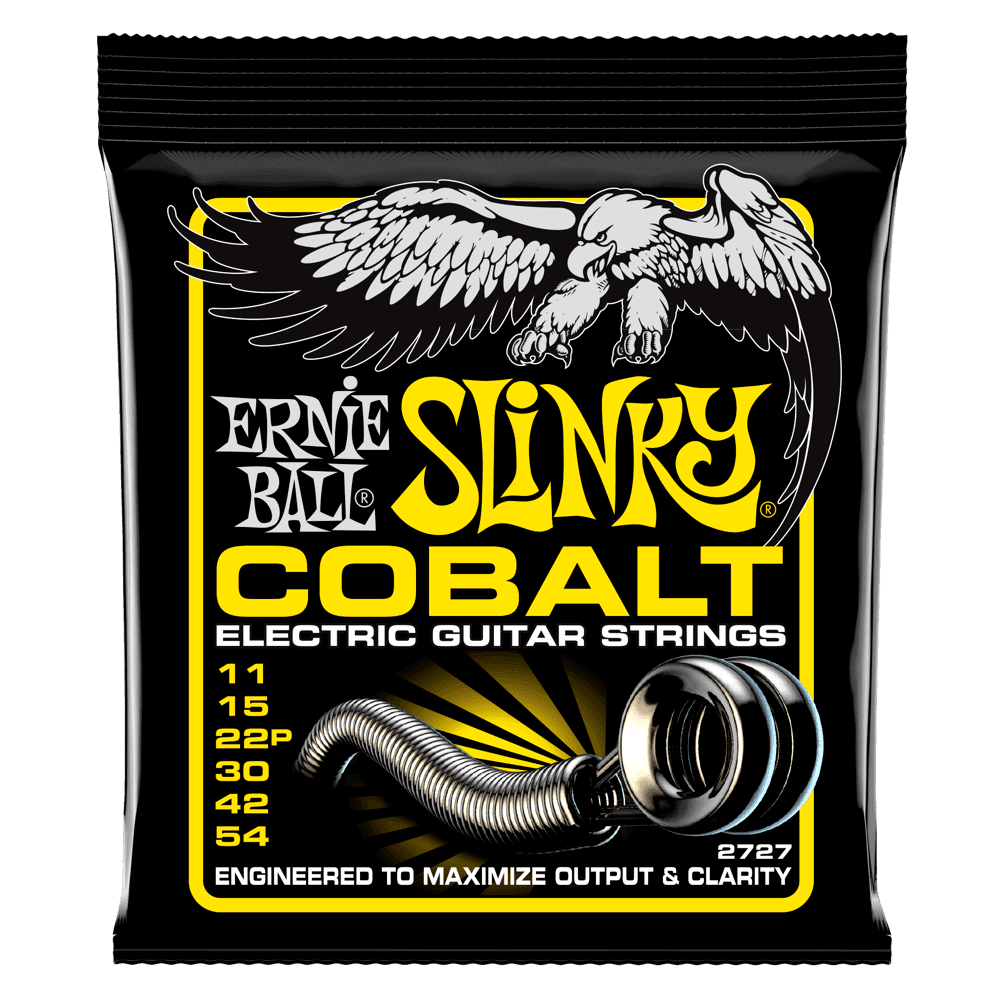
Beefy Slinky Cobalt (.011–.054)
Why this one: The slightly lighter option for players who also visit Drop C and want an easier top end. The .054 low B is the floor for tight drop B; pair it with a baritone scale if you want more tension.
For maximum tightness on the low B, a custom set with a .060 or heavier bottom string, or a 7-string set used on a 6-string, gets you into true baritone territory.
Next steps
- The physics of gauge and scale: string gauge and scale length reference.
- The documented drop-B rig: Mick Thomson.
- A sludge metal drop-B rig: Kirk Windstein of Crowbar and Down.
- One and two steps up: Drop C and Drop D.
- The uniform cousin: C# standard.
String gauge by tuning + scale length
Safe gauge ranges by tuning across Gibson (24.75"), Fender (25.5"), and baritone (27"+) scales. A dash in any cell means that scale length isn't recommended for the tuning, not that data is missing.
| Tuning | Gibson scale (24.75") | Fender scale (25.5") | Baritone (27"+) |
|---|---|---|---|
| E Standard | 10–46 | 9–42 | – |
| Drop D | 10–52 | 10–52 | – |
| Eb Standard | 11–48 | 10–52 | – |
| Drop C# | 11–54 | 11–48 +52 | – |
| D Standard | 11–54 | 11–48 | 10–52 |
| C Standard | 12–56 | 12–56 | 12–56 |
| Drop C | 12–56 | 11–54 +56 | 11–56 |
| Drop B | 12–64 | 12–62 | 11–54 |
| B Standard | 13–68 | 13–64 | 12–54 |
| Drop A | 13–70 | 12–68 | 12–62 |
| Drop G | – | – | 13–70 |
Source: CYS in-house tension-and-scale reference, built by Phil (luthier) and Wright (tension/scale). For scale lengths between categories (e.g., 25" PRS), split the difference between the two nearest columns.
Frequently asked questions
What gauge strings for drop B?
Go heavy. The practical minimum is a .011-.054 set, and .012-.060 is better for a tight, articulate low B. On a 25.5-inch scale the low B string wants at least a .056 to .060 to avoid flopping. Lighter than that and the bottom string turns to rubber under palm muting.
How do you tune to drop B?
Two ways to think about it. Tune to C# standard first (every string down a step and a half), then drop the lowest string a further whole step from C# to B. Read low to high, the result is B-F#-B-E-G#-C#. The bottom two strings now sit a fifth apart, so the lowest power chord is a one-finger barre.
Is drop B the same as B standard?
No. Drop B lowers only the 6th string to B and keeps the others in C# standard, giving B-F#-B-E-G#-C# and the one-finger power chord. B standard tunes every string to a uniform B shape (B-E-A-D-F#-B). Drop B is built for fast low riffing; B standard spreads the low range across all six strings.
What bands use drop B?
Slipknot is the marquee name, alongside a huge amount of metalcore and deathcore. The low B power chord is the riff foundation of a lot of modern heavy music, which is why so many seven-string players reach the same notes a different way. Sludge metal reaches it from the other direction: Kirk Windstein of Crowbar and Down documents drop B as one of his two touring tunings, alongside C# standard.
Do I need a setup change for drop B?
Usually yes. Heavy strings plus low tension change neck relief and intonation, so plan on a truss rod check and an intonation reset. Thicker strings may bind in nut slots cut for lighter gauges. A longer scale length helps a lot, see the baritone note below.
Drop B on a 25.5-inch scale or a baritone?
A standard 25.5-inch guitar handles drop B with heavy strings but can still feel loose under hard picking. A 26.5 to 27-inch baritone scale keeps the low B tight with more moderate gauges, which is why baritones are popular for this tuning and lower. Match string gauge to your scale length, not just the pitch.
Will tuning this low damage my guitar?
No. Lowering pitch reduces tension, which is the gentle direction for the neck. The real adjustments are practical: heavier strings to restore feel, a setup to match, and nut slots wide enough for the thicker low strings. Going back and forth to standard often is where a dedicated drop-tuned guitar earns its place.