Open D tuning: gauges, the slide setup, and the best strings
Written with AI help · Updated
Open D tuning (D-A-D-F#-A-D) retunes a standard set so the open strings ring a D major chord, the classic slide and Delta-blues sound. Four of the six strings drop, so a stock .010 to .046 set turns noticeably slack. For slide, step up to .012 to .052 or heavier for firmer tension, a cleaner ring, and less rattle under the bar. Barre any fret and you get an instant major chord.
The sound: a major chord in the open strings
Open D tuning lowers your guitar so the six open strings ring a D major chord. Low to high it is D-A-D-F#-A-D. Strum without fretting anything and you get D major; lay a slide or barre straight across any fret and you get that same chord shape at a new pitch. That is the appeal: chords collapse into one-finger or one-bar shapes, and the open strings drone underneath the melody.
It is one of the two cornerstone slide tunings, alongside open G, and a backbone of Delta blues and open-tuned folk fingerstyle. The old parlor-guitar name for it is Vestapol, after a 19th-century showpiece, and the tuning has been part of the American roots vocabulary ever since. Where open G drops three strings, open D drops four, so it sits a touch slacker and rewards a slightly heavier set.
How to tune it from standard
Four strings move, two stay. Lower the 6th string from E to D, the 3rd from G to F#, the 2nd from B to A, and the 1st from E to D. Leave the 5th (A) and 4th (D) where they are. Because four strings drop, the set loses more tension than it does in open G, and a light gauge can feel rubbery under hard strumming or a slide.
Detuned strings take a moment to settle, so tune up, stretch each string gently, and check the pitches again before you record or play out. The 3rd string only drops a half step to F#, which is easy to overshoot, so tune it last and confirm it against the open 6th and 1st D strings.
| String | Standard | Open D | Change | |
|---|---|---|---|---|
| 6th | E | D | Down a whole step | |
| 5th | A | A | No change | |
| 4th | D | D | No change | |
| 3rd | G | F# | Down a half step | |
| 2nd | B | A | Down a whole step | |
| 1st | E | D | Down a whole step |
Strings and gauges
For general open-D playing, a regular set works and the slight slack is part of the feel. The Cobalt wrap keeps the droning open strings clear and present.
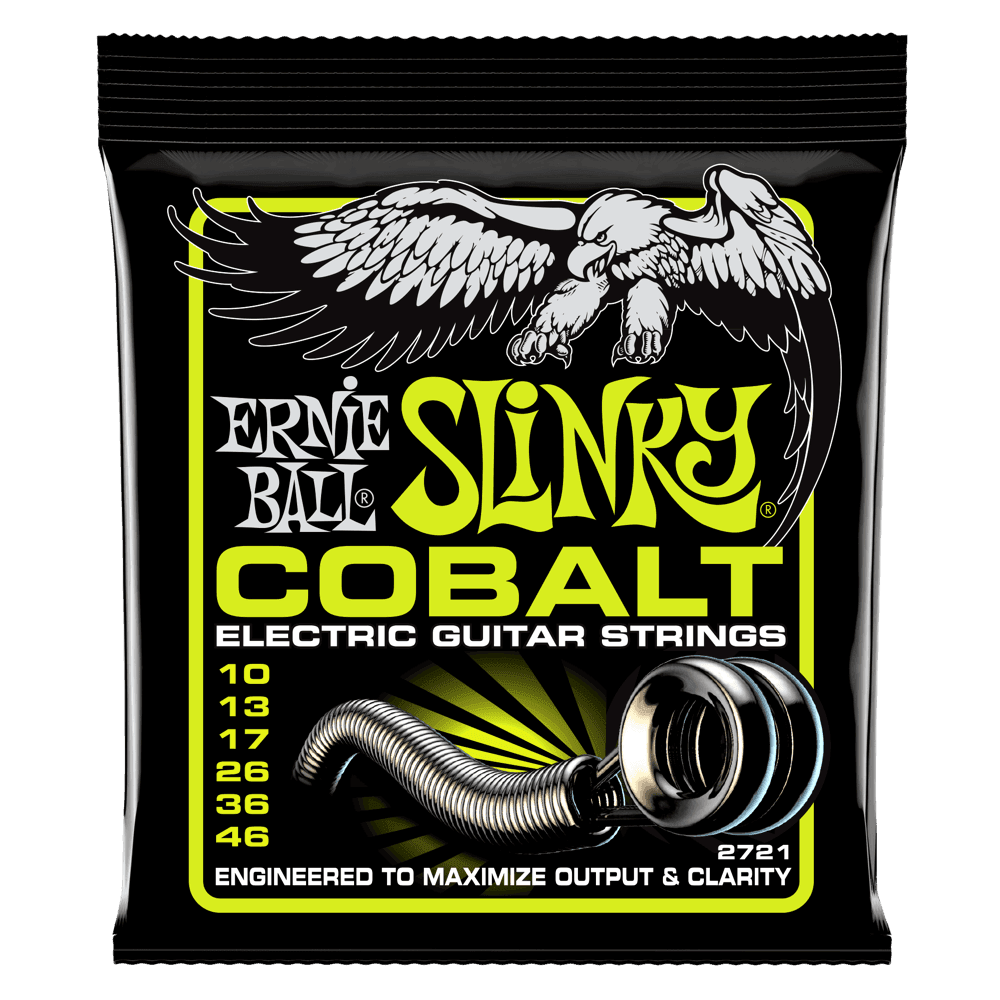
Regular Slinky Cobalt (.010–.046)
Why this one: The straightforward open-D set for fretted playing and light slide. Standard gauges handle the four down-tuned strings with a touch of slinky give, and the Cobalt wrap keeps the open D, A, and high strings ringing clearly.
For slide or a firmer, louder ring, step up a gauge. The added tension restores what the down-tuned strings give away.
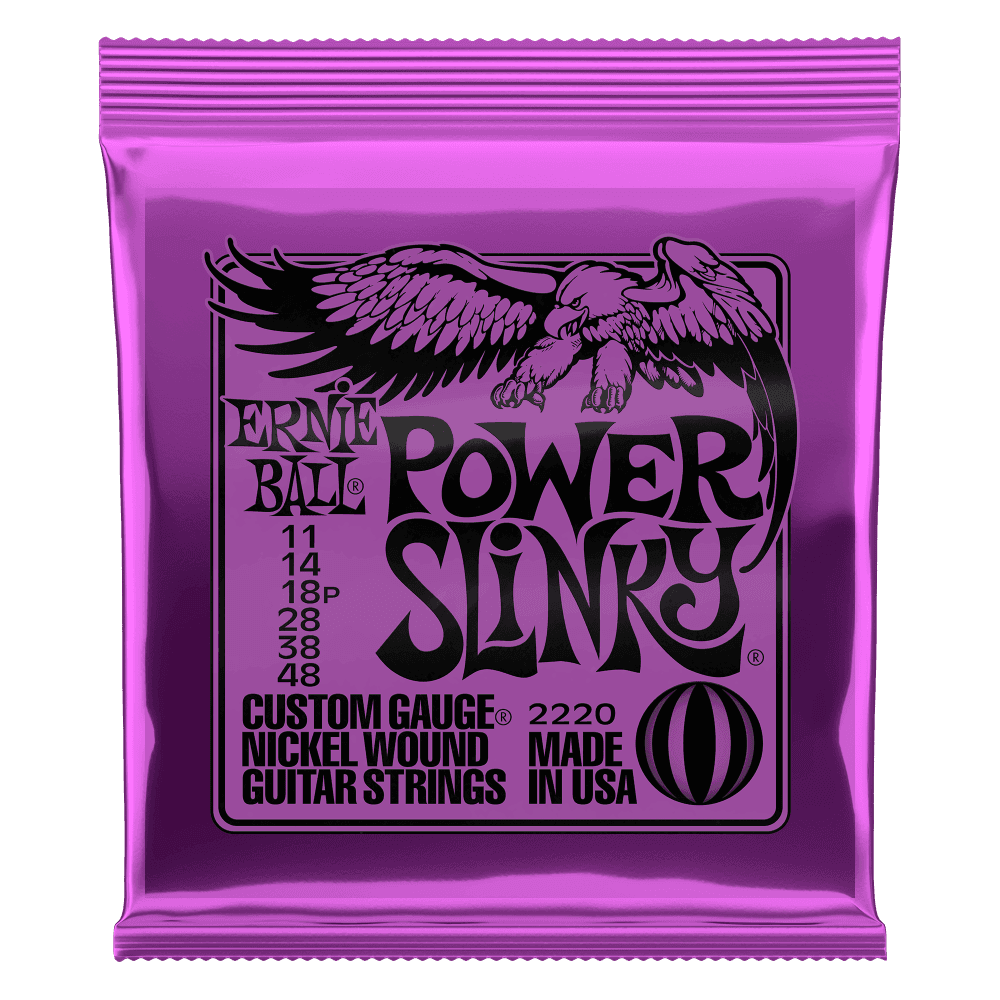
Power Slinky (.011–.048)
Why this one: The slide-friendly choice. The heavier gauge restores tension lost to the four down-tuned strings, so chords ring cleaner and the slide tracks with less rattle. A sensible first step up before committing to a dedicated slide set.
Dedicated slide players, especially on acoustic and resonator guitars, go heavier still: .012 to .052 or .013 to .056 medium gauge is the working blues-slide default. The heavier the set, the more tension you reclaim from the four dropped strings, which is exactly what keeps a slide from buzzing. See the gauge guide for how slide tension and action interact.
Open D vs open E: the slide player's choice
Open D and open E share the same shape; open E is just open D raised a whole step (E-B-E-G#-B-E). The catch is how you get there. Open E tunes three strings up from standard, which piles on tension and raises the odds of a snapped string or extra stress on an older neck. Open D tunes down, so it is the safer, more forgiving route to the same chord voicings. A common trick is to tune to open D and capo the 2nd fret, which lands you in open-E pitch with none of the tuning-up strain. Plenty of slide parts that sound like open E were cut exactly this way.
Open D minor: the Bentonia variant
Drop the F# 3rd string one more half step to F and the open strings ring D minor: D-A-D-F-A-D. That single change flips the tuning from major to minor and gives you the eerie Bentonia blues sound most associated with Skip James. Because only one string moves between open D and open D minor, players who live in this world often switch mid-set with a quick tweak of the third string.
Slide and setup notes
For slide in open D, heavier strings and slightly higher action pay off: more tension means a cleaner note under the slide and less buzz against the frets. A wound third survives the switch between open D and standard better than a plain G. The slide-guitar work of George Harrison, prominent across his All Things Must Pass solo material, leans on open D and open E for exactly this reason: the open strings carry the chord while the bar does the singing.
Next steps
- The physics of gauge and tension: string gauge and scale length reference.
- The other classic slide tuning: open G.
- A gentler retune to try first: drop D.
- A documented open-D slide player: George Harrison.
- Make the open strings last: coated vs uncoated strings.
String gauge by tuning + scale length
Safe gauge ranges by tuning across Gibson (24.75"), Fender (25.5"), and baritone (27"+) scales. A dash in any cell means that scale length isn't recommended for the tuning, not that data is missing.
| Tuning | Gibson scale (24.75") | Fender scale (25.5") | Baritone (27"+) |
|---|---|---|---|
| E Standard | 10–46 | 9–42 | – |
| Drop D | 10–52 | 10–52 | – |
| Eb Standard | 11–48 | 10–52 | – |
| Drop C# | 11–54 | 11–48 +52 | – |
| D Standard | 11–54 | 11–48 | 10–52 |
| C Standard | 12–56 | 12–56 | 12–56 |
| Drop C | 12–56 | 11–54 +56 | 11–56 |
| Drop B | 12–64 | 12–62 | 11–54 |
| B Standard | 13–68 | 13–64 | 12–54 |
| Drop A | 13–70 | 12–68 | 12–62 |
| Drop G | – | – | 13–70 |
Source: CYS in-house tension-and-scale reference, built by Phil (luthier) and Wright (tension/scale). For scale lengths between categories (e.g., 25" PRS), split the difference between the two nearest columns.
Frequently asked questions
How do you tune to open D?
From standard tuning, lower four strings: the 6th (E to D), the 3rd (G to F#), the 2nd (B to A), and the 1st (E to D). The 5th (A) and 4th (D) stay put. Read low to high it is D-A-D-F#-A-D, and strumming the open strings sounds a D major chord.
What strings work best for open D?
A standard .010 to .046 set works, but four strings drop so it feels noticeably slacker than standard. For slide or a fuller ring, step up to .012 to .052 or .013 to .056 for more tension and cleaner sustain. Acoustic and resonator slide players lean heavier still, with .013 to .056 medium gauge the working default.
Open D vs open E, what is the difference?
Same chord shape, different pitch. Open E (E-B-E-G#-B-E) is open D moved up a whole step, reached by tuning strings up, which adds tension and raises the risk of string breakage and extra neck stress. Open D gets there by tuning down, so it is gentler on the guitar. Many players tune to open D and clamp a capo at the 2nd fret to play in open-E pitch without the strain.
Why is open D good for slide?
Lay a slide straight across all six strings at any fret and you get a full major chord, which makes melodic slide lines and chord slides simple. It is one of the two classic slide tunings alongside open G. Slightly heavier strings and a touch more action give cleaner slide tone with less rattle against the frets.
What is open D minor?
Lower the F# 3rd string one more half step to F and the open strings ring D minor: D-A-D-F-A-D. It is the haunting Bentonia blues sound associated with Skip James. Switching between open D and open D minor moves only one string, so it is a fast way to flip a slide piece from major to minor.
Do I need to change my setup for open D?
For occasional use, usually not. Four strings drop, lowering total neck tension, which most necks absorb fine. If you keep a guitar in open D permanently or move to heavier slide gauges, check the neck relief and intonation, and make sure the nut slots are not binding on any thicker strings.