Open G tuning: gauges, the Keith Richards five-string setup, and the best strings
Written with AI help · Updated
Open G tuning (D-G-D-G-B-D) retunes a standard set so the open strings ring a G major chord, the Rolling Stones and slide-blues sound. Three strings drop a whole step, so a stock .010 to .046 set turns slightly slack. Keith Richards famously removes the low D entirely and plays a five-string G-D-G-B-D set with a wound third, which tightens intonation. For slide, step up a gauge for a firmer, cleaner ring.
The sound: a major chord in the open strings
Open G tuning lowers your guitar so the six open strings ring a G major chord. Low to high it is D-G-D-G-B-D. Strum without fretting anything and you get G major; barre any fret straight across and you get that chord. That is the whole appeal: chords become one-finger shapes, and the open strings drone underneath everything you play.
It is the sound of the Rolling Stones rhythm guitar and a cornerstone of slide blues. The tuning rewards a percussive, riff-and-stab style, which is exactly what Keith Richards built his playing on.
How to tune it from standard
Three strings move, three stay. Lower the 6th string from E to D, the 5th from A to G, and the 1st from E to D. Leave the 4th (D), 3rd (G), and 2nd (B) where they are. Because those three strings drop a whole step, the set loses a little tension and feels slightly slinky compared to standard.
The Keith Richards five-string trick
Keith Richards plays open G on a five-string guitar, most famously his butterscotch Telecaster, Micawber. He removes the lowest string and tunes the rest G-D-G-B-D. Per documented breakdowns of the guitar, the lowest string in six-string open G just doubles the root an octave below, so dropping it tightens the low end and frees up his chugging rhythm style. He runs a custom set around .011 to .042 with a wound third string, where the wound G firms up the intonation of his open-G chord shapes.
You do not have to remove a string to play open G. But if his rhythm sound is the goal, the five-string approach is the real recipe.
Strings and gauges
| String | Standard | Open G | Change | |
|---|---|---|---|---|
| 6th | E | D | Down a whole step | |
| 5th | A | G | Down a whole step | |
| 4th | D | D | No change | |
| 3rd | G | G | No change | |
| 2nd | B | B | No change | |
| 1st | E | D | Down a whole step |
For general open-G playing, a regular set is fine and the slight slack is part of the feel.
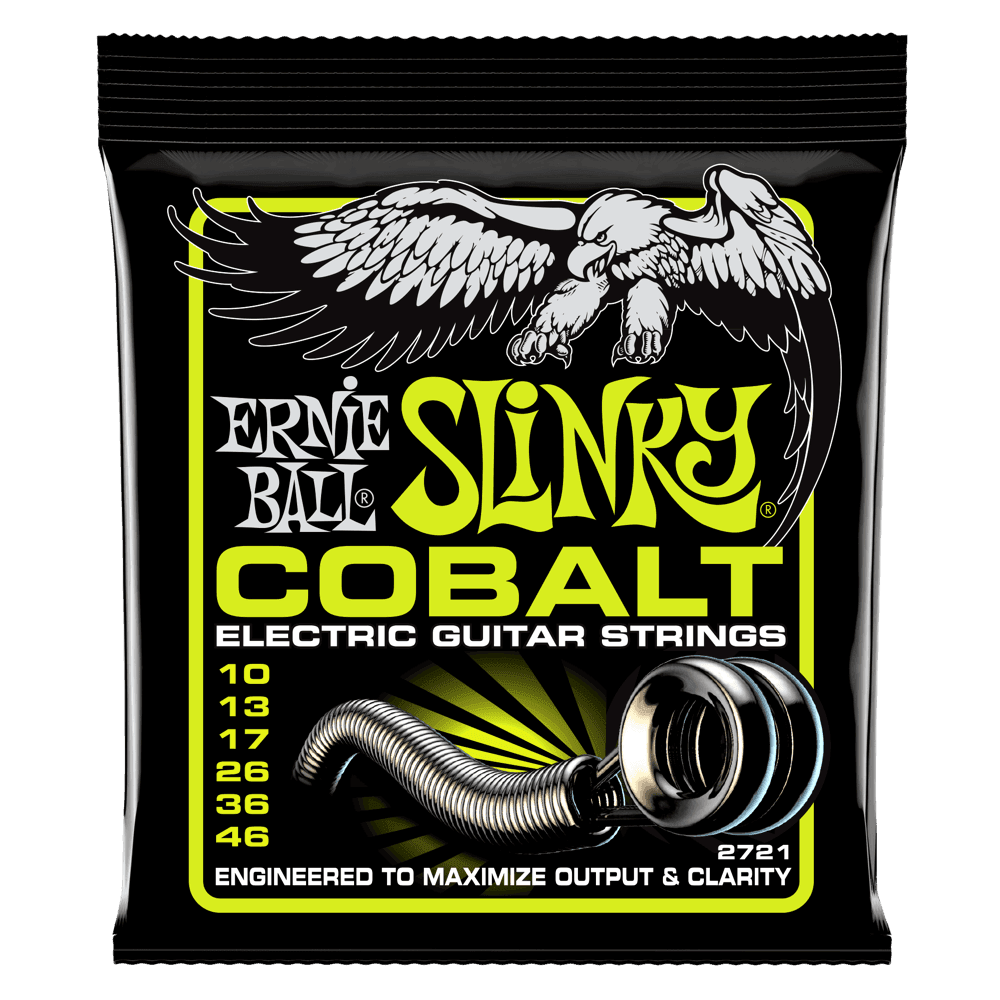
Regular Slinky Cobalt (.010–.046)
Why this one: The straightforward open-G set. Standard gauges handle the three down-tuned strings with a touch of slinky give, and the Cobalt wrap keeps the droning open strings clear and present.
For slide or a firmer, louder ring, step up a gauge.
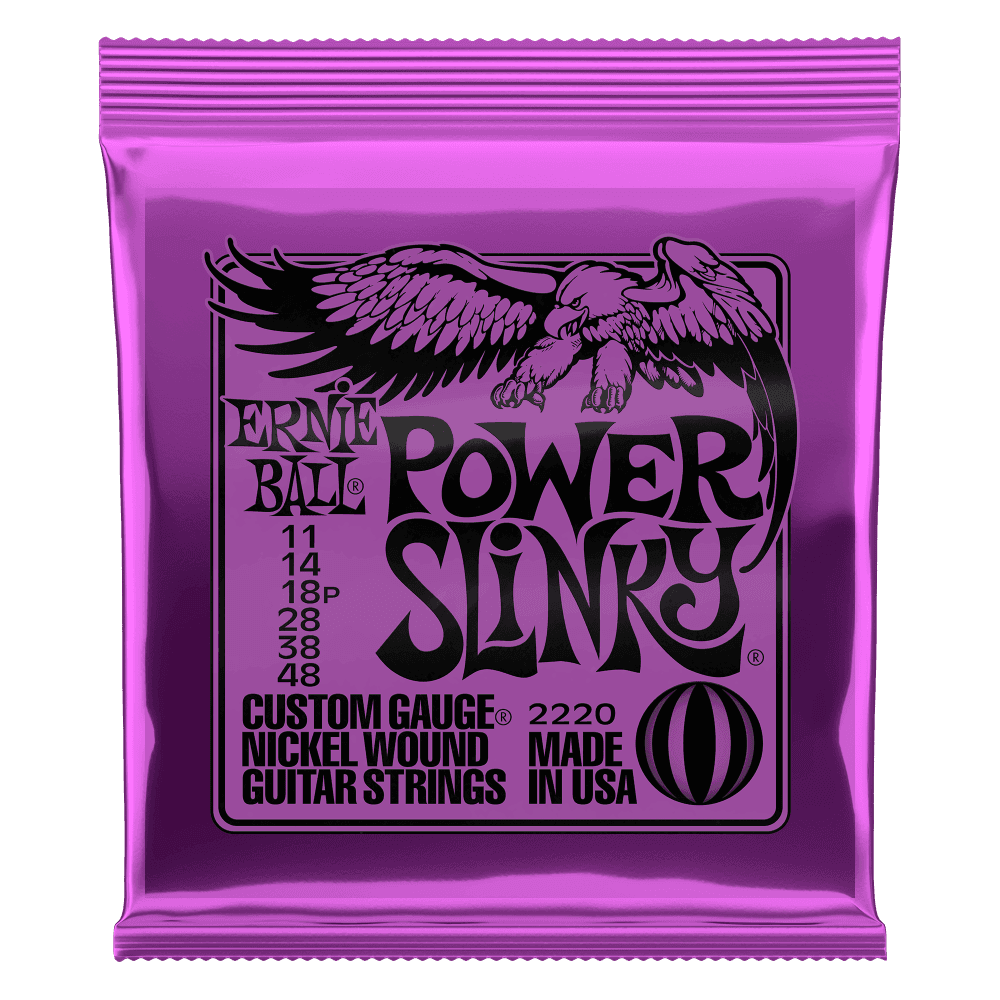
Power Slinky (.011–.048)
Why this one: The slide-friendly choice. The heavier gauge restores tension lost to the down-tuned strings, so chords ring cleaner and the slide tracks with less rattle. Close in spirit to the heavier wound strings Keith Richards favors.
Slide and setup notes
For slide in open G, heavier strings and slightly higher action pay off: more tension means a cleaner note under the slide and less buzz. If you split time between open G and standard, a wound third string survives both better than a plain G. And remember the Keith move: pulling the lowest string off a spare guitar and tuning it G-D-G-B-D is the fastest way to that specific rhythm sound.
Next steps
- The physics of gauge and tension: string gauge and scale length reference.
- The documented open-G rig: Keith Richards.
- A gentler retune to try first: Drop D.
- Make the open strings last: coated vs uncoated strings.
String gauge by tuning + scale length
Safe gauge ranges by tuning across Gibson (24.75"), Fender (25.5"), and baritone (27"+) scales. A dash in any cell means that scale length isn't recommended for the tuning, not that data is missing.
| Tuning | Gibson scale (24.75") | Fender scale (25.5") | Baritone (27"+) |
|---|---|---|---|
| E Standard | 10–46 | 9–42 | – |
| Drop D | 10–52 | 10–52 | – |
| Eb Standard | 11–48 | 10–52 | – |
| Drop C# | 11–54 | 11–48 +52 | – |
| D Standard | 11–54 | 11–48 | 10–52 |
| C Standard | 12–56 | 12–56 | 12–56 |
| Drop C | 12–56 | 11–54 +56 | 11–56 |
| Drop B | 12–64 | 12–62 | 11–54 |
| B Standard | 13–68 | 13–64 | 12–54 |
| Drop A | 13–70 | 12–68 | 12–62 |
| Drop G | – | – | 13–70 |
Source: CYS in-house tension-and-scale reference, built by Phil (luthier) and Wright (tension/scale). For scale lengths between categories (e.g., 25" PRS), split the difference between the two nearest columns.
Frequently asked questions
How do you tune to open G?
From standard tuning, lower three strings a whole step: the 6th (E to D), the 5th (A to G), and the 1st (E to D). The 4th, 3rd, and 2nd strings stay at D, G, and B. Read low to high it is D-G-D-G-B-D, and strumming the open strings sounds a G major chord.
What strings for open G?
A standard .010-.046 set works. Three strings drop a whole step, so the tuning feels a little slacker than standard. If you play slide or want a fuller ring, step up to .011-.048 or heavier for more tension and cleaner sustain. Keith Richards runs a custom five-string set around .011-.042 with a wound third string.
Why does Keith Richards remove a string?
He plays five strings, G-D-G-B-D, dropping the low D entirely. In open G the lowest string just doubles the root an octave down, so removing it cleans up the low end and suits his percussive, chord-stab rhythm style. The wound third string he keeps in its place tightens the intonation of his open-G chord shapes.
What songs use open G?
A huge slice of the Rolling Stones catalog: Brown Sugar, Honky Tonk Women, Start Me Up, Tumbling Dice, and more. Open G is also a backbone of slide blues, because a straight barre across all strings gives a major chord at any fret.
Is open G good for slide guitar?
Yes, it is one of the classic slide tunings. Laying a slide straight across all six strings at any fret produces a full major chord, which makes melodic slide lines and chord slides simple. Slightly heavier strings give cleaner slide tone with less rattle against the frets.
Do I need to change my setup for open G?
Usually not for occasional use. Three strings drop a whole step, lowering total neck tension a little, which most necks absorb. If you keep a guitar in open G permanently or move to heavier strings for slide, check relief and intonation, and confirm the nut slots are not binding on any thicker strings.