Ernie Ball Slinky Nickel Wound 6-String Electric Bass Strings (.032–.130): the classic-tone alternative to Cobalt
Written with AI help · Updated
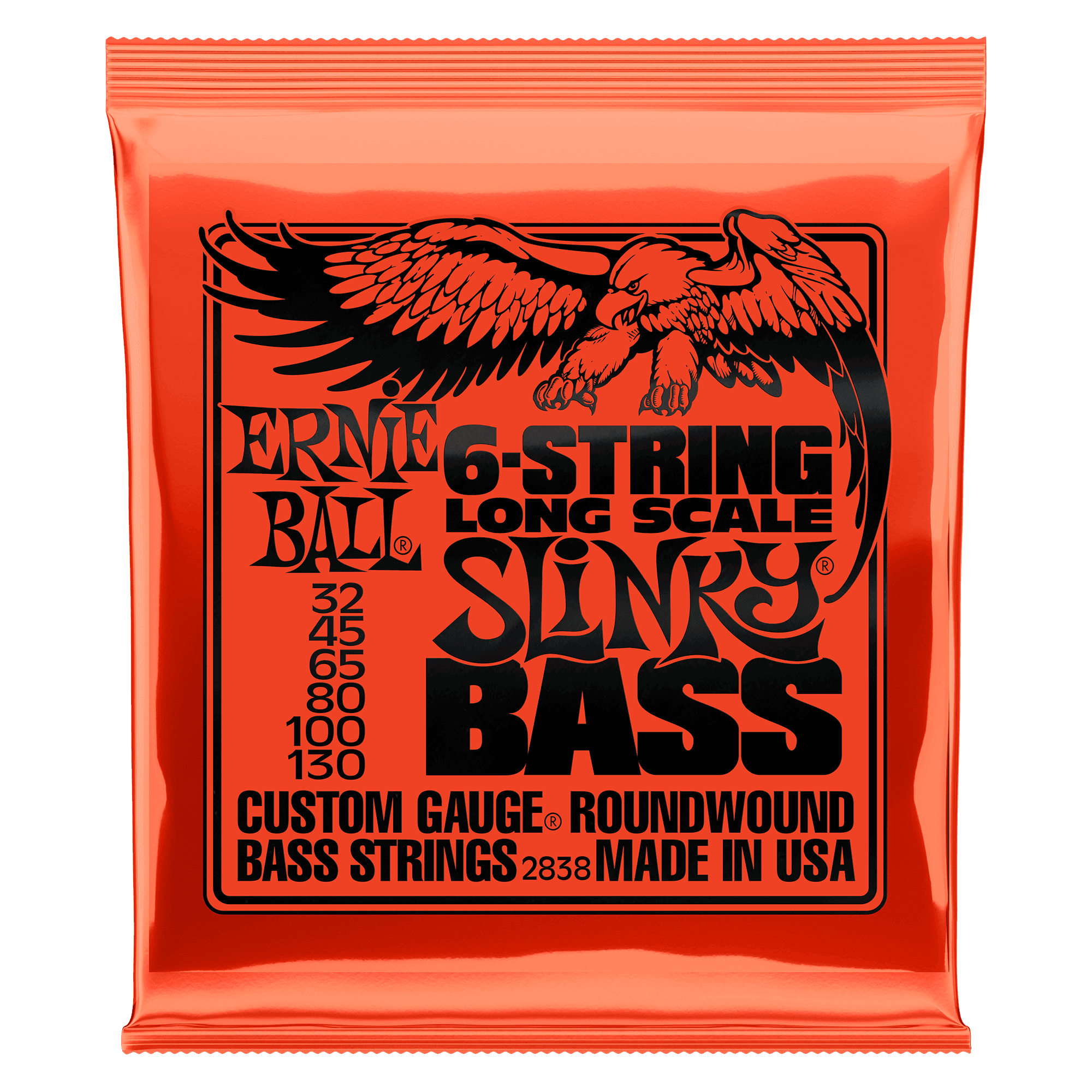
Ernie Ball's Slinky Nickel Wound Long Scale 6-String Electric Bass Strings run .032 to .130, the nickel-plated-steel counterpart to Ernie Ball's Cobalt 6-string bass set at the identical gauge. Nickel trades Cobalt's extra output and brightness for a warmer, rounder voicing and a lower price ($34.99 direct from Ernie Ball). Pick it if you want a traditional roundwound tone on a 6-string bass without paying Cobalt's alloy upcharge.

What this set is
Ernie Ball's Slinky Nickel Wound Long Scale 6-String Electric Bass Strings run .032 to .130, nickel-plated steel wrapped around a hex steel core. It's the nickel counterpart to the Slinky Cobalt 6-String Electric Bass Strings already reviewed on CYS: same gauge, same 6-string spread, different wrap alloy. Ernie Ball's own product page keeps the description simple, each string "produces a bright, balanced tone," and adds a build spec specific to this 6-string gauge that most retailers don't publish: designed for a 34 inch scale bass, with an overall string length of 48 inches and the taper beginning at 37 1/4 inches.
This set also closes the last open gap in Ernie Ball's nickel-wound bass catalog on CYS. The 4-string spread (Extra through Beefy Slinky) and the 5-String Regular Slinky Bass already had pages; this 6-string gauge, SKU P02838, was the one missing entry, and the direct nickel sibling to the Cobalt 6-string bass CYS shipped earlier the same day.
Anatomy
- Model
- Ernie Ball P02838 Slinky Nickel Wound Long Scale 6-String Electric Bass Strings
- SKU / Model #
- P02838 (Model # 2838 per retailer catalogs)
- Gauge
- .032 – .130 (6-string)
- Gauge set
- .032, .045, .065, .080, .100, .130
- String count
- 6 strings
- Core wire
- Hex steel
- Wrap wire
- Nickel-plated steel
- Coating
- None, uncoated
- Winding
- Standard roundwound
- Intended scale
- 34-inch scale; overall string length 48 inches, taper begins at 37 1/4 inches per Ernie Ball's own spec
- Intended tunings
- B-E-A-D-G-C (6-string standard); handles E standard on the top 4 strings
- Price (direct from Ernie Ball)
- $34.99
- Package
- Single pack
Nickel vs Cobalt at the identical 6-string gauge
Ernie Ball's own nickel and Cobalt product pages both list this identical .032 to .130 six-string gauge over a hex steel core, just wound in different wrap wire, nickel-plated steel here versus a cobalt alloy on the other set.
| This set (Nickel) | Cobalt 6-String | How big is the difference? | |
|---|---|---|---|
| Wrap wire | Nickel-plated steel | Cobalt alloy | Chemistry: the whole reason two lines exist |
| Price (direct from Ernie Ball) | $34.99 | Higher, $$ price tier | Nickel costs less |
| Relative output | Baseline | Hotter (commonly reported ~2–3 dB) | Audible on first strum |
| Low-end character | Rounder, warmer bloom | Tighter, more defined | Matters most under gain or a dense mix |
| Documented 6-string user | None on the record CYS has sourced | John Myung's Bongo 6 factory spec | Cobalt has the citable connection |
| Longevity (uncoated) | 1–3 weeks | 1–3 weeks | Identical |
For the fuller measured breakdown of Cobalt vs nickel voicing (output dB, brightness curve, bend feel), see Cobalt Slinky vs nickel Slinky: the voicing difference, explained. That page covers Ernie Ball's guitar strings, but the same wrap-wire logic carries over to bass: nickel's rounder, warmer low end versus Cobalt's tighter, more defined one. On a 6-string bass the low B is doing more work in a mix than on a 4-string, since it's the only string below E, so the alloy's low-end character is worth weighing before you buy.
Same low end as the 5-string, plus a high C
Where the gauge comes from
- Bottom five strings
- Identical to the 5-String Regular Slinky Bass (.045 to .130), gauge for gauge, confirmed on Ernie Ball's own product page.
- Added string
- A .032 high C on top, the thinnest string in Ernie Ball's nickel bass catalog and the one most prone to breakage on a rough nut slot.
- Same pattern as Cobalt
- Ernie Ball uses the identical approach on the Cobalt 6-string: keep the 5-string's bottom five untouched, add a .032 high C. The engineering choice doesn't change with the alloy.
- Physical build, not just gauge
- Ernie Ball's own spec for this 6-string sets the overall string length at 48 inches with the taper beginning at 37 1/4 inches, a detail that doesn't show up on most retailer listings.
Where this sits in Ernie Ball's Nickel Wound bass family
Ernie Ball ships nine nickel Slinky bass gauges across three string counts. This is the only one built for 6-string:
- 4-string, lightest: Extra Slinky Bass, .040–.060–.070–.095.
- 4-string, light: Super Slinky Bass, .045–.065–.080–.100.
- 4-string, hyper: Hyper Slinky Bass, .040–.060–.080–.100.
- 4-string, hybrid: Hybrid Slinky Bass, .045–.065–.085–.105.
- 4-string, standard: Regular Slinky Bass, .050–.070–.085–.105.
- 4-string, heavier: Power Slinky Bass, .055–.075–.090–.110.
- 4-string, heaviest: Beefy Slinky Bass, .065–.080–.100–.130.
- 5-string, standard: 5-String Regular Slinky Bass, .045–.065–.080–.100–.130.
- 6-string, this set: Slinky Nickel Wound Long Scale 6-String Bass (SKU P02838), .032–.045–.065–.080–.100–.130, the only 6-string gauge in the nickel line.
The Cobalt side of this same family tree (also nine gauges) lives on the Cobalt 6-string bass page. Full extended-range roster: 5-string and 6-string bass players.
Who plays it
No documented artist plays this exact nickel 6-string set on the record CYS has sourced. Dream Theater bassist John Myung's Music Man signature lineup is a 4-string (the John Myung 4) and this 6-string Bongo, no 5-string model, and Music Man's own specifications table lists the Bongo 6's factory strings as the Cobalt version, not this nickel set.
So a player chasing Myung's exact 6-string factory spec wants the Cobalt 6-string, not this page. A player who already prefers nickel's warmer, rounder voicing and wants a budget-friendly 6-string without switching alloys is exactly who this set is for.
Thundercat is another documented 6-string bassist CYS covers, though his instrument is strung with Dean Markley SR2000 Medium Custom, a different brand entirely.
Best for
- Budget-conscious 6-string players. This set costs less than the Cobalt equivalent at the identical .032 to .130 gauge.
- Players who already run nickel and want to keep the voicing consistent while stepping up from a 4-string or 5-string Ernie Ball set to a 6-string instrument.
- Traditional, rounder low-end tone. Nickel's warmer character sits well under a dense mix where Cobalt's extra brightness can compete with guitars for space.
Worst for
- Players chasing maximum output and articulation. Ernie Ball's own Cobalt 6-string claims a stronger magnetic relationship with pickups and a tighter low end; nickel is the rounder, lower-output baseline by comparison.
- Maximum string life. Nickel Wound is uncoated, the same wear curve as any uncoated roundwound; Ernie Ball's coated longevity line is Paradigm, not this family.
- Drop-tuned 6-string setups below B standard. The .130 low string is built for B standard; Ernie Ball ships no heavier 6-string nickel option, so a lower tuning means custom singles instead.
Install and break-in
The thin .032 high C is the string most likely to snap if a nut slot is cut rough or too narrow, the same install caution that applies to the Cobalt 6-string at the identical gauge. Break-in runs about the same as any fresh nickel roundwound: 15 to 20 minutes of playing before the top end settles. Stretch each string, pull up gently a few times, retune, and repeat before a gig or session, paying extra attention to the high C until it holds pitch.
Verdict
Slinky Nickel Wound Long Scale 6-String Electric Bass Strings is Ernie Ball's budget, classic-tone answer for 6-string bass: the identical .032 to .130 gauge as the Cobalt 6-string, in nickel-plated steel instead of cobalt alloy, for a lower price.
If output and brightness matter more than price, step up to Cobalt, the set with John Myung's actual documented Bongo 6 factory spec behind it. If you want a warmer, rounder low end and a lower price at the same gauge, this is the set.
Related
Related