Best Strings for Telecaster: 5 Sets by Gauge and Playing Style
Written with AI help · Updated
Fender Super 250R (.010 to .046) is the best all-around string for a Telecaster. It is the Regular gauge Fender itself lists on its Jack White Triplecaster Telecaster, and it keeps the bright, snappy bridge-pickup bite the guitar is known for. Go to DR Pure Blues PHR-10 for warmer blues, D'Addario ECG24 flatwounds for jazz, Elixir Nanoweb for long life, and GHS Boomers Medium for a heavier feel.
The short answer
A Telecaster is a bright, direct guitar. The strings you pick decide whether it bites, warms up or turns smooth. Start with a Regular .010 to .046 nickel-plated steel set and move from there by genre.
Fender's own spec sheet for the Jack White Triplecaster Telecaster lists a 25.5 inch scale and Fender USA 250R Nickel Plated Steel, .010 to .046. That is the baseline. Everything below is a move away from it for a reason: warmth, smoothness, longevity or weight.
| Best for | Gauge | Price | |
|---|---|---|---|
| Fender Super 250R | All-around, country twang, rock | .010–.046 | $ |
| DR Pure Blues PHR-10 | Warm blues, vintage country | .010–.046 | $$ |
| D'Addario XL Chromes ECG24 | Jazz, smooth clean tone | .011–.050 | $$ |
| Elixir Nanoweb 12052 | Long life, frequent players | .010–.046 | $$ |
| GHS Boomers Medium GBM | Heavier feel, Drop D, hard picking | .011–.050 | $ |
Fender Super 250R is the pick if you want one answer. It is the string Fender installs on its own guitars, it suits the Tele's firm 25.5 inch scale, and it is cheap enough to try without a second thought.
Super 250R Nickel Plated Steel (.010–.046)
Why this one: The Regular gauge Fender lists on its Jack White Triplecaster Telecaster. The plainest, most Tele-correct baseline.
What the Telecaster asks of a string
Two things define a Tele for string choice: scale and bridge.
The scale is 25.5 inches. Fender lists that figure for the Triplecaster and for its American Professional II Telecaster Thinline. Our guide to guitar scale length explains the consequence. At the same tuning and gauge, a longer scale runs tighter, about 6 percent more than a 24.75 inch Gibson. So a Tele feels firmer and snappier than a Les Paul with the same pack of strings. For you, that means a lighter gauge goes further than you expect, and a heavier gauge feels more solid than on a Gibson.
The bridge is the other half. Fender lists a three-saddle Tele bridge on both guitars above, and on the Thinline it describes a top-load/string-through design with compensated brass saddles. A standard Tele has a fixed bridge with no tremolo to balance against string tension, so you do not have to pick a gauge to suit a floating bridge (the Triplecaster's Bigsby is an exception). That is the big difference from a Strat. Your gauge is a feel and tone choice, not a setup constraint.
If you want the full gauge logic, read string gauge and scale length and keep the string gauge chart open when you compare sets.
Country and bright rock: Fender Super 250R
Country, rockabilly and indie rock all lean on the same Tele sound: a bright bridge pickup, a quick attack and notes that stop cleanly. Nickel-plated steel does that best. It is the wrap most single-coil pickups were voiced around, and a Regular .010 set gives you the bite without making bends hard work.
Fender Super 250R is a nickel-plated steel wrap on a hex steel core, uncoated, in the .010 to .046 Regular gauge. Our review of the set notes Fender's own claim that it is the best-selling line and the one installed on its guitars before they leave the factory, and that it matches the tension your Fender was set up for. Its listed genres are rock, blues-rock, classic rock and indie rock, and it works in E standard or Drop D.
The honest tradeoff: it is a plain set. It has no coating, no special alloy and no tuning-stability tech. If that sounds boring, good. For most Tele players the plain choice is the right one, and the money you save buys new sets more often. If you like a lighter touch for string bending, try a nines set for a week and compare. Our gauge FAQ walks through when to move down.
Blues and vintage country: DR Pure Blues PHR-10
Some Tele players find nickel-plated steel too sharp, especially through a bright amp. Pure nickel is the fix. It is warmer, softer and rounder, with a gentler top end that still keeps the Tele's character.
DR Pure Blues PHR-10 is a .010 to .046 set with a pure nickel wrap on a round high-carbon steel core, instead of the hex core and nickel-plated steel most modern sets use. Per our review, that combination gives a warmer, more vintage tone with longer sustain and a softer attack. DR hand-winds the line and builds it in Westwood, New Jersey. Its listed genres include blues, classic rock, rock, country and alternative rock.
This is the set for a Tele that already sounds bright and thin, or for a player who wants the pre-1970s feel. The cost is a step up in price tier from Fender's set, and a softer attack that some players will not like. If you want to understand the metal itself, read pure nickel vs nickel-plated steel.
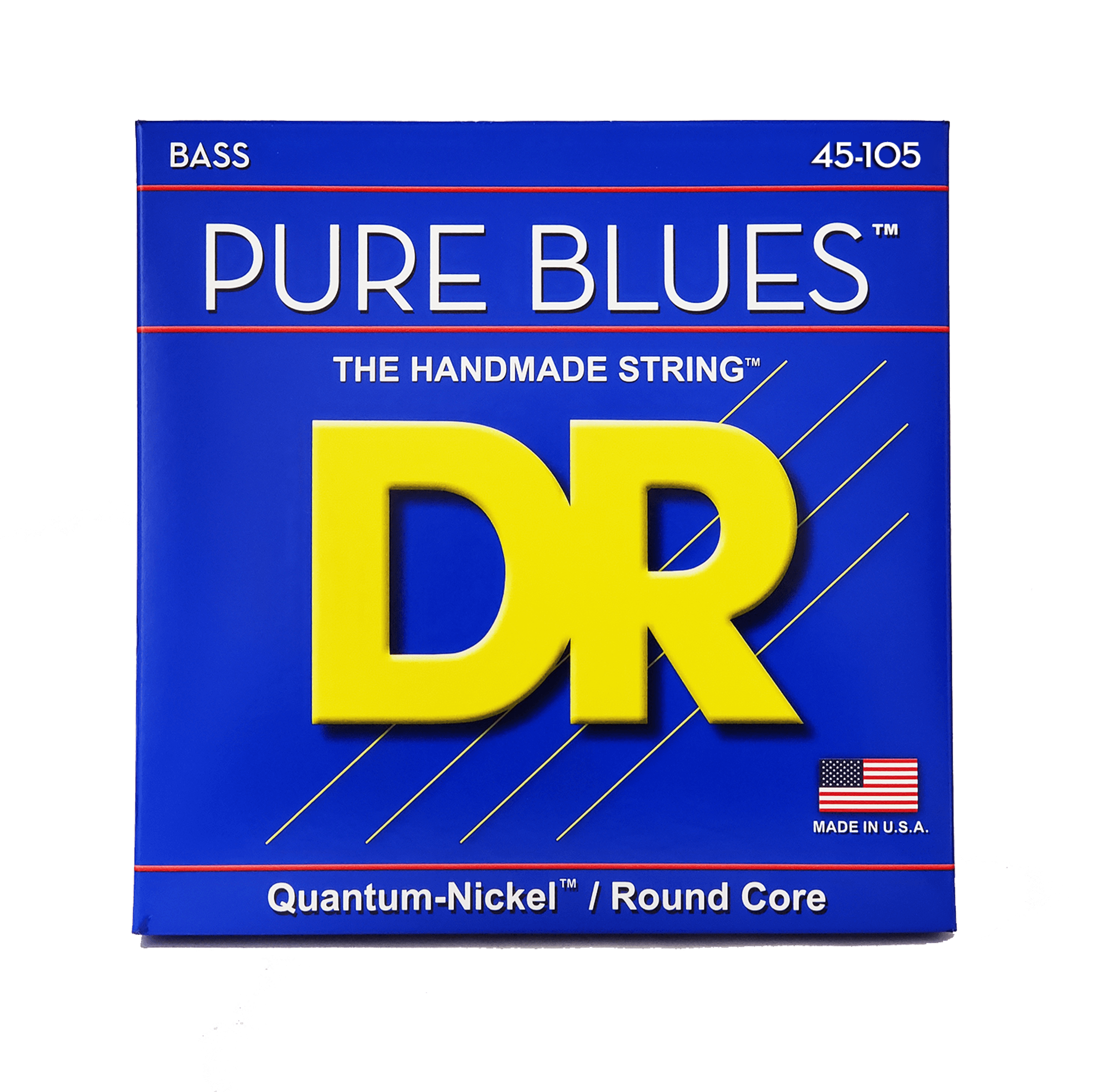
Pure Blues PHR-10 Pure Nickel (.010–.046)
Why this one: Round-core, pure-nickel wrap. A warmer, more vintage voice for a Tele that already has plenty of top end.
Jazz: D'Addario XL Chromes ECG24
A Telecaster with the tone knob rolled back is a classic jazz sound. Flatwound strings take that further. They remove the bright roundwound ridges, so the neck pickup goes dark, round and quiet under your fingers.
D'Addario XL Chromes ECG24 is a .011 to .050 Jazz Light set with a flattened stainless steel ribbon wrapped over a hex core, uncoated. D'Addario calls it the industry standard in flatwound strings, per our review. Only the four wound strings are flatwound. The .011 and .015 are plain steel.
Expect a warm, dead, mellow sound with no finger squeak. Expect less sustain and less sparkle too. That is the point, but it is not a Tele sound most country or rock players will want. Read our flatwound vs roundwound breakdown before you commit, and consider that the heavier .011 top string also means stiffer bends than a Regular set.
XL Chromes ECG24 Flat Wound, Jazz Light (.011–.050)
Why this one: A smooth, warm, dead flatwound tone. The strongest way to turn a bright Tele into a jazz guitar.
Players who restring a lot: Elixir Nanoweb
If you play every day, sweat heavily or hate changing strings, a coated set solves the real Tele problem: bridge-pickup brightness fades fast on dirty strings. Elixir Nanoweb 12052 is a .010 to .046 nickel-plated steel set on a hex core with a thin coating across the whole string. Elixir's testing, as quoted in our review, claims three to five times the tone life of an uncoated set. Country is among its listed genres.
The tradeoff is price tier and feel. It costs more up front, and the coating feels a little slicker under the fingers. For a Tele player, the benefit is real: the snap stays longer. See coated vs uncoated electric strings for the full picture.
Heavier feel and Drop D: GHS Boomers Medium
Some Tele players want more beef. Rhythm players, Drop D riffs and hard pickers all benefit from a heavier set, and the 25.5 inch scale keeps heavier strings from feeling floppy.
GHS Boomers Medium GBM is a .011 to .050 nickel-plated steel set, one step up from GHS's Light GBL. It lists rock, funk, classic rock, hard rock, blues and pop, and E standard, Eb standard and Drop D. Our review notes that Prince's guitar tech strung this gauge on his Telecaster-shaped Hohner Mad Cat, per Guitar World's Let's Go Crazy rig breakdown. That is a documented detail about one guitar, not a rule for every Tele.
You get a fuller, tighter sound and more stability under a hard attack. You also get stiffer bends and more finger pressure. Our light vs heavy gauge FAQ explains the tradeoff in plain terms.
Boomers Medium GBM Nickel-Plated Steel (.011–.050)
Why this one: A heavier, fuller .011 set for harder picking and Drop D, still cheap enough to experiment with.
How to choose
Pick by how you play your Tele
- Country, twang, bright rock
- Fender Super 250R. Bright nickel-plated steel in the standard Tele gauge.
- Blues and vintage tone
- DR Pure Blues PHR-10. Warmer pure nickel with a softer attack.
- Jazz and smooth clean tone
- D'Addario XL Chromes ECG24. Flatwound, dark and quiet under the fingers.
- Tired of restringing
- Elixir Nanoweb 12052. Coated, so the bridge-pickup snap lasts longer.
- Hard picking or Drop D
- GHS Boomers Medium GBM. Heavier, with a firmer low end.
Most Tele players should buy one Regular set, play it for a month, and only then change. The bridge does not force any gauge on you, so you can follow your hands. If you are curious how this differs on the other classic Fender, our Stratocaster string guide covers the tremolo question that does not apply here. For the broader field of sets, see best electric guitar strings.
Tuning matters too. A Tele in E standard is happy at .010. If you drop to Drop D, move toward .011.
Bottom line
Buy Fender Super 250R first. It is the Tele-correct baseline, it is cheap, and it keeps the bridge pickup bright. Then change one thing at a time: pure nickel for warmth, flatwounds for jazz, a coating for longevity, a heavier gauge for weight.
Super 250R Nickel Plated Steel (.010–.046)
Why this one: Our pick for most Telecasters. Plain, bright, and the gauge Fender itself lists.