Pick gauge by genre: thickness and material picks for every guitar style
Written with AI help · Updated
Pick gauge sits in three working bands: thin (.60mm and below) for acoustic strumming and rhythm-pop; medium (.73mm to .88mm) for indie, classic rock, and country; heavy (1.0mm to 1.5mm) for metal, metalcore, prog, and djent. Material follows tone goal: celluloid for vintage warmth, Tortex (Delrin) for the metal-rhythm canon, Ultex for djent precision and extended-range, nylon for jazz Jazz III precision. The 1.14mm purple Tortex sits at the absolute center of working metal rhythm; the Jazz III sits at the center of working metal lead.
The pick-gauge cheat sheet
Pick choice carries as much tone weight as gauge or amp. Most working guitarists settle on a single pick spec across decades; the wrong pick spec for your genre fights every other tone choice you make. Here's the working map.
Gauge by genre
- Acoustic strumming, folk, indie-pop
- .60mm to .73mm. Thin enough to flex with the strum and produce the rounded chord-strum sound; thick enough not to feel like a piece of paper. Tortex orange (.60) or yellow (.73) is the working canon. Fender Medium 351 celluloid is the vintage-tone alternative.
- Indie rock, classic rock, blues
- .73mm to .88mm. The all-purpose rock-rhythm gauge. Tortex yellow (.73) or green (.88), Fender Medium celluloid 351, or Dunlop Nylon .88. Stevie Ray Vaughan is documented on Fender Mediums (played with the fat end), squarely in this lane. Most working indie / classic-rock rhythm guitarists default here.
- Country, chicken-pickin', honky-tonk
- .88mm to 1.0mm. Medium thickness with a sharper attack; celluloid 351 shapes are the traditional canon. The hybrid-picking technique country uses needs the pick to release fast, which is why thicker picks are rare in country. Note that country's most famous session picker, Brent Mason, actually plays a thumbpick with fingers and acrylic nails, a different lane entirely.
- Metal rhythm guitar (thrash, metalcore, hard rock)
- 1.14mm. The canonical metal-rhythm gauge. Dunlop Tortex Standard 1.14mm purple is the working canon; James Hetfield's signature White Fang is the Flow-shape variant of the same gauge. Going thicker (1.50mm) is overkill for most rhythm work; going lighter (1.0mm) loses pitch stability under hard down-picking.
- Metal lead guitar, prog-metal lead, jazz fusion
- 1.38mm to 1.5mm Jazz III. The precision-pick lane. Standard Jazz III at 1.38mm in red nylon is the original; Petrucci's signature 1.5mm Ultex is the modern prog-metal canon; Jazz III XL Stiffo 1.38mm is the comfortable-grip variant. The small footprint plus sharp tip delivers the precision fast lead work needs.
- Djent, extended-range prog-metal (7- and 8-string)
- 1.14mm Ultex Sharp. The transient-precision lane for fast palm-muted rhythm work on 7- and 8-string guitars in drop tunings. Dunlop Ultex Sharp 1.14mm is the working spec across modern djent. Going to a standard Tortex 1.14mm warms the tone slightly; the Ultex Sharp delivers maximum articulation for the gate to trigger on.
- Jazz
- Jazz III red nylon 1.38mm. The original Jazz III. The small footprint and red nylon material delivers the warm round attack that jazz lead playing wants, different from the metal-side Jazz III Ultex variants in both feel and tone.
Material primer
Pick material drives tone almost as much as gauge. Three materials cover 95% of working guitarists:
Tortex (Delrin polymer). Dunlop's proprietary Delrin formulation, introduced 1981 to replace tortoise-shell picks. The industry-standard durable pick material. Consistent grip across sweat-soaked playing sessions; doesn't shatter when dropped on hard floors. The metal-rhythm canon (1.14mm purple) lives here. Tortex Standard is color-coded by thickness: red .50, orange .60, yellow .73, green .88, blue 1.0, purple 1.14. A white 1.50 exists in the Sharp and Flow shapes rather than the classic Standard line.
Ultex (Ultem polyetherimide). Dunlop's brighter, stiffer, more durable polymer. Outlasts Tortex 3-5x but is more brittle. The djent and extended-range canon (1.14mm Ultex Sharp) lives here. The Petrucci Jazz III signature is Ultex; most modern prog-metal players use Ultex variants.
Nylon. The original Jazz III material. Warmer, rounder attack than Tortex or Ultex. The red Jazz III 1.38mm is the canonical jazz pick; the black Stiffo nylon Jazz III XL is the metal-side variant of the same shape. Nylon is the warmer, more vintage-feeling pick material.
Celluloid (Fender 351 family). The vintage-rock canon. Stevie Ray Vaughan played Fender Medium celluloid (with the fat end); Eric Clapton's documented pick is the Ernie Ball Eric Clapton Special, a heavy cellulose nitrate pick around 0.94mm. The material family is warmer than Tortex, less durable, and grippier when sweaty (some players love this; some hate it). Vintage rock and blues lives here.
Coin and unconventional picks. Brian May plays a British sixpence coin. Billy Gibbons sometimes uses a Mexican peso. These unconventional picks deliver harder, brighter, more metallic attack than any production polymer; the trade-off is wear on guitar strings is dramatically faster. Niche.
Shape primer
Three shape categories cover most production picks:
Standard 351. The all-purpose pick shape. Comfortable for most picking-hand sizes, good for both rhythm and lead, the default Dunlop and Fender shape. Most beginner picks are 351.
Jazz III. Small, sharp-tipped pick designed for precision lead work. Originally developed for jazz; became the metal-lead canon over the past 30 years. The Jazz III XL is the larger version of the same shape for players whose hands feel cramped on the small original.
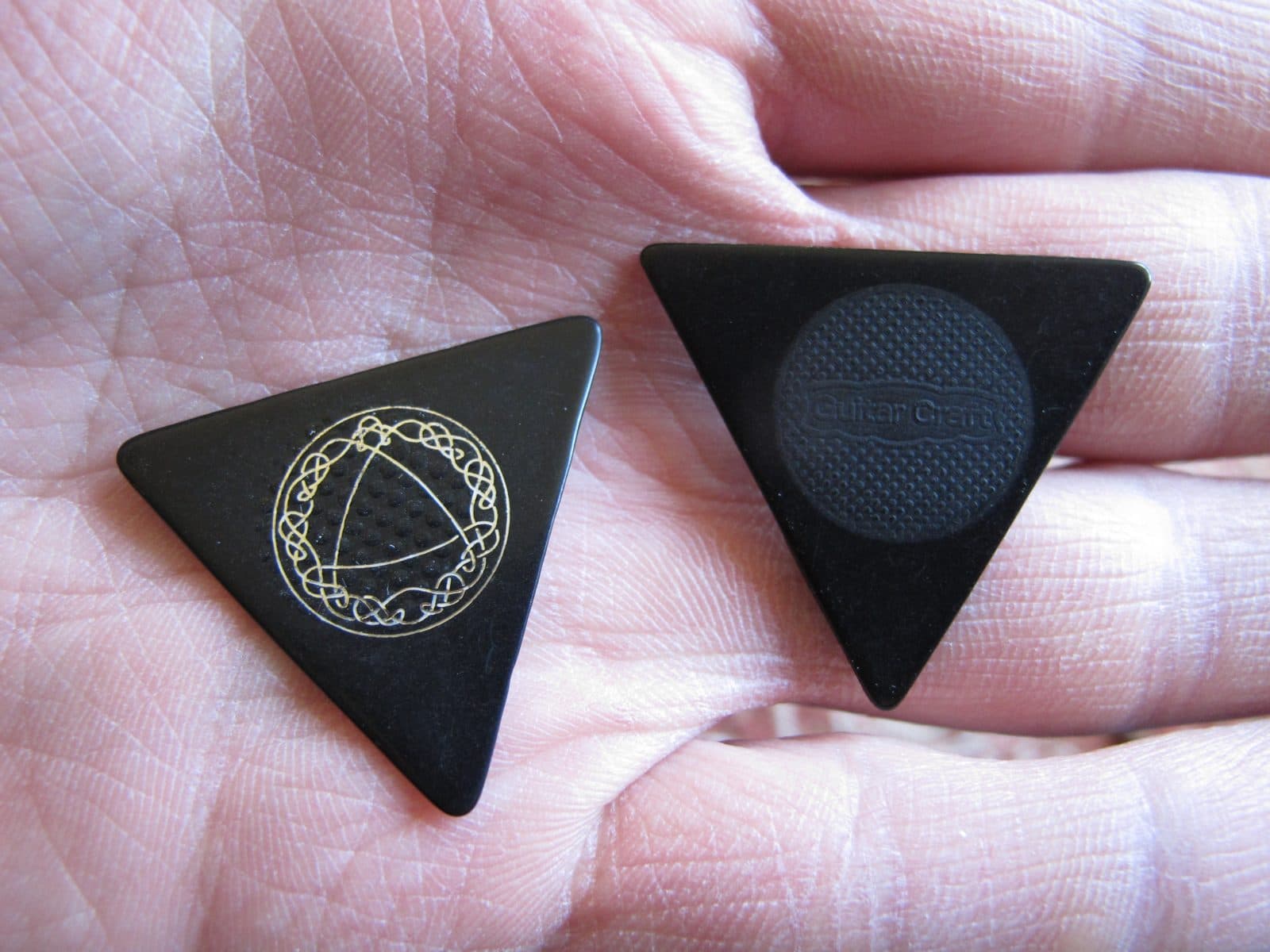
Triangle / Big Stubby. Three identical picking corners on a single pick: never need to rotate it for a fresh tip. Used widely in country, bluegrass, and acoustic strumming. Less common in metal.
Sharp tip variants. The Tortex Sharp, Ultex Sharp, and Tortex Flow all add a sharpened tip to a standard 351-style body. The sharpened tip delivers more transient articulation; useful for djent, modern metalcore, and prog-metal where the gate triggers on the transient.
Working canon: documented player picks
Sourced from manufacturer signature pages, Premier Guitar Rig Rundown coverage, and Dunlop's artist roster. Not all the working-pro guitar canon is signature-SKU material; many players use a standard production pick that suits their genre lane.
| Player | Pick | Notes | |
|---|---|---|---|
| James Hetfield (Metallica) | Dunlop Tortex Flow Hetfield 'White Fang' 1.14mm | Signature SKU built around his exact spec | |
| John Petrucci (Dream Theater) | Dunlop John Petrucci Jazz III 1.5mm Ultex | Signature SKU, slightly larger than a standard Jazz III, JP grip | |
| Eric Johnson | Dunlop Jazz III red nylon 1.38mm | Original Jazz III, foundational alternate-picking technique built on the small shape | |
| Eric Clapton | Ernie Ball Eric Clapton Special (heavy, ~0.94mm) | Cellulose nitrate, warm vintage attack | |
| Stevie Ray Vaughan | Fender Medium 351 celluloid | Documented playing with the fat rounded end | |
| Billy Gibbons (ZZ Top) | Fender Heavy 351 celluloid + Mexican peso for lead work | Vintage celluloid lane plus the iconic peso variant | |
| Brian May (Queen) | British sixpence coin | Iconic non-production pick, exceptional brightness | |
| Jimmy Page (Led Zeppelin) | Herco Flex 75 nylon (medium-heavy) | Vintage Herco lane, slightly warmer than modern Tortex |
Quick-pick guide by guitar setup
If you're not sure where to start, match the pick spec to your guitar setup:
- Strat or Tele in E standard, indie or rock genre: Tortex Standard 1.0mm blue, or Fender Heavy 351 celluloid. The all-purpose rhythm lane.
- Les Paul or SG in E standard, hard-rock genre: Tortex Standard 1.14mm purple, or Hetfield White Fang 1.14mm. The metal-rhythm canon.
- 7- or 8-string in drop tuning, prog-metal genre: Ultex Sharp 1.14mm, or Petrucci Jazz III 1.5mm. The djent precision lane.
- Acoustic dreadnought, folk or singer-songwriter genre: Tortex Standard .73mm yellow, or Fender Medium 351 celluloid. The acoustic strumming lane.
- Hollow-body archtop, jazz genre: Standard Jazz III red nylon 1.38mm. The jazz precision lane.
Frequently asked questions
What gauge pick should a beginner buy?
.73mm yellow Tortex. Thick enough to give controlled attack on rhythm strumming, light enough that wrist fatigue isn't an issue across a long practice session. The Tortex material is also forgiving on grip: it doesn't sweat-slip the way celluloid does. Once you've identified your genre lane, step heavier (metal) or lighter (acoustic-only) from there.
Why do metal players use thick picks?
Pitch stability and transient definition. A thin pick (under 1.0mm) flexes under hard down-picking, which causes the pitch of the note to bend slightly under attack. On a high-gain rig, that pitch bend smears the chord or the chug. A thick pick (1.14mm and up) holds its shape under hard attack, delivering the transient cleanly so the gate triggers correctly and the guitar reads as in-tune through the amp.
Why do jazz players use the Jazz III?
Precision and articulation. The Jazz III is small (smaller than a standard 351) and sharp, which lets jazz lead playing have surgical control on every note. The size also reduces wrist movement on fast alternate-picked passages. The 'Jazz' in the name is historical (the pick was developed with jazz players in mind), but the shape became the standard precision pick across modern metal lead work too.
What pick does Eric Clapton play?
The Ernie Ball 'Eric Clapton Special' heavy pick: an M-size cellulose nitrate pick around 0.94mm, per the Where's Eric fan-site FAQ that documents his picks. The celluloid-family material gives the warmer, rounder attack his blues-rock lead playing is known for. Neighboring vintage players differ: Stevie Ray Vaughan is documented playing Fender Mediums, famously with the fat rounded end, and Billy Gibbons is famous for the Mexican peso story on some lead work.
What pick does James Hetfield play?
Dunlop 'White Fang' Custom Flow 1.14mm, his signature SKU. Built around his specification: Flow shape (sharper than standard 351), 1.14mm, custom bevels, white finish for stage visibility on dark guitars. The standard equivalent without the signature is the Dunlop Tortex Standard 1.14mm Purple.
What pick does John Petrucci play?
Dunlop John Petrucci Signature Jazz III 1.5mm Ultex, his signature SKU. A slightly larger profile than a standard Jazz III (per Dunlop's own product copy) at 1.5mm in Ultex with a polished tip and raised JP grip. Built around his exact spec for Dream Theater's prog-metal lead playing.