Do strings or pickups change your tone more? What string metal and gauge actually do
Written with AI help · Updated
Your pickups and your strings shape different things, so neither wins outright, but they are not equal levers. The pickup sets the amplified voicing: how bright, how hot, how compressed the signal reads. The string sets the raw signal the pickup then amplifies, its harmonics, attack, and sustain. Swap alloy or gauge and the tone shifts; swap pickups and the whole voice changes. Strings are the cheapest, fastest tone change you can make.

The short answer, and why it is not a tie
Neither the pickup nor the string wins outright, because they shape different parts of the sound. The string is the source: its alloy, gauge, age, and how hard you hit it set the raw vibration, the harmonics, the attack, and the sustain. The pickup is the transducer: it decides how much of that vibration reaches your amp and with what voicing. Change your strings and you change the signal going in. Change your pickups and you change how the whole thing reads coming out.
So the useful question is not which one matters, but which one to reach for first. Strings are the cheapest, fastest, fully reversible tone change on the guitar. Pickups are the bigger, permanent voicing decision. Most players get better results faster by dialing the string first, alloy and gauge included, and only then reaching for a soldering iron.
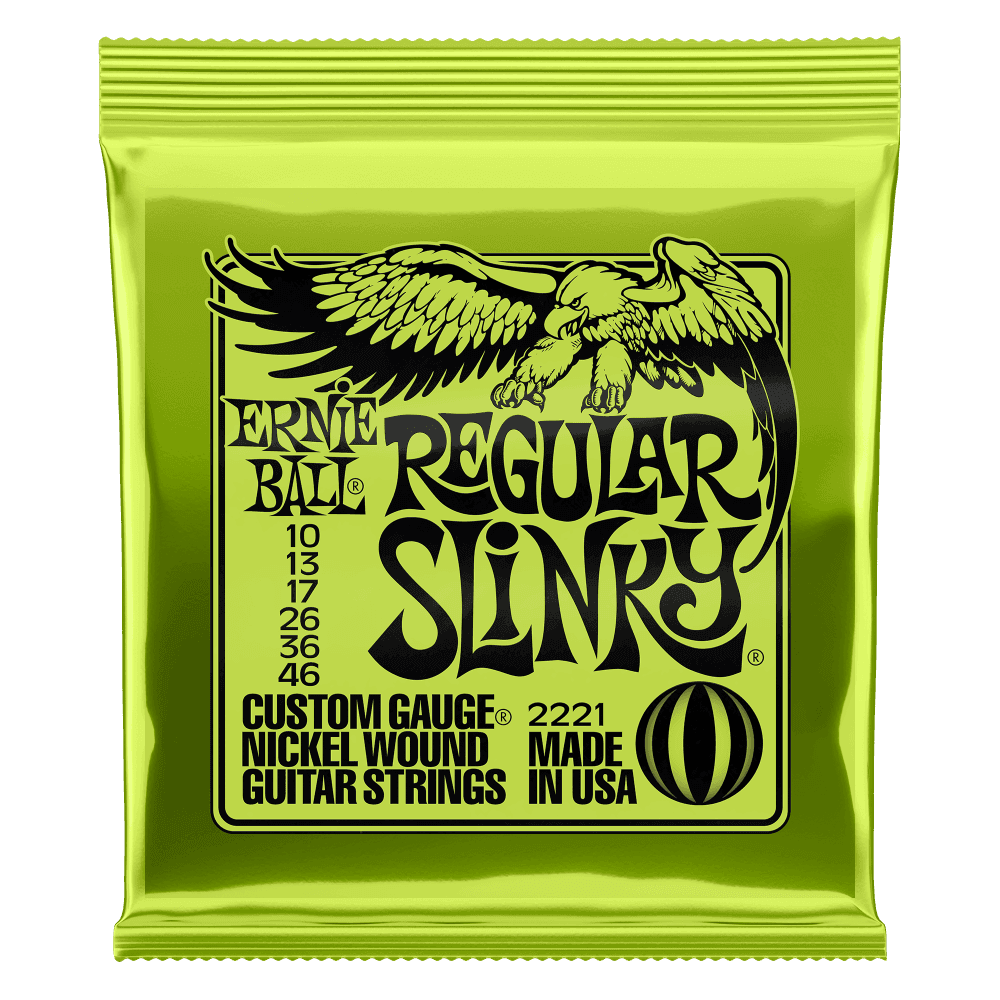
Regular Slinky (.010–.046)
Why this one: The reference nickel-plated steel set for a 25.5-inch scale in E standard. The baseline every tone change here is measured against, and the cheapest lever to pull first.
What the string metal changes
The wrap alloy is the string's biggest single tone lever, bigger than gauge. It sets how bright, how warm, and how hot the raw signal reads before it ever hits the pickup. The four you will actually meet are nickel-plated steel, pure nickel, cobalt, and any of those with a coating over the top.
| Voice | Output and longevity | Reach for it when | |
|---|---|---|---|
| Nickel-plated steel | Bright, punchy, aggressive | The modern default; brightest when fresh, dulls as the plating wears | You want the standard rock and blues sound, or a dark guitar woken up |
| Pure nickel | Warm, round, smoother highs | Slightly lower output; barely changes as it ages | Your rig runs bright, or you are chasing a vintage voice |
| Cobalt | Hi-fi, clear, extra bite | Highest output of the four; strong magnetic pull | Metal, active pickups, and low tunings that need clarity |
| Coated (over any alloy) | The same voice, highs very slightly tamed | Lasts far longer against sweat and grime | Sweaty hands, long tours, or studio sessions where one set must last |
The pattern is simple once you see it: pick the alloy for what your rig is missing. A warm alloy like pure nickel tames a bright single-coil guitar at the string instead of at the amp. A bright alloy like nickel-plated steel or cobalt wakes up a dark humbucker guitar. For the full breakdown, our pure nickel vs nickel-plated steel comparison covers the warm-versus-bright choice, cobalt vs nickel Slinky covers the high-output option, and coated vs uncoated explains why a coating buys longevity for almost no tone cost. Stainless steel is a fifth option, commonly reported as the brightest and most corrosion-resistant of all, at the cost of a little extra fret wear.
What the string gauge changes, and what most players get wrong
Gauge changes the feel far more than it changes the tone. A heavier string carries more mass, so it can read a little fuller and sustain a touch longer, and it holds tension in low tunings where a light string goes slack. But the tone difference between two gauges of the same alloy is small next to the difference between two alloys, or between a fresh set and a dead one.
Here is the myth worth killing. Most players assume a bigger, fatter tone needs bigger, heavier strings. It does not. Billy Gibbons of ZZ Top, whose tone is about as huge as electric guitar gets, plays an ultralight .007 to .038 Dunlop Rev. Willy's set, and he switched after a young encounter with B.B. King. In his Sweetwater interview, Gibbons recalls King picking up his heavy-strung guitar, playing a couple of strums, and asking: "Why are you working so hard?" The lesson stuck. The big sound was never in the string thickness.
There is real physics under the feel, though. Tension for a given pitch rises with the square of the string's diameter, because a string's mass rises with its cross-sectional area. A plain .011 high E has about 49 percent more cross-sectional area than a .009, so at the same pitch it pulls roughly that much more tension. That is why a step up in gauge feels so much stiffer under a bend, and why the choice is really about feel and tuning, not tone.
So how do you get gauge right, every time? Match it to your tuning and scale first, then to your taste. Run a standard .010 to .046 set for E standard on a normal scale. Go heavier for lower tunings so the low strings stay tight: a set like Dunlop Heavy Core (.010–.048) keeps a 10-gauge feel up top while holding Drop C down low. Our gauge chart lists every size in inches and millimeters, and the scale-length guide covers why a longer scale lets you drop a gauge and stay tight. For low-tuned metal specifically, the best strings for metal comparison maps gauge to tuning across brands.
So what changes the sound more, the pickup or the string?
For the amplified sound, the sound coming out of your amp, the pickup is the single largest voicing decision on the instrument. But it can only ever amplify the signal the string hands it, which is why the honest answer is that they are not competitors. They sit in series.
Start with what a pickup actually is. Per Yamaha's guide to electric guitar pickups, its job is "to sense the vibrational movement of the strings on your guitar and convert it into electrical energy that can be sent to an amplifier and speakers." How it does that sets the voicing. The winding count changes output and EQ: Yamaha notes that winding the coil more increases volume, but "if wound too much, the sound will become muffled." Position matters just as much. A bridge pickup "delivers a brighter, punchier sound, while the neck humbucker adds warmth and a smoother tone." And the type is a fork in the road: single-coils are bright and cut through a mix, while humbuckers give "a thick, powerful sound with a hotter output." Swap between those and the guitar reads like a different instrument.
But notice what every one of those does: it shapes how the string's vibration is captured, not the vibration itself. Dead strings through great pickups still sound dead. Fresh strings through modest pickups still sparkle. The string sets the raw material, its harmonic content, its attack, its sustain, and the pickup decides how much of that reaches the amp and with what EQ. That is why the string is the source and the pickup is the filter.
The practical takeaway, stated plainly: the pickup makes the bigger difference to your plugged-in voice, but the string is the cheaper, faster, and reversible place to start, and a bad string choice cannot be fixed by any pickup. And to be fair to the whole debate, plenty of players argue the amp and your hands outweigh both. They have a point. Gain staging, speaker, pick attack, and vibrato shape tone as much as any part swap. Strings and pickups are the two levers you buy; technique is the one you build.
How to get it right every time
The order that saves you money
- Start with fresh strings
- Before you judge any tone, put on a new set. A dead set masks everything else, and this is the single most common reason a guitar sounds dull. See how often to swap them below.
- Pick the gauge for your tuning and scale
- Match gauge to tuning first: a standard .010 to .046 for E standard, heavier for Drop C and below so the low strings stay tight. Then adjust for how bends feel.
- Pick the alloy for the voice you want
- Warm and vintage points to pure nickel, bright and modern to nickel-plated steel, hi-fi and high-output to cobalt. Coat any of them if your sets die fast.
- Only then think about pickups
- If the guitar still is not doing what you want after a string change, a pickup swap is the bigger, permanent voicing move. Do it last, not first.
Get the string right and you have solved most tone problems for the price of a set. That is the whole point: the cheapest lever is also the first one to pull. If your set is more than a few weeks of playing old, our guide on how often to change strings is the fastest tone upgrade on this page.
Related
Frequently asked questions
What changes an electric guitar's tone the most?
There is no single winner, because the pickup and the string do different jobs. The pickup sets the amplified voicing, how bright, hot, or compressed the sound reads, so a pickup swap changes the whole character. The string sets the source signal the pickup amplifies, its harmonics, attack, and how long it sustains. Your amp, your gain, and your hands matter just as much. If you want the biggest change for the least money and effort, start with fresh strings, then the string's alloy and gauge, then think about pickups.
Does string gauge really change your tone, or just the feel?
Mostly the feel, with a smaller tone effect than most players assume. A heavier gauge has more mass, so it can sound a touch fuller and sustain a little longer, and it holds tension better in low tunings. But the difference is subtle next to the change you get from a different alloy, fresh strings, or a pickup swap. Gauge is chosen first for the tuning and scale you play, and second for how the strings feel under your fingers.
Do heavier strings actually sound better or fatter?
Not automatically. Heavier strings add a little mass and tension, which some players hear as fuller, but plenty of famously fat tones come from very light strings. Billy Gibbons of ZZ Top, whose sound is about as big as electric guitar gets, plays a .007 to .038 set on B.B. King's advice. Tone comes far more from your alloy, your amp, and your hands than from string thickness. Pick the gauge that fits your tuning and feels right, not the heaviest one you can bend.
What string metal sounds the brightest, and what sounds the warmest?
Nickel-plated steel, the modern default, is bright and punchy. Pure nickel is the warmer, rounder, more vintage voice. Cobalt is the most hi-fi and highest-output of the common alloys, which suits metal and active pickups. Coating any of these barely changes the voice but makes the set last far longer. Match the alloy to what your rig is missing: a warm alloy tames a bright guitar, a bright alloy wakes up a dark one.
Should I change my strings or my pickups first to change my sound?
Strings first, every time. A fresh set, a different alloy, or a different gauge costs a fraction of a pickup swap, takes fifteen minutes, and is fully reversible. Live with the string change for a week. If the guitar still is not doing what you want, then a pickup swap is the bigger, more permanent voicing change. Doing it in that order stops you from paying for pickups when a five dollar set would have fixed it.
How does string gauge relate to my tuning?
Lower tunings need heavier gauges to keep tension, and standard tuning can run lighter. Drop your tuning without going heavier and the low strings turn slack and floppy, which buzzes and intonates badly. Go heavier than you need in standard tuning and bends get stiff. Match the gauge to the tuning first: a standard .010 to .046 for E standard, something heavier for Drop C and below. Scale length matters here too, which our scale-length guide covers in full.
Do pickups only affect the amplified sound?
Largely, yes. A pickup is a transducer: it senses the string's vibration through a magnetic field and turns it into the signal your amp hears, so it shapes the plugged-in tone, not the acoustic sound of the guitar in the room. The string, the wood, and your hands set the unplugged voice and the raw vibration. The pickup then decides how much of that vibration reaches the amp, and with what EQ. That is why the same guitar sounds like a different instrument through different pickups.