The gear behind Reckless & Relentless: Joey Sturgis, Asking Alexandria, and a wall of drop-G#
Written with AI help · Updated
Asking Alexandria's Reckless & Relentless (2011) was produced by Joey Sturgis, one of the defining metalcore producers. The band plays in drop G#, a very low tuning documented with heavy gauges around .012 to .056. Sturgis's studio method leans on fresh strings and getting tone right at the source, which is why a low-tuned metalcore rhythm sound starts with the right heavy set.
Some records are gear lessons in disguise. Asking Alexandria's Reckless & Relentless (2011) is one: a produced, ultra-low metalcore rhythm sound that a generation of bands chased. It was made by Joey Sturgis, whose fingerprints are on a huge slice of the era. Here is what is documented about the build, what is not, and how to get in the neighborhood.
The history, in one paragraph
By 2011, Sturgis had already produced Asking Alexandria's breakout single "The Final Episode" and was one of the most in-demand metalcore producers alive, with a client list running through The Devil Wears Prada, Of Mice & Men, Emmure, and Born of Osiris. Reckless & Relentless was the band's second album and a defining document of the polished, brutally low metalcore sound. The record is the history; the gear is the lesson.
The documented gear
Here is the honest state of the sourcing. We list what is documented and flag what is not, because guessing a spec is worse than admitting a gap.
What's documented (and what isn't)
- Producer
- Joey Sturgis, confirmed across his own credits and Wikipedia. The Sturgis production sound is the through-line.
- Tuning
- Drop G#, a very low tuning, per Guitar World's lesson on the band's material.
- Gauge
- The band is documented playing heavy gauges around .012 to .056 (Guitar World). Note: that is a playing figure, not a published studio spec for this exact record.
- String method
- Sturgis's documented studio approach is fresh strings at the start of a session, changed as needed, and getting tone right at the source rather than fixing it later.
- Not sourced
- A specific string brand or exact per-session gauge for Sturgis personally is not publicly documented, so we do not claim one.
That is the discipline of this series: the producer, the record, and the tuning are sourced; the gauge is presented as a documented playing figure with the caveat attached; and anything we could not verify is left out rather than invented.
How to get in the neighborhood
You cannot buy a produced record, but you can build the front end of that sound: a very low tuning on strings heavy enough to stay tight, changed often enough to stay bright. For drop G# and the tunings around it, that means a heavy Cobalt set. Cobalt runs hotter and brighter than standard nickel, which helps a dark, ultra-low tuning keep its edge under high gain.
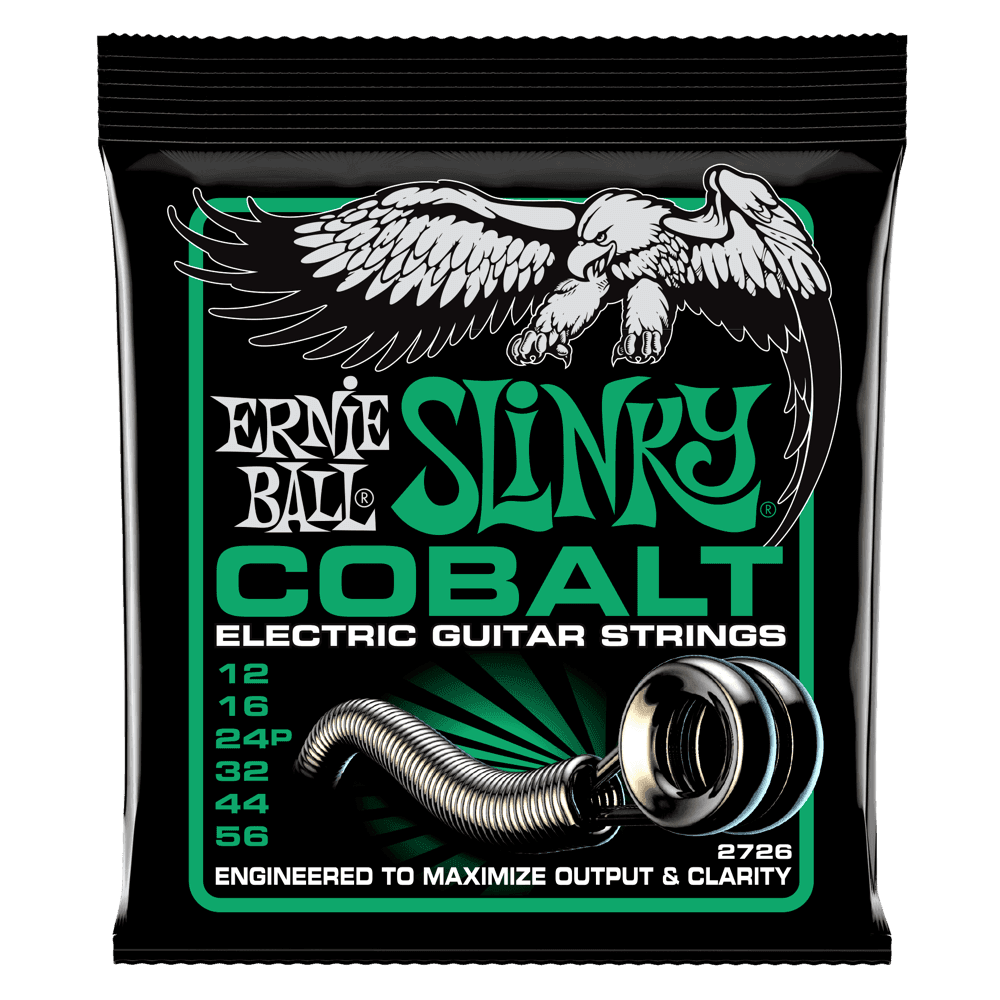
Not Even Slinky Cobalt (.012–.056)
Why this one: A heavy .012–.056 Cobalt set in the gauge range the band is documented playing. The starting point for a low, produced metalcore rhythm.
Mammoth Slinky Cobalt (.012–.062)
Why this one: Even heavier low strings for the lowest drops, so a drop-G#-style tuning stays tight instead of flopping.
And take the method, not just the gauge: on a record this low and this high-gain, fresh strings are the difference between a tight rhythm and a dull one. That is exactly why bands tracking a record buy strings by the box, covered in our producers on strings for recording FAQ.
Next steps
Pair the sound with the right build in tonewoods by genre, get the tension math for very low tunings in the string gauge and scale length reference, and browse every heavy set in the strings catalog.
Frequently asked questions
Who produced Reckless & Relentless?
Joey Sturgis, who also produced Asking Alexandria's breakout single 'The Final Episode' and later The Black. Sturgis is one of the most influential metalcore producers of the era, with credits including The Devil Wears Prada, Of Mice & Men, Emmure, and Born of Osiris.
What tuning does Asking Alexandria use?
Drop G#, a very low tuning that sits well below drop C. Guitar World's lesson on the band notes drop-G# material and correspondingly heavy strings. Tunings that low need heavy gauges just to stay tight and in tune.
What string gauge do you need for drop G#?
Very heavy. The band is documented playing gauges around .012 to .056, and for tunings that low a .012 to .062 style set is a sensible target so the lowest string holds tension. A standard .010 set is unusable at that pitch.
Did Joey Sturgis really change strings constantly?
The precise 'every song' framing is not something we can source to a direct Sturgis quote, so we will not put it in his mouth. What is documented, on his own site, is that he starts sessions on fresh strings and changes them as needed, because strings oxidize and go dull from first play. For a low, heavy, high-gain rhythm sound, fresh strings matter even more.
What sets get me close to this sound?
For drop G# and similar very low tunings, reach for a heavy Cobalt set like Not Even Slinky (.012 to .056) or Mammoth (.012 to .062). Cobalt runs hot and bright, which helps a very low, dark tuning keep definition under high gain.
Why does this record still matter for gear?
Reckless & Relentless is a template for the produced, ultra-low metalcore rhythm sound: heavy strings, low tuning, tight tracking, and a producer obsessed with getting it right at the source. Copy the method, not just the settings.