Producers on strings for recording: how often to change them, and why to buy in bulk
Written with AI help · Updated
Producers start a session on fresh strings and change them as they go, because strings oxidize from the first play and dead strings sound dull and drift out of tune on a recording. How often varies: some engineers restring per day, some per song. The practical upshot for a band tracking a record or touring is simple: buy strings by the box, not the pack.
Ask a producer about guitars and the conversation gets to strings fast. Not because strings are exotic, but because they are the cheapest variable that most reliably wrecks a take. A guitar with dead strings sounds dull and drifts flat, and no plugin fully fixes it. So the pros treat strings as a consumable and go through a lot of them. Here is how they think about it, and why it should change your shopping cart.
Why fresh strings matter more in the studio than on stage
Strings start dying the moment you play them. As producer Joey Sturgis puts it on his own site, strings "begin to slowly oxidize and rust from the moment they're played," which "adds up to dull, lifeless strings that sap away at the natural overtones." His documented studio rule is to start each session on new strings and change them as needed throughout.
The payoff is brightness and, just as important, intonation. New strings are brighter, louder, and tune more accurately, which is exactly what a close-mic'd, uncompressed recording exposes. In a Premier Guitar test the difference was real but subtle inside a busy mix, so this matters most on exposed parts, and less on a wall of layered rhythm. Either way, the pro instinct is the same: do not let a dead set be the reason a take sounds flat.
The studio string mindset
- Fresh at the start
- New strings at the top of a session, changed as needed through it. The documented Sturgis baseline.
- Some go further
- Engineers commonly restring per day of tracking, and some swap for every song to keep takes consistent.
- Settle, then track
- Restring a day or two ahead, or stretch thoroughly, so the guitar holds pitch through a take.
- Consumable, not keepsake
- Strings are the cheapest thing between you and a great take. Budget for many sets, not one.
Why bands tracking a record (or touring) buy by the box
Do the math. A record with ten to twelve songs, tracked in doubles or quads for a big rhythm sound, with a fresh set going on every day (and for some, every song) burns through sets fast. If your string routine is "one pack when the old one snaps," you are not set up to record. The same is true on tour, where a hard-picking player may restring every night.
So the pros buy in bulk. It lowers the per-set cost and it means you never blow a session or a soundcheck waiting on strings. If you are heading into the studio or out on the road, order a box, not a pack.
Here are bulk-friendly sets CYS carries that cover the common studio and stage cases:
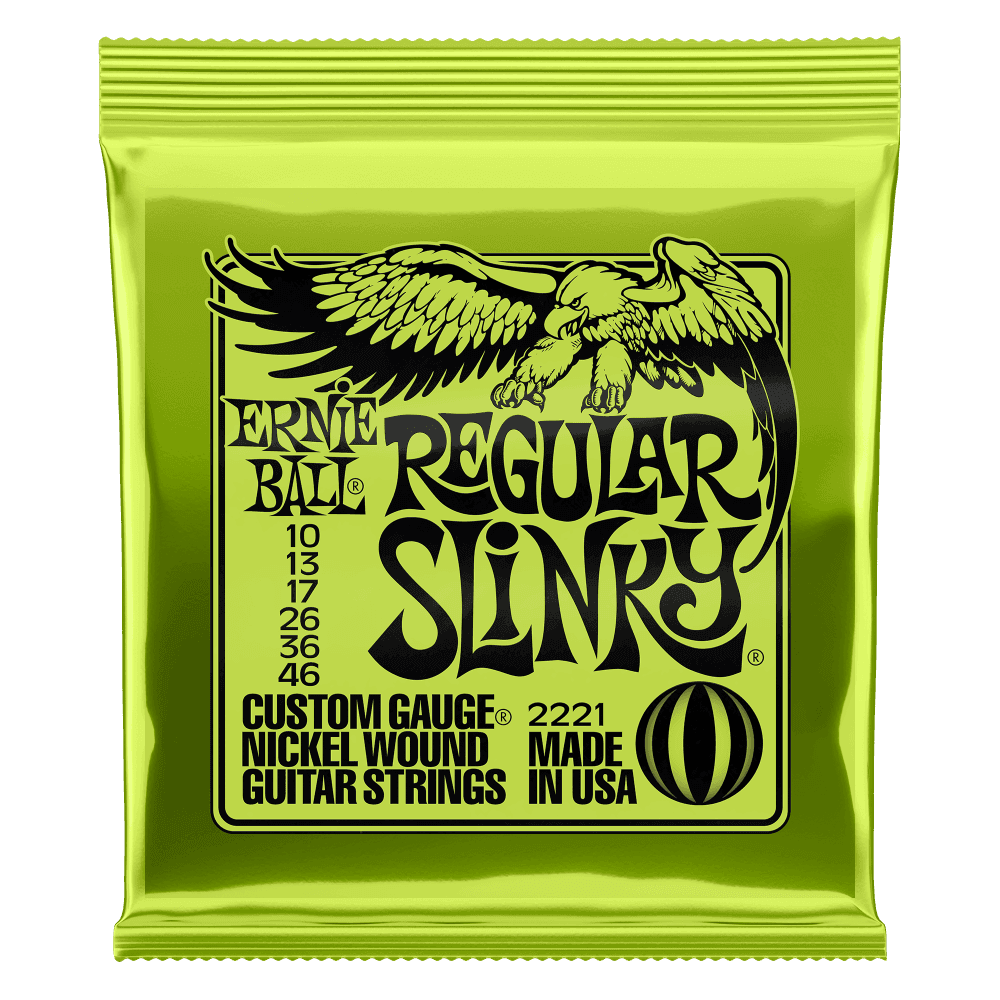
Regular Slinky (.010–.046)
Why this one: The standard-tuning workhorse for tracking rock, pop, and blues. The obvious set to stock deep for a session.

NYXL1156 Nickel Wound (.011–.056)
Why this one: Misha Mansoor's recommended NYXL gauge for drop C at 25.5-inch scale. Tuning stability that survives take after take.

Not Even Slinky Cobalt (.012–.056)
Why this one: Heavy Cobalt set for the lowest drop tunings. Worth changing often on a record, exactly the case for buying a box.
Next steps
Match a gauge to your tuning with the string gauge and scale length reference, see which woods and pickups pair with your style in tonewoods by genre, and browse the full strings catalog to stock up by brand and gauge.
Frequently asked questions
How often should you change strings when recording?
The documented pro baseline is fresh strings at the start of a session, then changed as needed throughout. Beyond that it varies widely: some engineers restring every day of tracking, and some change for every song to keep the brightness and intonation dead consistent take to take. If you are tracking rhythm for hours, plan to swap more than once.
Do new strings actually sound better on a recording?
New strings are brighter, louder, and intonate more accurately. In a controlled Premier Guitar test the difference was real but subtle inside a full mix, and could be largely matched with a small EQ lift around 2 kHz. For exposed or solo guitar, fresh strings matter more; buried in a dense mix, less.
Why do dead strings sound bad?
Strings begin to oxidize and collect grease and dirt from the moment they are played. That build-up dulls them, saps the natural overtones, and makes them harder to keep in tune. On a recording, where nothing is hidden, that reads as a flat, lifeless guitar.
Should you put strings on the same day you track?
Not necessarily. Brand-new strings keep stretching and drifting for a day or two. A common pro move is to restring one to two days before the session so the strings settle and hold tune, but still sound fresh. If you must restring same-day, stretch them thoroughly first.
Should you stretch new strings before tracking?
Yes. Gently pull each string a few inches away from the fretboard around the 12th fret, retune, and repeat three or four times. It will not fully stop the settling, but it gets most of the initial stretch out so the guitar holds pitch through a take.
Coated or uncoated strings for the studio?
Uncoated strings give the rawest, brightest attack and the widest dynamics, which many engineers prefer for tracking. Coated strings (Elixir, D'Addario XS) resist corrosion and cut finger and fret noise, which helps on exposed acoustic parts, but can sound slightly warmer and take longer to settle. Pick per part.
What gauge should you track in for drop C?
Roughly .012 to .060, or a light-top heavy-bottom set, so the low strings hold tension and stay tight under the pick. A standard .010 set turns to spaghetti in drop C and will not intonate cleanly for a recording.
What gauge for drop B or lower?
Go heavier again: low strings into the .060s and up to keep tension at pitch. The core rule is that every step down needs more gauge to stay tight, in tune, and articulate, which matters even more on a recording than live.
What do pro metal players actually track with?
Documented examples: James Hetfield uses an Ernie Ball 11-50 set (his Papa Het signature is 11, 14, 18p, 28, 38, 50). Misha Mansoor of Periphery is a D'Addario NYXL artist and has said he uses a 10-52 plus a .064, and recommends 11-56 NYXL for drop C at 25.5-inch scale.
Does heavier gauge give a better metal tone, or just more tension?
The documented rationale is tension and tuning stability first. Heavier strings keep low tunings from going slack, which keeps the attack tight and the intonation accurate. The fuller tone is a bonus that follows from the strings actually behaving at pitch.
Is there ever a case for older strings in the studio?
Yes. Broken-in strings offer better tuning stability, more consistent dynamics, and fewer finger squeaks, and some engineers prefer that settled sound for certain parts. The trade is brightness and cut. It is a per-part call, not a rule.
If I am tracking a record or touring, how many sets should I buy?
More than you think. If you change strings per day or per song across a multi-song record and multiple takes, a single band burns through a lot of sets fast. Buying by the box lowers the per-set cost and means you never lose a session waiting on strings. Same logic on tour, where you may restring nightly.