Ernie Ball Ultra Slinky Cobalt (.010–.048): Regular Slinky's top, Power Slinky's bottom
Written with AI help · Updated
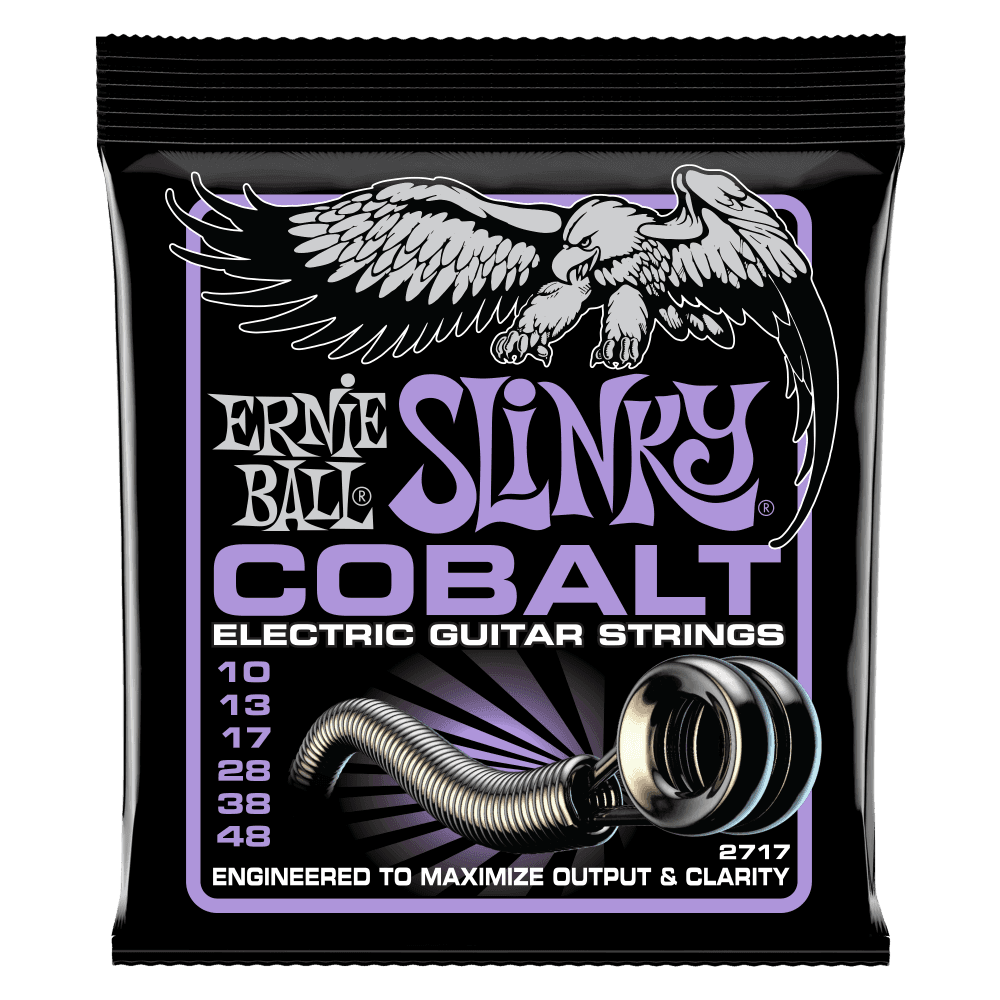
Ernie Ball Ultra Slinky Cobalt (2717) is the .010–.048 Cobalt set that pairs Regular Slinky's .010 top three strings with Power Slinky's .048 low E. Cobalt-iron wrap wire reads roughly 2 to 3 dB louder through passive pickups than nickel Ultra Slinky at the same gauge, with a tighter upper midrange. Pick it for E standard players who want extra low-string weight, or Eb standard players who find .011s too stiff.

Anatomy
- SKU
- Ernie Ball 2717
- MPN
- P02717
- Gauge
- .010 – .048 (Ultra Slinky)
- Gauge set
- .010, .013, .017, .028, .038, .048
- Core wire
- Tin-plated hex steel
- Wrap wire
- Cobalt-iron alloy
- Plain strings
- Tin-plated hex-core steel (.010, .013, .017 plain)
- Coating
- None, uncoated
- Winding
- Standard roundwound
- Intended scale
- 25.5" (Strat / superstrat) and 24.75" (Les Paul) both work
- Intended tunings
- E standard (heavy hand), Eb standard
- Total tension (25.5", E standard)
- ~103 lbs, per CYS's own audited Cobalt tension table
- Collection
- Ernie Ball Cobalt Expanded Gauges (exact SKU launch date not independently confirmed)
- Package
- Single pack
Ultra Slinky Cobalt (.010–.048)
Tone
Voicing through a passive pickup
- Output
- Commonly reported 2–3 dB louder than same-gauge nickel Ultra Slinky through the same passive pickup, the same voicing bump every Cobalt gauge shares.
- Top end
- Brighter and more defined. MusicRadar's review of the Cobalt line described low notes as more defined and mids as tighter, like a little dust removed from the treble frequencies.
- Low end
- The heavier .048 low string (versus Regular Slinky Cobalt's .046) adds a touch more low-end mass on top of the Cobalt wrap's own tighter attack.
- Feel
- Identical to Regular Slinky Cobalt under the fretting hand: same .010, .013, .017 top three strings. Only the low E feels different, and only slightly.
Where this set sits in the Cobalt range
Ultra Slinky Cobalt is a hybrid by design. Ernie Ball builds it from Regular Slinky's top three strings and Power Slinky's low E. The Cobalt 6-string lineup in tuning order:
- E standard, lighter feel: Regular Slinky Cobalt (.010–.046).
- E standard heavy hand / Eb standard: This set, Ultra Slinky Cobalt (.010–.048).
- Eb standard / occasional Drop D: Power Slinky Cobalt (.011–.048).
- Drop D specialist, mixed gauge: Skinny Top Heavy Bottom Cobalt (.010–.052).
- Drop C# / Drop C: Beefy Slinky Cobalt (.011–.054).
Full picking guide at Cobalt Slinky gauges explained.
Who plays this set
No individual artist is currently documented on this exact Cobalt SKU. Ernie Ball's own artist coverage and gear-database sources like Equipboard don't list a named Ultra Slinky Cobalt (2717) user as of this review.
The plain nickel Ultra Slinky gauge this set is built from, .010–.048, is a long-standing Ernie Ball gauge sold alongside Regular Slinky and Power Slinky as one of the brand's standard 6-string sets. Ernie Ball's own product copy describes it as combining Regular Slinky's top strings with Power Slinky's low string, built for lead players who bend often without losing rhythm-string weight. If you already play nickel Ultra Slinky and want the Cobalt output bump, this is the direct swap: same gauge, different wrap alloy.
See Who plays Cobalt Slinky strings for documented pros on other gauges in the line.
Best for
- E standard players who pick hard. The heavier low E holds up to aggressive rhythm attack better than Regular Slinky Cobalt's .046.
- Eb standard players who find .011s stiff. Ultra Slinky keeps Regular Slinky's lighter top three strings while adding some of the low-end weight Eb standard wants.
- Players switching from nickel Ultra Slinky. Same gauge, so no setup change, just the Cobalt voicing bump.
- Beginners on a factory-strung 25.5-inch scale electric. The top three strings match the most common factory gauge.
Worst for
- Dedicated Drop D or lower. The lighter .010 top wasn't built around a dropped low string. Use Power Slinky Cobalt or Skinny Top Heavy Bottom Cobalt instead.
- Players who want a bigger jump from Regular Slinky. The gauge difference is one string, barely noticeable. If you want to feel a real difference, go to Power Slinky Cobalt.
- Slide players. Like every Cobalt gauge, the extra attack fights a slide's natural compression. Use a nickel set.
- Humid climates with heavy sweat. Cobalt is less corrosion-resistant than nickel plating. Wipe down after every session.
Install and break-in
Because only the low E changes gauge (.046 to .048, a difference of two thousandths of an inch), moving from Regular Slinky Cobalt to Ultra Slinky Cobalt adds only a small amount of total tension, nowhere near the jump you'd feel moving to a full Power Slinky .011 top. Most setups won't need a truss-rod adjustment. Coming from nickel Ultra Slinky at the same gauge, there's no setup change at all.
Break-in is roughly 20 to 30 minutes of playing before the bright initial top end settles. Stretch each string (press behind the 12th fret, pull up about an inch, retune, repeat 3 to 4 times) before you start.
Verdict
Ultra Slinky Cobalt is a narrow, specific fix. Think of it as Regular Slinky Cobalt with a heavier low string, or Power Slinky Cobalt with a lighter top. Reach for it if you've played Regular Slinky Cobalt and wanted a bit more low-end weight without giving up the lighter top-string bend feel, or if Power Slinky's .011 top always felt like more than you needed.
If you're new to the Cobalt line entirely, start with Regular Slinky Cobalt instead. It's Ernie Ball's own recommended default and the more documented gauge. Come back to Ultra Slinky once you know you want the heavier low string.
Related
Related