Ernie Ball Power Slinky Cobalt Flatwound (.011–.048): flatwound for Eb standard
Written with AI help · Updated
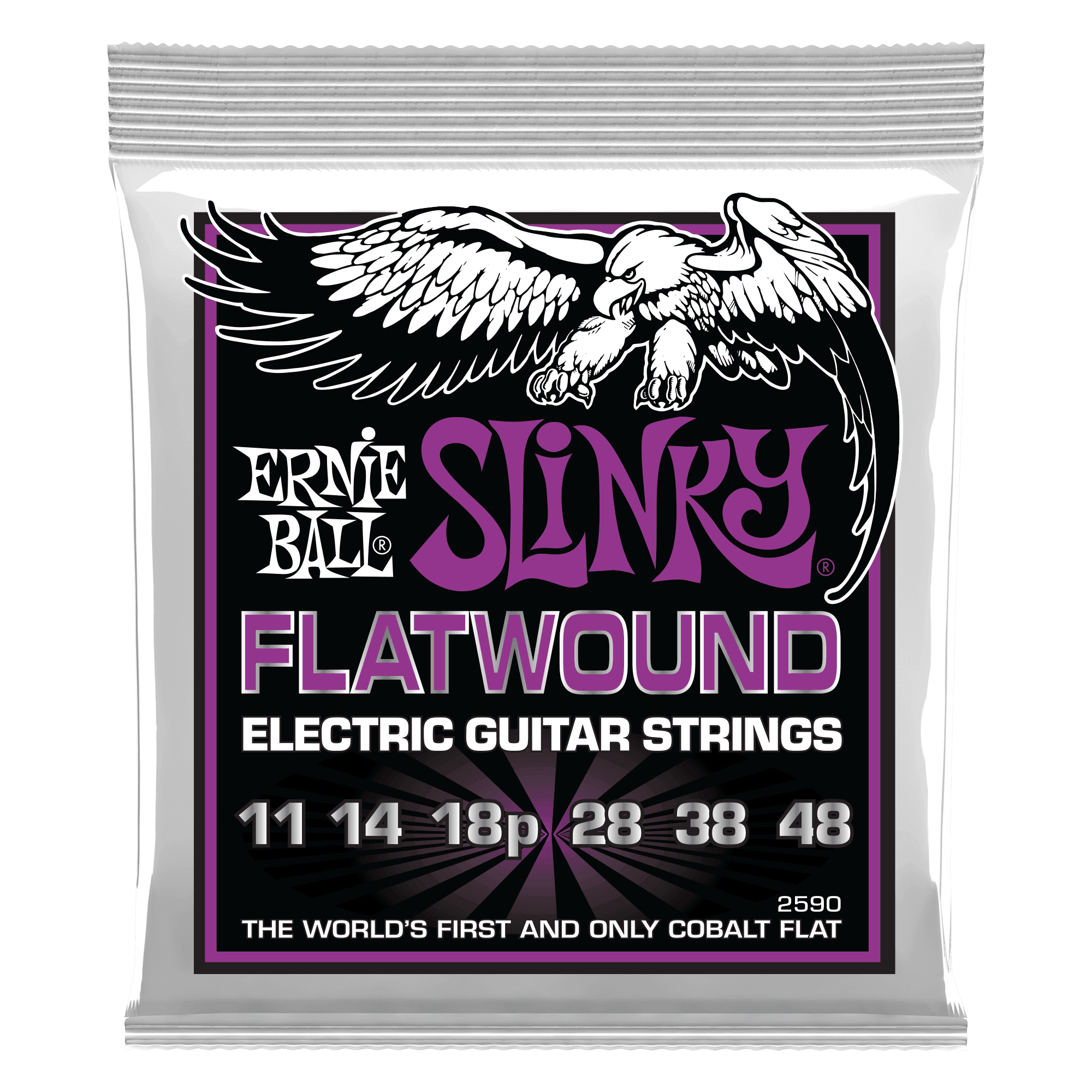
Ernie Ball Power Slinky Cobalt Flatwound (2590) scales the same cobalt-ribbon flatwound construction up to .011-.048, the gauge built for Eb standard and Drop D. The plain G string still bends and solos normally, and the flatwound wrap keeps finger noise low. Reach for it over Regular Slinky Cobalt Flatwound if you tune down a half step, dig in harder, or want more low-string headroom without losing the flatwound feel.

What this set is
Power Slinky Cobalt's flatwound sibling: the same .011 to .048 gauge Ernie Ball built for Eb standard and Drop D, wound with a cobalt alloy ribbon instead of round wire. Ernie Ball's own product page frames the set around three claims: "Flat Feel," a cobalt ribbon "precisely polished to provide the smoothest possible feel with the least amount of finger noise"; "Round Sound," the same cobalt alloy that "preserve[s] that classic Slinky tone"; and "Plain G," where "a plain G string along with lighter gauge combinations allow for easy bending and soloing compared to traditional flatwound strings."
Ernie Ball unveiled the Slinky Cobalt Flatwound line, this gauge included, at NAMM 2023. Guitar World covered the announcement and called it the world's "first and only" cobalt flatwound string, noting Ernie Ball was "touting their blend of old-school tone and modern playability, with the smooth feel particularly suited to slide playing," a use case neither Ernie Ball's current product page nor most retailers mention. It's been a standard part of the Cobalt lineup since.
Like every set in the flatwound family, this one skips the tradition of wrapping the G string. A traditional flat, D'Addario XL Chromes included, wraps all three treble-adjacent strings, which stiffens the G and makes wide, fast bends harder to execute cleanly. Ernie Ball's SKU 2590 leaves the G plain at .018, so the bending vocabulary of a normal roundwound Power Slinky carries over.
Anatomy
SKU 2590 is Ernie Ball's Power Slinky gauge in the Slinky Cobalt Flatwound line. B0C35HNQ5P is the ASIN Amazon lists for this exact SKU, cross-checked against the same ASIN already verified on CYS's Regular Slinky Cobalt Flatwound family comparison table.
- SKU
- Ernie Ball 2590
- MPN
- P02590
- Gauge
- .011 – .048 (Power Slinky)
- Gauge set
- .011, .014, .018, .028w, .038w, .048w
- Plain strings
- .011, .014, .018 (G string plain, not wrapped)
- Core wire
- Steel hex core
- Wrap wire
- Cobalt alloy ribbon, flatwound and polished smooth
- Coating
- None. Uncoated.
- Winding
- Flatwound (round wire on standard Cobalt Slinky, ribbon here)
- String tension
- Not published by Ernie Ball for this set. The roundwound Power Slinky Cobalt at this identical gauge runs about 95 lbs total in Eb standard and 103 lbs in E standard; expect the flatwound version to sit at or slightly above those numbers, since the denser ribbon wrap typically adds a touch more mass than round wire at the same gauge.
- Intended tunings
- Eb standard, Drop D, E standard with firmer feel
- Launched
- NAMM 2023 (Slinky Cobalt Flatwound line debut)
- Package
- Single pack (2590)
Power Slinky Cobalt Flatwound (.011–.048)
Flatwound vs its roundwound twin, same gauge
Ernie Ball sells this exact .011-.048 gauge two ways: roundwound Power Slinky Cobalt and this flatwound version. Same numbers, same alloy family, different wrap geometry, and CYS has both reviewed, so the comparison is direct instead of estimated.
| Flatwound (this set, 2590) | Roundwound Power Slinky Cobalt (2720) | |
|---|---|---|
| Wrap wire | Cobalt alloy ribbon, flatwound | Cobalt-iron alloy, round wire |
| Total tension, Eb standard | ~95 lbs or slightly more (not published; ribbon adds mass) | ~95 lbs (published CYS estimate) |
| Total tension, E standard | ~103 lbs or slightly more | ~103 lbs |
| Finger noise | Low | Standard roundwound |
| Brightness | Lower, flatwound-muted top end | Higher, more present highs |
| Documented user at this gauge | None documented | Slash (roundwound, Cobalt launch, 2012) |
The gauge decision and the construction decision are separate. Pick .011-.048 because it fits your Eb-standard or Drop-D tuning; then pick flatwound or roundwound based on how much finger noise and brightness you want. Cobalt vs nickel Slinky covers the alloy question if you're also weighing that.
The Slinky Cobalt Flatwound gauge family
Ernie Ball sells Slinky Cobalt Flatwound in three gauges on one product page, all sharing the plain-G design. This is the heaviest of the three.
| Super Slinky (2593) | Regular Slinky (2591) | Power Slinky (2590, this page) | |
|---|---|---|---|
| Gauge | .009–.042 | .010–.046 | .011–.048 |
| Gauge set | .009, .011, .016, .024w, .032w, .042w | .010, .013, .017, .026w, .036w, .046w | .011, .014, .018, .028w, .038w, .048w |
| G string | Plain (.016) | Plain (.017) | Plain (.018) |
| Best-fit tuning | E standard, light feel | E standard | Eb standard, Drop D |
| Amazon ASIN | B0C356VJ63 | B0C35DTZHG | B0C35HNQ5P |
Regular Slinky Cobalt Flatwound (.010–.046), full review · Super Slinky Cobalt Flatwound (.009–.042), full review
Best for
- Eb standard and Drop D players who want flatwound's quiet feel. The gauge that already fits those tunings on a roundwound Power Slinky carries straight over
- Rock and blues players curious about flatwound who don't want to give up bends and lead lines to get there
- Quiet studio takes and slide playing. Guitar World's own launch coverage singled out the flatwound Cobalt line's smooth feel as "particularly suited to slide playing"
- Guitars already set up for roundwound Power Slinky gauge. No setup change, since the core numbers match
Worst for
- Traditional jazz players chasing a fully dead, dark tone. D'Addario Chromes is voiced darker and deader on purpose; this set still carries some of Cobalt's brightness
- Humid climates and heavy sweat. Player reports on Cobalt's corrosion resistance are mixed: some see rust or tarnish within weeks in humid conditions or with high-acid sweat, others get long life with no issues. If you sweat heavily or gig somewhere humid, wipe down after every session, or consider a traditional stainless flat like Ernie Ball's own Stainless Steel Flatwound
- Drop C and below. .011–.048 is an Eb-standard-family gauge; a lighter drop below Drop D asks more of this set than it's built for
- Budget shoppers. It costs roughly double a standard nickel Power Slinky pack
Setup notes
Coming from roundwound Power Slinky, whether nickel or Cobalt, the swap to this set needs little more than a normal restring since the gauge numbers match exactly. The flatwound ribbon on the bottom three strings carries a bit more mass than round wire at the same gauge, so check intonation after the swap. Stretch each string the way you would any new set: press behind the 12th fret, pull up about an inch, retune, repeat three or four times before you trust the tuning.
Go easier on hard bends than you would on a roundwound set. The flattened cobalt ribbon has less give than round wire, so an aggressive full-step bend can leave a faint flat spot at the bend point over years of play. It's a smaller concern here than on a heavier traditional flat, since the plain G string, where most rock and blues bends happen, isn't flatwound at all.
Verdict
Power Slinky Cobalt Flatwound is the set to reach for if you play Eb standard or Drop D, want a quieter, smoother string under your fingers, and don't want to relearn how to bend. It carries Ernie Ball's Power Slinky numbers over from the roundwound original and swaps in a cobalt ribbon wrap that trades some brightness for reduced finger noise and, per Guitar World's own launch coverage, a smoother ride under a slide. It costs more than a standard nickel Power Slinky pack and isn't a substitute for a traditional dark jazz flat like D'Addario Chromes. For an Eb-standard or Drop-D player who wants flatwound's quiet without giving up playability, it's the direct upgrade path from Ernie Ball's lighter Regular Slinky Cobalt Flatwound.
Related
Related