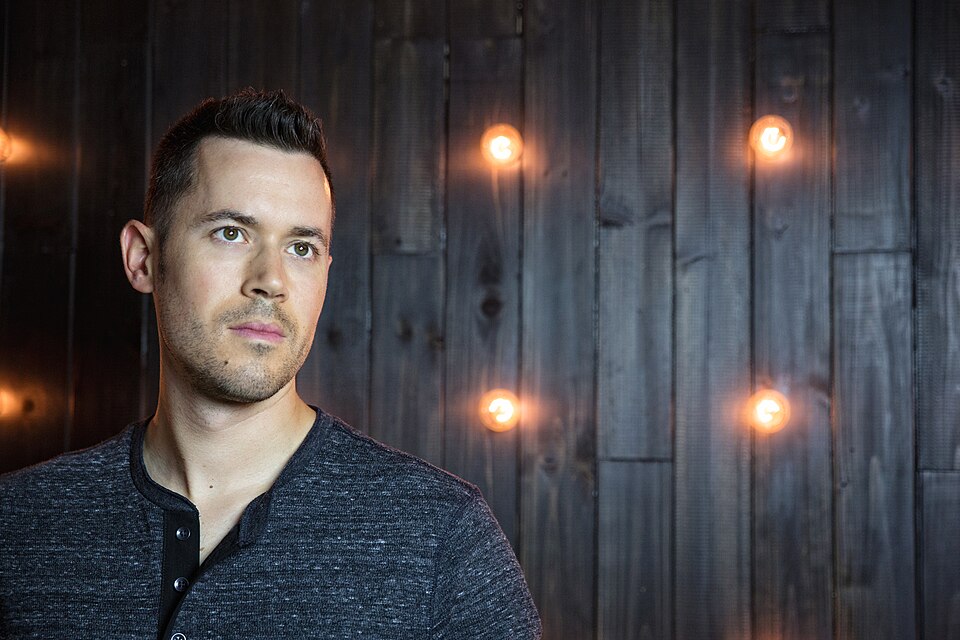
Joel Wanasek: metalcore producer and URM Academy co-founder
Joel Wanasek produced and mixed Monuments and Machine Head, plus co-founded URM Academy. What strings fit his rhythm-guitar lane.
Written with AI help · Updated
Joel Wanasek is a Milwaukee, Wisconsin producer and mixer who owns JTW Recording, with credits including Monuments and Machine Head's "Is There Anybody Out There?" He co-founded URM Academy with Joey Sturgis and Eyal Levi, and Drumforge with Sturgis and Joe Wohlitz. His rhythm-guitar lane sits in Drop C and Drop D on 25.5-inch-scale 6-strings, with nickel-plated-steel gauges in the .011–.054 range. His published mixing content emphasizes fresh strings, tight gate discipline, and consistent pick attack over exotic gauges.
Who Joel Wanasek is
Joel Wanasek is a Milwaukee, Wisconsin-based producer, mixer, and educator who owns JTW Recording. His verifiable production and mix credits include Monuments' Phronesis and Machine Head's single "Is There Anybody Out There?" (2016), alongside a mixing-assistant credit on Blessthefall's To Those Left Behind (2015). If Joey Sturgis's catalog defines the scene-era metalcore sound, Wanasek's own studio work sits in the same Milwaukee-adjacent metalcore and post-hardcore lane.
He is one of the three founders of URM Academy (Unstoppable Recording Machine), the subscription education platform for metal and metalcore producers, the other two being Joey Sturgis and Eyal Levi. He also co-founded Drumforge, a drum-sample and plugin company, with Sturgis and Joe Wohlitz. That context matters for this page: Wanasek's publicly available gear discussions live primarily in URM content and on his personal YouTube, where the focus is mixing technique rather than specific string brand preference.
This page is the guitar-string context for his production lane. We describe the strings that fit his production style; nothing here is a direct "Wanasek recommends" claim absent sourced citation.
Production signatures
Two things identify a Wanasek-era production, based on his documented Monuments and Machine Head credits:
- Cleaner low-end management than peer-era metalcore. His low-frequency mix work is notably less cluttered than the 2010-era metalcore standard, the bass guitar and kick drum occupy clear pockets rather than fighting. This shows up in tracking decisions too: guitar gauges that keep the low string musical rather than thuddy.
- Mid-scoop discipline. His rhythm guitar tones rarely carry the extreme mid-scoop that characterized peer producers' work. The midrange sits present, which means string choice needs to support that, dead or worn strings collapse the upper-midrange content his mixes build around.
- Educational output as signal. His public YouTube content and URM Nail the Mix sessions are one of the clearest windows into how these mixes come together. He explains his decisions in detail, which is why producer-lane pages for him can confidently describe his approach even without direct endorsement relationships.
Gauges that fit the Wanasek-era metalcore lane
Drop C / Drop C# (6-string, 25.5" scale)
.011–.054 nickel-plated steel is the anchor gauge. Brand is player preference, not producer preference; Wanasek has not publicly named a specific string brand for his own use, so the recommendation is gauge-math, not endorsement.
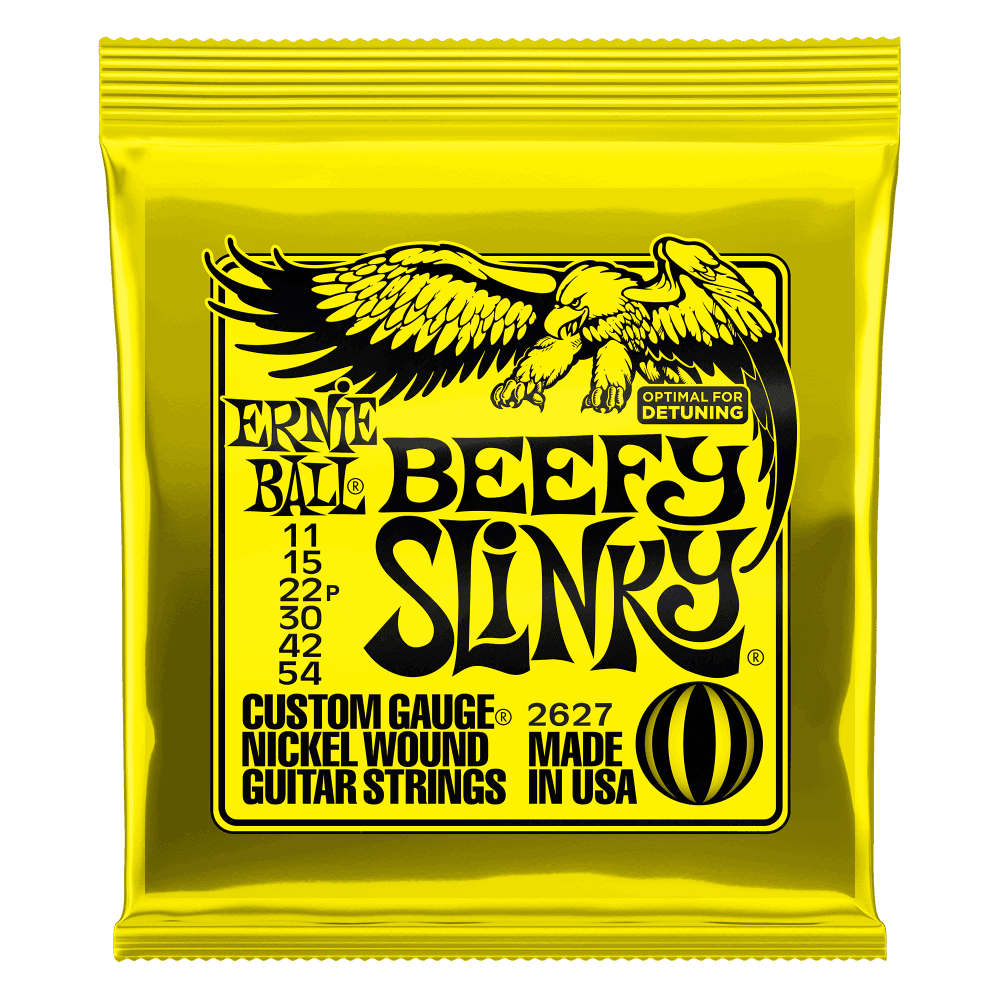
Beefy Slinky (.011–.054)
Why this one: Editorial pick for Drop C metalcore on a 25.5-inch scale. The .011–.054 gauge supports the upper-midrange attack a Wanasek-style mix gates on. Gauge-fit, not a Joel Wanasek endorsement.
Drop D / Eb standard (6-string, 25.5" scale)
.010–.052 (Skinny Top Heavy Bottom configuration) or .011–.048. Lighter on the top strings for lead clarity, heavier on the bottom for Drop D punch.
E standard / Eb standard (6-string, 25.5" scale)
.010–.046 standard rock gauge for lighter rock and post-hardcore material that doesn't drop-tune. The bend feel and top-end clarity of a .010 gauge suit rhythm work that isn't chasing the heaviest possible low end.
Coated for session work
Multi-day tracking schedules are standard for the records in his catalog. Coated sets (Elixir Nanoweb, Ernie Ball Paradigm, D'Addario XT) hold tone long enough to cut a full album's rhythm passes without a string change disrupting the engineer's reference.
Why his lane rewards clean tracking technique
Wanasek's published mix content repeatedly makes the same point Joey Sturgis does: gauge choice is a floor condition (heavy enough to hold the tuning without flab), not a quality condition. The variables that actually determine how his mixes come together are:
- Picking discipline, firm consistent attack, palm-mute anchor hand relaxed.
- Gate calibration, set to trigger on the attack transient, not the sustain. Requires fresh strings whose upper-midrange content is clean.
- Low-end separation, kick, bass, and low guitar tuned and EQ'd to not occupy the same 80–120 Hz pocket. Heavier gauges that produce more 60–80 Hz content actually make this harder, not easier.
The takeaway is the same across URM's three founding voices: the tracking choices support the mix, and the mix is where the sound lives.
Related
- Related producer pages: Joey Sturgis (URM co-founder, metalcore lane), Adam "Nolly" Getgood (prog/djent side), Drew Fulk (modern metalcore).
- Genre pages: metalcore in Drop C, post-hardcore in Drop D.
- URM Academy is the best single resource for going deeper on production technique in this lane, his free YouTube content is a useful starting point before paying for the school.