Drop C string gauge and tension chart: pick the right set for 25.5", Gibson, and baritone scales
Written with AI help · Updated
For Drop C (C-G-C-F-A-D) on a 25.5-inch Fender-scale electric, the right gauge floor is .011–.054 (Beefy Slinky or equivalent). Most players are best served by .012–.056 (Not Even Slinky) if they play heavy rhythm. On a 24.75-inch Gibson scale, run the same gauge or step one heavier. On a 27-inch baritone, step one lighter to keep bend feel comfortable. Going lighter than .011 at Drop C causes flap, intonation drift, and tuning instability.
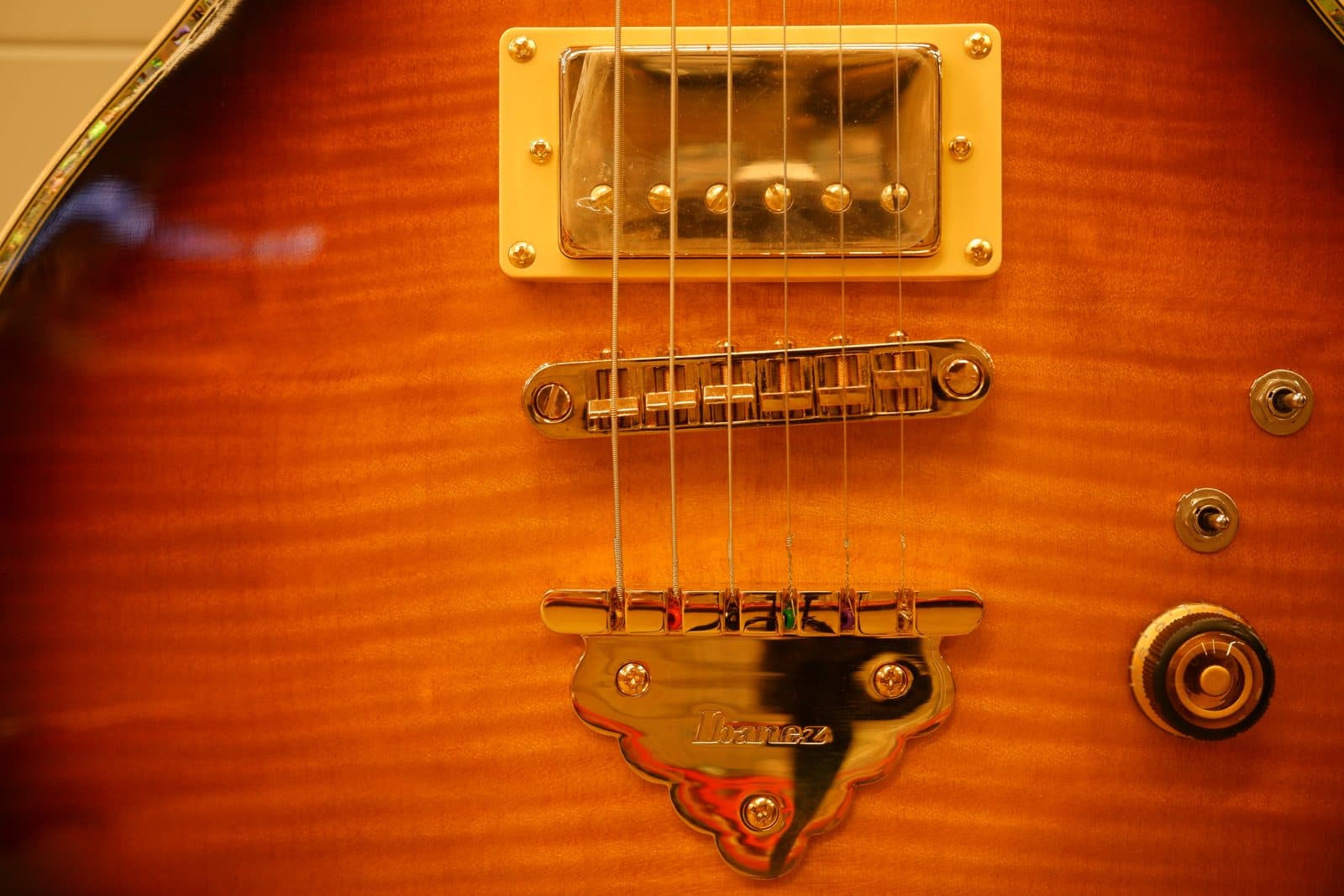
Drop C tuning, explained in one paragraph
Drop C tuning is the standard 6-string E-standard pattern dropped a whole step plus one additional step on the low string: C–G–C–F–A–D from low to high. It's a go-to tuning for modern metal, post-hardcore, and heavy alternative rock because it gives a huge low end while still letting you play power chords with a single-finger fifth shape on the bottom two strings. Bands from Alice in Chains (on some songs) through System of a Down through Bullet for My Valentine have used Drop C as their primary tuning.
Full reference: Drop C tuning guide.
The tension targets, by scale length
Strings don't care how you tune them, they care about tension. Tension is a function of gauge, pitch, and scale length. Flip any two of those and you get a different tension number. The goal in Drop C tuning is to keep each string between about 15 and 22 pounds of tension so it articulates cleanly under a pick without feeling stiff or floppy.
| Scale | Low C target gauge | Low C tension | Full-set recommendation | |
|---|---|---|---|---|
| 25.5" Fender (Strat, Tele, most superstrats) | .054 | ~15 lbs | .011–.054 (Beefy Slinky) | |
| 25.5" Fender, heavy-handed player | .056 | ~16 lbs | .012–.056 (Not Even Slinky) | |
| 24.75" Gibson (Les Paul, SG, ES) | .056 | ~15 lbs | .012–.056 (Not Even Slinky) | |
| 25.0" PRS scale | .054 or .056 | ~15–16 lbs | .011–.054 or .012–.056 | |
| 26.5" Mayones / Schecter extended | .052 | ~15 lbs | .010–.052 (STHB) up to .011–.054 | |
| 27" baritone | .050 or .052 | ~15–16 lbs | .010–.052 (STHB) is the sweet spot |
The three Ernie Ball sets that work for Drop C
Drop C-ready Ernie Ball sets
- Beefy Slinky / Beefy Slinky Cobalt (.011–.054)
- The default answer for Drop C on a 25.5-inch scale Fender-style guitar. The low .054 at Drop C produces about 15 pounds of tension, firm enough to hold pitch under aggressive picking, flexible enough to bend comfortably on the top three strings. Pick nickel for classic voicing; pick Cobalt for tighter low-end articulation under high gain.
- Not Even Slinky / Not Even Slinky Cobalt (.012–.056)
- One gauge heavier. The .056 low string at Drop C produces about 16 pounds of tension, the firmer end of comfortable, and the right answer for heavy-handed rhythm players who palm-mute hard or play in high-gain amp settings.
- Custom build: .011–.058
- Some Drop C players want a heavier low-string-only. The .011–.058 custom build uses a heavier .058 wound low string at the bottom of a .011 set. String-builder services (Stringjoy, Kalium) and single-string purchases make this build straightforward.
The cleanest in-stock answer for most Drop C players on 25.5-inch scale into high gain:
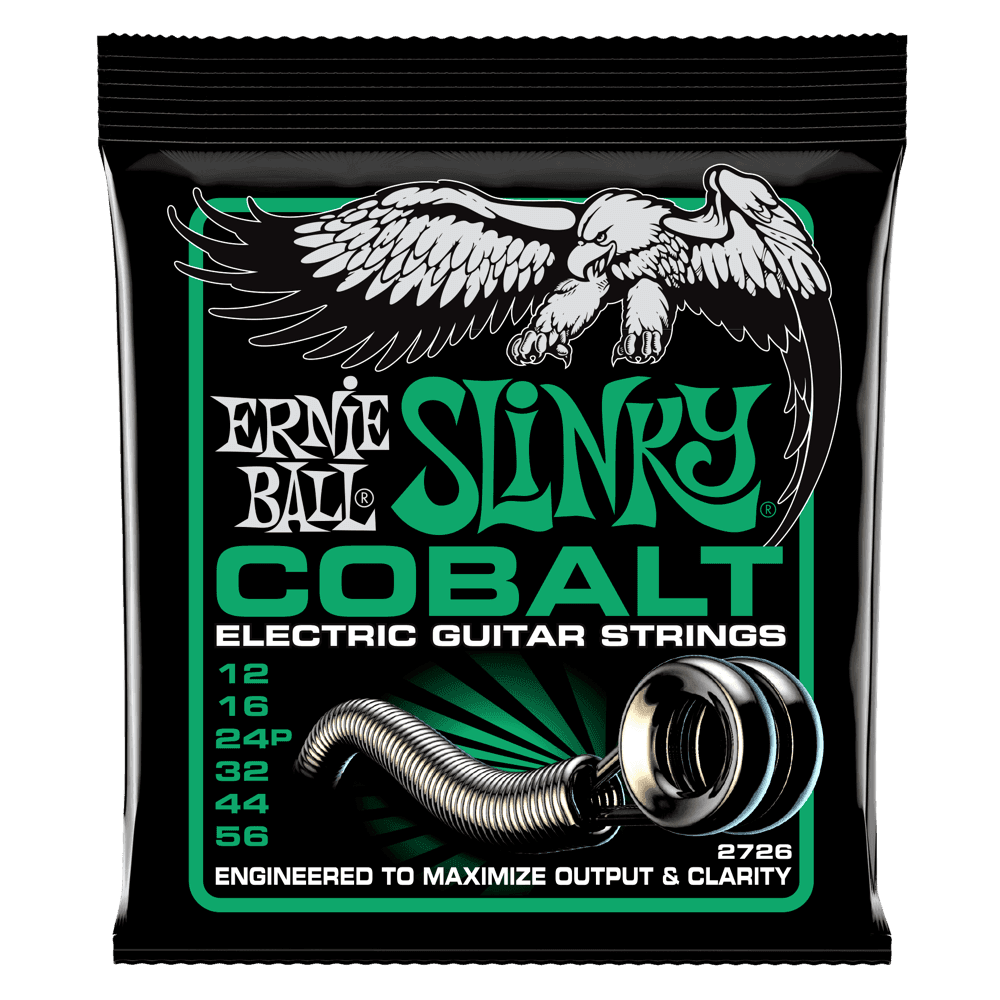
Not Even Slinky Cobalt (.012–.056)
Why this one: The cleanest 6-string Drop C answer for 25.5-inch-scale electrics played into high gain. Cobalt wrap tightens low-end articulation; .056 low string hits the 16-pound tension sweet spot.
For the full review of the Cobalt set: Not Even Slinky Cobalt (.012–.056) review.
The sets that DON'T work for Drop C, and why
Sets to avoid for Drop C
- Regular Slinky (.010–.046)
- Do not tune a .010 set to Drop C. The low .046 at Drop C is about 10 pounds of tension, well below the playable floor. The string will flap under picking, detune rapidly, and intonate inconsistently. If you want to try Drop C on a guitar currently strung with Regular Slinky, restring first.
- Power Slinky (.011–.048)
- Borderline. The low .048 at Drop C is about 12 pounds, above flap but below comfortable. Works for light-touch players in a clean or crunch amp setting, but falls apart under high gain. Most players who try Power Slinky for Drop C end up moving up to Beefy or Not Even within a session or two.
- Hybrid Slinky (.009–.046)
- Same low-string problem as Regular Slinky, compounded by lighter top strings that don't match the heavier musical context of Drop C. Not recommended.
Install considerations when switching to a Drop C gauge
Going from a .010 E-standard set to a .011 or .012 Drop C set adds 6–12 pounds of total tension across the neck. Do not skip the setup adjustments:
- Truss rod. Expect to tighten about a quarter turn to compensate for the added neck bow.
- Nut slots. A .054 or .056 low string usually fits a stock Drop D nut slot. A .058 or heavier may need the slot widened with a nut file. See precision nut filing for heavy-gauge strings.
- Bridge saddles. Expect to raise action slightly at the bass side to prevent buzz under the heavier string's wider vibration arc.
- Intonation. Re-intonate after the new set has stretched in. Heavy strings move the intonation point further toward the bridge tailpiece.
The full walk-through is in our heavy-gauge electric string install guide.
Related
- Drop C tuning guide, the full reference page
- String gauges by tuning, the cross-tuning chart from E standard to Drop A
- Not Even Slinky Cobalt (.012–.056) review, the canonical Drop C set on Cobalt wrap
- Cobalt vs nickel Slinky, voicing comparison for the Drop C lane
- Cobalt Slinky gauges explained, picking between the gauges in the family
- Heavy-gauge electric string install, the install procedure for stepping into .011–.054 or heavier
- Precision nut filing for heavy-gauge strings, when the nut slot needs widening
- 8-string high-tension setup, the next step beyond Drop B for extended-range players
Frequently asked questions
What's the lightest gauge I can get away with for Drop C?
.011–.054 is the floor on 25.5-inch scale. Below that, the low C produces under 14 pounds of tension. Players tuning a .010 set to Drop C regret it within a week, the low string smears under gain, intonation drifts, tuning stability collapses on bends.
Is .012–.056 overkill for Drop C?
Depends on your picking style. Heavy-handed metal rhythm: .012–.056 Not Even Slinky Cobalt is the sweet spot. Lighter touch or lead-forward: .011–.054 Beefy Slinky stays comfortable and still handles Drop C rhythm.
Does scale length really change the right gauge for Drop C?
Yes. On a 24.75-inch Gibson scale, a .054 low string sits at about 13% less tension than the same string on a 25.5-inch Fender scale. That means Gibson-scale Drop C players often need to step up one gauge compared to the Fender recommendation. Baritone 27-inch players can step down one gauge because the added scale length compensates.
Can I tune a factory .010 set down to Drop C?
You can physically; you shouldn't musically. The low E-dropped-to-C at .046 will have about 8 pounds of tension, about 40% below playable for rhythm work. The string will flap and detune under picking. If you're experimenting, tune down just for 20 minutes, then switch to an appropriate gauge set if you want to stay in Drop C.
What about Skinny Top Heavy Bottom for Drop C?
Skinny Top Heavy Bottom (.010–.052) is designed for Drop D, not Drop C. On a 25.5-inch scale in Drop C, the .052 low string is still under-tension for the heavier rhythm work most Drop C players want. Players who love the STHB format for Drop D often move to .011–.054 or a custom .010–.058 set for Drop C.
Do I need to adjust my truss rod when switching to heavier gauges for Drop C?
Almost always yes. .010 to .011 adds about 6 pounds of total neck tension; .010 to .012 adds about 12 pounds. Most necks need a quarter-turn tighter on the truss rod, plus a small bridge-height adjustment. See the heavy-gauge install guide for the full walk-through.
What about Drop B, can I use the Drop C set?
Borderline. .011–.054 tuned to Drop B drops the low string to about 11 pounds, below the comfortable floor. For Drop B, step up to .012–.056 Not Even Slinky Cobalt at minimum, or move to a 7-string or baritone setup. Drop B on standard 25.5-inch 6-string is the dividing line.