Precision nut filing for heavy-gauge guitar strings
Written with AI help · Updated
A .062 nickel-wound low E needs a nut slot 0.067-inch wide. Rule: slot width = string gauge plus 5 mils. Use Stewmac gauged nut files at the correct size, file the slot at a 12-degree back-angle, target 0.005-inch clearance above fret 2 when fretted at 3, and lubricate the cut with Big Bends Nut Sauce. The whole job runs about 45 minutes if you have the right files; budget $50-75 for the file kit plus consumables.
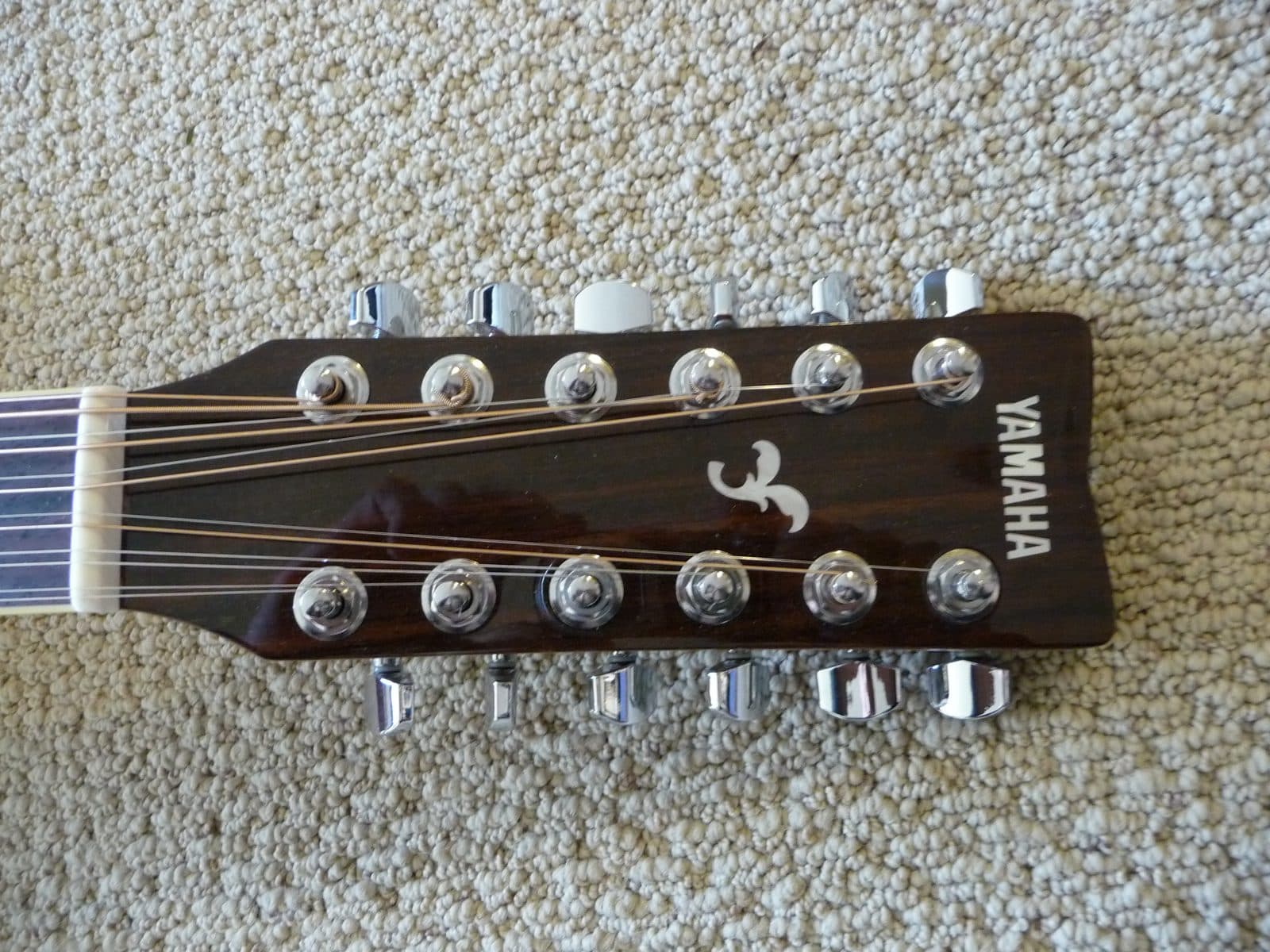
This is the canonical Change Your Strings procedure for filing a guitar nut to accept heavy-gauge strings (.062 nickel low E, .074 baritone low E, or 8-string territory). The procedure assumes a standard plastic, bone, or Tusq nut on a 25.5-inch scale electric guitar. Floyd Rose locking nuts use a different protocol entirely.
Why heavy-gauge strings demand a re-cut nut
A factory-cut electric guitar nut is sized for the stock string set the manufacturer ships with, typically .009-.042 for Strat-style guitars, .010-.046 for Les Pauls, .012-.052 for acoustic-spec electrics. Stepping up to a .062 low E or beyond exceeds the slot's design tolerance, and three things go wrong:
The string binds in the slot. You can hear it as an audible click during tuning. The slot was sized for a thinner string; the new gauge wedges into the walls.
The string fails to return to pitch after bends. Because the binding holds the bent length captive, releasing the bend doesn't equalize the tension across the nut. This is the most common in-the-wild diagnostic.
The string sits too high above fret 1. Heavy strings have a larger diameter, so even if the bottom of the slot wasn't deepened, the string sits higher off the fretboard. That increases playing effort on the first three frets.
The fix for all three is a single procedure: re-cut the slot to the correct width and depth, back-angle it, and lubricate.
Relevant gear
A working set of nut-filing tools doesn't have to be expensive but it does have to be the right tools. Steel files, double-cut, in graduated gauges. Don't substitute a hardware-store needle file, the cut profile is different and you'll widen the slot unevenly.
Step-by-step procedure
How to file a guitar nut for .062 bass strings
Precision nut filing procedure for accommodating .062-gauge low-E strings on a standard 25.5-inch scale electric guitar. Includes diagnosis, slot width math, depth measurement method, back-angle technique, and recovery procedure for over-filing.
- Time
- 45 min
- Cost
- ~$75 USD
- Tools
- 6
- Supplies
- 4
Tools
- Stewmac Gauged Nut File Set (.010 to .090 covers most jobs; baritone needs the .064 + .074 sizes)
- Stewmac Nut Slot Depth Gauge (or a 0.005-inch feeler gauge)
- Steel ruler 6-inch
- Painter's tape (low-tack, blue)
- Magnifier or jeweler's loupe (10x)
- Calipers (digital, 0.001-inch resolution)
Supplies
- Big Bends Nut Sauce (or a soft graphite pencil as backup)
- Replacement string set with the target heavy-gauge low E
- Cotton cloth for cleaning fretboard between steps
- Bone dust (saved from filing, kept in a small dish for the recovery procedure)
- 01
Diagnose the binding
Tune the guitar to standard pitch with the heavy-gauge string installed. Listen for a click as you turn the tuning peg. A click during tuning means the string is binding in the nut slot. Bend the low string up one whole step and release it. If the open note returns to anything other than the pre-bend pitch, the binding is confirmed. Continue to step 2 only if you have a confirmed binding diagnosis. If the string is not binding, do not file the nut.
- 02
Confirm the string gauge with calipers
Detune and remove the low string. Measure the wound diameter with calipers at three points along the playing length. Record the largest reading. This is your reference gauge. For a typical Mammoth Slinky low E, expect 0.062 inch. For a baritone .074, expect 0.074. The slot width target is this measured gauge plus 5 mils (0.005 inch).
- 03
Mark the slot depth target
Re-install the string and tune to pitch. Press the string at fret 3. Measure the gap between the bottom of the string and the top of fret 2 using a feeler gauge. The target gap is exactly 0.005 inch. If the current gap is greater than 0.005 inch, the slot needs to be filed deeper. If the current gap is less than 0.005 inch, do not file deeper, only widen.
- 04
Protect the fretboard
Detune the string and pull it aside. Apply low-tack painter's tape over the fretboard immediately in front of the nut, covering the area between the nut and fret 1. The tape protects the wood from accidental file contact during the cutting motion. Do not skip this step.
- 05
Select the correct gauge file
For a .062 string, select a Stewmac 0.067-inch gauge nut file. For a .074 string, select 0.080-inch. Confirm the file size with calipers before you start cutting. Most file sets are stamped with the gauge but the stamp can be wrong on cheaper kits. Do not use a smaller file and try to wallow it side-to-side; that produces an irregular slot.
- 06
File at a 12-degree back-angle
Hold the file at 12 degrees of back-angle toward the headstock. The cutting stroke is from the fretboard side toward the headstock side, light pressure, full stroke length. Make 5 strokes, then stop. The back-angle pulls the string contact point to the leading (fretboard-side) edge of the slot, which gives a sharper break angle and a cleaner open-string note.
- 07
Test-fit the string
Re-install the string and test-tune to pitch. Re-measure the gap at fret 2 (string fretted at 3). If the gap is greater than 0.005 inch, detune and make another 3-5 strokes with the file at the same 12-degree back-angle. Test-fit again. Iterate until the gap is exactly 0.005 inch. Do not overshoot; recovering from an over-filed slot is harder than incremental filing.
- 08
Lubricate the slot
Detune the string and pull it aside. Apply a small amount of Big Bends Nut Sauce to the slot's sliding surface (the bottom of the slot where the string rests). If you don't have Nut Sauce, rub a soft graphite pencil into the slot until you see graphite residue. The lubricant lets the string slide during tuning and bending instead of catching.
- 09
Verify with the bend test
Re-install the string. Tune to pitch. Bend the low E up exactly one whole step. Release. The string should return to exact pitch with no audible drift. If it doesn't, repeat the lubricate step with one fresh application of Nut Sauce. If the bend test still fails after re-lubricating, the slot wall has a burr or rough surface; polish with a folded strip of 1500-grit abrasive paper drawn through the slot 2-3 times, then re-lubricate and re-test.
- 10
Final intonation check
Tune all six strings to pitch. Play an open low E. Then play the same note fretted at the 12th fret (one octave up). The 12th-fret note should be exactly an octave above the open note. If the 12th-fret note reads sharp, the bridge saddle needs to compensate further (back the saddle away from the neck). If flat, the saddle moves toward the neck. The nut work is complete when the open-12th-fret octave reads true.
When to skip this and replace the nut
Filing a nut is non-reversible. If the nut is in poor condition before you start, you're better off replacing it with a fresh blank. Tusq XL is the canonical drop-in upgrade, it's a self-lubricating polymer that doesn't bind even without Nut Sauce, and the slot accuracy is consistent because the blanks are CNC-cut at the factory. Bone replacement nuts are the traditionalist's choice; they sound marginally fuller (debatable) and require the same filing procedure as the original nut. Either material is fine. Plastic OEM nuts on $400-and-under guitars are usually the part to replace; they wear faster, file unevenly, and aren't worth the time.
Recovery from over-filing
If you cut deeper than 0.005 inch by mistake, do not panic. The repair is straightforward:
- Save bone dust from your earlier filing in a small dish. (If you didn't save dust from this nut, you can shave dust off a spare bone blank with the same file.)
- Mix the dust with a small drop of thin cyanoacrylate glue (super glue) on a piece of waxed paper to a paste consistency.
- Apply the paste to the over-deep slot using a toothpick. Slightly overfill above the target depth.
- Let it cure overnight (8+ hours).
- Re-file the slot to the correct depth using the same Stewmac gauged file. The cured paste files exactly like the original bone material.
For Tusq nuts, the recovery is different, you can't bond bone dust to Tusq. Replace the nut instead. Tusq blanks are inexpensive enough that this is the cheaper outcome.
What this procedure does NOT cover
Floyd Rose locking nuts. Those use a clamping mechanism instead of slot retention, and the protocol for sizing a Floyd nut for heavy-gauge strings involves the locking-block bottom plate (R2/R3/R4 sizes), not file work. Separate guide queued.
LSR roller nuts. The Fender LSR uses ball bearings instead of a sliding slot. They don't need filing; if a heavy string doesn't fit, you replace the LSR with an oversized version.
Brass nuts. Brass is harder than bone; you need different files (the gauged file set won't cut it efficiently) and the procedure involves more dressing. Contact a luthier.
Related
- Heavy-gauge electric string install guide, full installation procedure once the nut is properly filed
- Drop C gauge and tension chart, gauge math for tuned-down setups that benefit from this procedure
- 8-string gauge guide, extended-range gauges that frequently require nut work
- Not Even Slinky Cobalt review, the .012-.056 set whose .056 low E is at the edge of unfiled-nut tolerance
Frequently asked questions
How do I know my guitar nut needs filing?
Three diagnostic tests: the click test (a click during tuning means the string is binding), the bend test (the string fails to return to pitch after a 1-step bend), and the visible pinch test (a magnifier shows the string pinched into the nut sides). Any of these means the slot is narrower than gauge plus 5 mils.
What's the rule for nut slot width on a heavy-gauge string?
Slot width equals string gauge plus 5 mils. A .062 string needs a 0.067-inch slot. A .074 string needs a 0.080-inch slot. The 5-mil margin lets the string sit without pinching at the slot walls, which is the binding behavior the procedure eliminates.
What's the back-angle and why does it matter?
12 degrees toward the headstock. The back-angle pulls the string contact point to the leading (fretboard-side) edge of the slot, which gives a sharper break angle and clean intonation. Without the back-angle, the string sits on a long flat run inside the slot and the open-string note dampens against the back wall.
How deep should the slot be?
Press the string at fret 3. Measure the gap between the bottom of the string and the top of fret 2 with a 0.005-inch feeler gauge. The target gap is 0.005 inch. If the gap is greater, file deeper. If the string already touches fret 2 when fretted at 3, the slot is too deep and needs a partial fill (see recovery FAQ below).
What if I file too deep?
Mix bone dust (saved from filing) with thin cyanoacrylate glue, drop a small amount into the slot, let it dry overnight, re-cut to the correct depth. For severe over-filing, replace the entire nut blank, Tusq XL self-lubricating blanks are the canonical drop-in upgrade.
Should I lubricate after cutting?
Yes, on every cut slot. Big Bends Nut Sauce on the slot's sliding surface, or a soft graphite pencil rubbed into the slot if you don't have Nut Sauce on hand. The lubricant lets the string slide during tuning and bending instead of catching, which is the binding behavior the entire procedure is designed to prevent.