Baritone guitar players: who plays baritone and what strings they use
Written with AI help · Updated
Baritone guitar extends the range down a fourth or fifth, usually on a 27 to 30 inch scale. Documented players cross genres: Robert Smith (The Cure, Schecter UltraCure VI, 30 inch), John Petrucci (Dream Theater, 27 inch Music Man BFR baritone), Pat Metheny (jazz, Linda Manzer custom on One Quiet Night), Bill Kelliher (Mastodon, a studio baritone on Ghost of Karelia), and twang pioneer Duane Eddy (Gretsch, 30.3 inch). Strings are documented where sources allow.
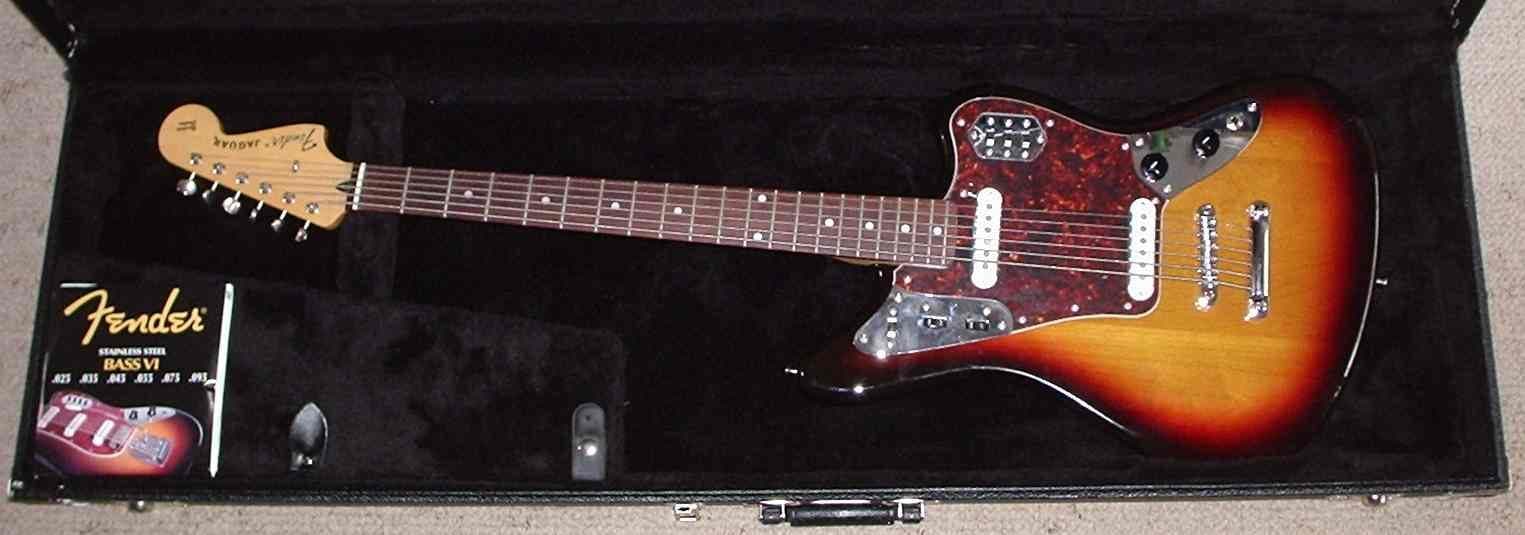
Who plays baritone and why
A baritone guitar is a standard-interval guitar built on a longer scale, usually 27 to 30 inches, so it holds useful tension at pitches below standard E. The extra scale length is the whole point. Tune a normal 25.5 inch guitar down to B or A and the low strings turn to spaghetti; put the same pitches on a 27 to 30 inch neck and they stay firm and articulate.
Because it is still played like a guitar, baritone crosses genres that never share a stage. The players below are documented users from five different worlds: post-punk and goth (Robert Smith), progressive metal (John Petrucci), modern jazz (Pat Metheny), sludge and prog metal (Bill Kelliher), and the rock-and-roll instrumental era (Duane Eddy). Where a source pins down the strings, we cite the gauge. Where it does not, we say so rather than inventing a spec.
Baritone players at a glance
| Player | Band | Guitar | Strings / gauge | Scale / tuning | |
|---|---|---|---|---|---|
| Robert Smith | The Cure | Schecter Robert Smith UltraCure VI | Ernie Ball Regular Slinky (.010–.046), per Schecter factory spec | 30" / tuning not specified by Schecter | |
| John Petrucci | Dream Theater | Music Man BFR Baritone (maple top, tobacco) | Ernie Ball (baritone gauge not stated in rundown) | 27" / tuning not stated in rundown | |
| Pat Metheny | Solo (jazz) | Linda Manzer custom baritone | Magma (nylon set); steel-string on One Quiet Night, gauge not documented | Manzer build / tuned A to A, two strings up an octave | |
| Bill Kelliher | Mastodon | Studio baritone on Ghost of Karelia (producer's guitar) | Not documented | Not documented | |
| Duane Eddy | Solo (twang) | Gretsch G6120TB-DE 6-String Bass | Not documented | 30.3" / tuned E to e, an octave lower |
Robert Smith, The Cure
Robert Smith's low, washed-out guitar textures are a big part of The Cure's sound, and his Schecter signature baritone is built for exactly that. The Schecter Robert Smith UltraCure VI is a 30 inch (762 mm) scale baritone loaded with three Seymour Duncan SJAG-1 single-coil-sized pickups (bridge, middle, neck), a TonePros bridge with brass saddles, and Hipshot locking tuners.
The interesting string detail: Schecter's own spec sheet lists the factory strings as Ernie Ball Regular Slinky #2221 (.010 to .046). That looks light for a baritone until you remember the physics. A 30 inch scale adds a lot of tension, so a set that would feel slack on a 25.5 inch guitar reads as firm here. We cite that as the documented factory spec. Schecter does not publish the tuning the guitar ships in, so we do not claim one.
John Petrucci, Dream Theater
Progressive metal leans on baritone for weight without dropping all the way to a seven- or eight-string, and John Petrucci is a documented example. Premier Guitar's Dream Theater Rig Rundown lists a 27 inch scale Music Man BFR Baritone with a maple top and tobacco finish in his touring boat of guitars, alongside his standard JP models and a seven-string.
Petrucci is a longtime Ernie Ball player, and the rundown documents a custom .010 to .046 set on his standard six-string JP guitars. It does not spell out the baritone's own gauge, and the only tuning it names is a separate aluminum-top JP dropped to D. So for the baritone specifically, the brand is documented (Ernie Ball) but the exact gauge and tuning are not, and we leave them unconfirmed. See his full rig page for the rest of the setup.
Pat Metheny, solo jazz
Baritone is not just a metal instrument, and Pat Metheny is the proof. He records and tours solo baritone pieces built on custom guitars from Canadian luthier Linda Manzer, a collaborator of more than 40 years. His 2003 album One Quiet Night is a solo steel-string baritone record, most of it improvised in a single evening.
Per Acoustic Guitar's 2024 interview, his more recent work is on a Manzer nylon-string baritone strung with sets from the Argentinean company Magma, which let him reach higher and lower pitches at a workable tension. He tunes the instrument roughly A to A, with the third and fourth strings raised an octave, and describes the result as three two-string instruments stacked together, closer to writing for a string trio than to normal guitar. The specific string gauges are not published, so we cite the brand and the tuning concept, not invented numbers.
Bill Kelliher, Mastodon
Mastodon's Crack the Skye was the band's most experimental record, and part of that came from the gear lying around producer Brendan O'Brien's Southern Tracks studio in Atlanta. In Guitar Player's 2024 interview, Bill Kelliher describes it plainly: "There's all kinds of amps, and guitars, and the baritone guitar that's on Ghost of Karelia at the heavy part. I'd never played one before. I thought, this will really thicken up the sound."
So the documented fact is specific: a baritone guitar on the heavy section of "Ghost of Karelia," used to add low-end thickness. It was a studio instrument rather than Kelliher's own, and the interview does not name the brand, model, tuning, or strings, so we do not attach any. It is a clean example of baritone used as a one-track color rather than a main instrument.
Duane Eddy, twang pioneer
Before "baritone guitar" was a category players shopped for, Duane Eddy was making low-string melody the hook of hit records. His "twang" sound, single-note lines played low with tremolo and echo, charted 15 top 40 singles from 1958 to 1963 and prefigured what baritone players do today. Eddy died in 2024.
His Gretsch signature sits right in the baritone and Bass VI overlap. Per Gretsch's own feature, the G6120TB-DE is a 30.3 inch scale hollowbody "6-String Bass," nicknamed Tic-Tac-Twang, tuned E to e (a full octave below a standard guitar) and loaded with twin DynaSonic pickups and a Bigsby. Gretsch markets it as a bass, but at 30.3 inches and voiced for chord and melody work, it plays like a very low baritone. The signature page does not specify a string set, so that stays unconfirmed.
What these players have in common
The thread across a goth frontman, a prog-metal virtuoso, a jazz composer, a sludge-metal riff writer, and a rock-and-roll pioneer is the scale length. Every one of these instruments runs long, from Petrucci's 27 inch neck to Duane Eddy's 30.3 inch Gretsch, so the low strings stay tight. Tuning is where they split: B or A standard for the metal and rock lane, A-to-A with octave strings for Metheny's jazz, E-to-e for Eddy's tic-tac twang.
Strings follow the same logic every time, heavier than a standard set because the pitch is lower and the scale is longer. The catch is documentation. Only Robert Smith's set is nailed down at the string level, and even that is a factory spec from Schecter, not a personal preference statement. For the others we cite the brand where it is public and leave the exact gauge open rather than guessing.
Baritone takeaways
- Scale length
- 27 inches is the production standard; 30 to 30.3 inches shows up on Robert Smith's Schecter and Duane Eddy's Gretsch.
- Tuning
- B standard and A standard are most common; Metheny tunes A to A, Eddy tunes E to e.
- String weight
- Heavier than standard. A dedicated set like the Baritone Slinky runs .013 to .072.
- Documentation
- Only Robert Smith's factory strings are pinned down here. Others are cited by brand or left unconfirmed.
Strings that fit this lane
If you want one off-the-shelf set built for baritone, the Ernie Ball Baritone Slinky is the reference. It is the only baritone-specific set in the Slinky family, and its .013 to .072 spread is aimed squarely at B standard and A standard on a long scale. For very low tunings on a shorter 27 inch baritone you may still want to step the bottom string up.
Baritone Slinky Nickel Wound (.013–.072)
Why this one: The only dedicated baritone set in the Slinky lineup. The .013 to .072 spread is built for B standard and A standard on a 27 to 30 inch scale. Note Robert Smith's Schecter ships with a lighter .010 to .046 Regular Slinky per Schecter's spec sheet, which works because the 30 inch scale adds tension.
Related
- Tunings: B standard, Drop A.
- Extended-range rosters: Top 7-string players, Top 8-string players.
- Gauge reference: 8-string guitar string gauge guide for the tension physics that also applies to baritone.
- Individual rig: John Petrucci.
Frequently asked questions
What is a baritone guitar?
A baritone guitar is a guitar built on a longer scale length, usually 27 to 30 inches, so it holds tension at pitches below standard E. It sits between a standard guitar and a bass. Common baritone tunings are B standard (a fourth below standard) and A standard (a fifth below), though players tune them many ways. The longer scale is what lets a low string ring clearly instead of flopping.
What strings does Robert Smith use on his Schecter baritone?
Per Schecter's own spec sheet for the Robert Smith UltraCure VI, the guitar ships with Ernie Ball Regular Slinky #2221 (.010 to .046). That is a light gauge for a 30 inch baritone, which is worth noting: the long scale adds tension, so a set that would feel slack on a 25.5 inch guitar can feel firm on a baritone. Treat that as the documented factory spec, not necessarily every set Smith personally strings.
What baritone does John Petrucci play?
Premier Guitar's Dream Theater Rig Rundown documents a 27 inch scale Music Man BFR Baritone with a maple top and tobacco finish in Petrucci's touring rotation, strung with Ernie Ball. The rundown lists a custom .010 to .046 set for his standard six-string JP guitars, but it does not state the baritone's specific gauge or tuning, so we do not guess it. He is a documented Ernie Ball player.
Did Pat Metheny record an album on baritone?
Yes. Metheny's One Quiet Night (2003) is a solo steel-string baritone record, built on a Linda Manzer custom baritone. On his more recent nylon-string baritone he uses strings from the Argentinean maker Magma and tunes the instrument roughly A to A, with the middle two strings raised an octave. He describes the octave tuning as turning the baritone into three two-string instruments, closer to writing for a string trio than playing normal guitar.
What tuning do baritone guitars use?
There is no single answer. B standard (B, E, A, D, F#, B) and A standard (A, D, G, C, E, A) are the two most common, giving standard chord shapes a whole step or perfect fourth lower. Metal players often drop the low string further to Drop A or below. Pat Metheny tunes his baritone A to A with two strings up an octave. Duane Eddy's Gretsch signature is tuned E to e, a full octave below a standard guitar.
What gauge strings does a baritone need?
Heavier than a standard set, because the low strings are tuned lower and the scale is longer. A dedicated baritone set like the Ernie Ball Baritone Slinky runs .013 to .072. As a rule, the lower the target pitch and the shorter the scale, the heavier the low string you want. If you tune a 27 inch baritone to A standard or Drop A, you may want a .072 or heavier bottom string to keep the tension firm.
Is a baritone guitar the same as a bass?
No. A bass is tuned a full octave below a guitar and usually has four to six strings on a 34 inch or longer scale. A baritone keeps six (sometimes more) strings in guitar-style intervals, just lower, on a 27 to 30 inch scale. Gretsch does blur the line with Duane Eddy's 6-String Bass, which it markets as a bass but which is tuned and voiced like a very low baritone. In general, you still play a baritone like a guitar.