Rush band members: the lineup, the gear, and the 2026 reunion
Rush's members: Geddy Lee (bass, vocals), Alex Lifeson (guitar), and Neil Peart (drums), the classic lineup from 1974 to 2015, plus the 2026 Fifty Something reunion with drummer Anika Nilles. Every member's documented gear, Grammy history, and Hall of Fame induction, with citations.
Written with AI help · Updated
Rush formed in Toronto in August 1968. The classic lineup, Geddy Lee, Alex Lifeson, and Neil Peart, locked in by 1974 and recorded 2112 (1976) through Clockwork Angels (2012), selling more than 26 million US albums. Rush entered the Rock and Roll Hall of Fame in 2013 and stopped touring in 2015. Neil Peart died in 2020. Lee and Lifeson reunited Rush for 2026's Fifty Something tour with new drummer Anika Nilles.
Band members(3)
Touring members(1)
At a glance
Role
Active
Affiliations
- Rock and Roll Hall of Fame, inducted 2013 (Performer category, inducted by Dave Grohl and Taylor Hawkins)
- 26 million albums sold in the US, more than 42 million worldwide; 24 gold and 14 platinum RIAA certifications (3 multi-platinum)
- Third-most consecutive gold-or-platinum rock albums by a band, behind only the Beatles and the Rolling Stones, per Rush's own site
- 7 Grammy Award nominations, 0 wins, per the Recording Academy's own artist page
Notable credits
- 2112 (1976)
- Permanent Waves (1980)
- Moving Pictures (1981, more than 4 million copies sold)
- Signals (1982)
- Hold Your Fire (1987)
- Counterparts (1993)
- Clockwork Angels (2012, final studio album)
The band, decoded
Rush is the Toronto power trio that spent 41 years proving three musicians could sound like five without ever hiring a fourth. Geddy Lee sang, played bass, and worked keyboards and pedals simultaneously on stage; Alex Lifeson layered rhythm and lead guitar into the same part; Neil Peart drummed and wrote nearly all the band's lyrics. That configuration, locked in by mid-1974, recorded every classic Rush album from 2112 (1976) through Clockwork Angels (2012) without a single lineup change, 41 years with the same three people, one of the longest-stable lineups in rock history.
Rush sold more than 26 million albums in the US and over 42 million worldwide, entered the Rock and Roll Hall of Fame in 2013, and closed its touring career in 2015. Peart died in 2020. A decade later, Lee and Lifeson brought the name back for 2026's Fifty Something tour.
This page is the band-level reference: formation, the full catalog, the Hall of Fame induction, and each classic-lineup member's documented gear, cross-linked to CYS's full profiles.
From Willowdale to the 1974 debut
Rush formed in August 1968 in the Willowdale neighborhood of Toronto, growing out of an earlier group, the Projection, that guitarist Alex Lifeson and drummer John Rutsey had played in together. When that band split, Lifeson and Rutsey stuck together and brought in bassist and singer Jeff Jones to round out a new trio. Their first booking, that September, was at the Coff-Inn, a youth center in the basement of a North York church, and the group still had no name when the gig was booked. Rutsey's brother Bill supplied one in the final days before the show: something short and to the point. Rush. It stuck.
Jones didn't last much longer. He skipped the band's second show for a party, and Lifeson recruited his school friend Gary "Geddy" Weinrib to fill in on bass and vocals. Jones never came back, and Weinrib, performing as Geddy Lee, became permanent. The band spent its early years playing covers of Cream and Jimi Hendrix before pressing its own single, a cover of Buddy Holly's "Not Fade Away," on a label the group formed itself, Moon Records, in 1973. Sales were thin until Cleveland radio station WMMS added "Working Man," from the band's self-titled 1974 debut, to its playlist. Mercury Records picked the album up for US distribution soon after, and Rush had a career.
The lineup that would define the band arrived that same year. Rutsey left the band for health reasons four months after the debut's release, and Neil Peart, a drummer and aspiring writer from nearby Hamilton, Ontario, auditioned and joined in July 1974, two weeks before Rush's first US tour. Lee, Lifeson, and Peart played together, without a single change, for the next 41 years.
The catalog, album by album
Rush (1974) through Clockwork Angels (2012)
- Rush (March 1974) through Caress of Steel (1975)
- The debut, self-released as a single on the band's own Moon Records before Mercury Records picked it up for US distribution after Cleveland's WMMS put "Working Man" into rotation. Fly by Night and Caress of Steel followed in 1975, the first two studio albums with new drummer Neil Peart.
- 2112 (1976)
- The commercial breakthrough: a 20-minute title track told in seven parts. It went platinum in Canada and sent the band on a US and Canadian tour that closed with three nights at Toronto's Massey Hall, captured on the live album All the World's a Stage later that year.
- A Farewell to Kings (1977) and Hemispheres (1978)
- Recorded at Rockfield Studios in Wales after the band relocated to the UK, leaning further into progressive rock. Geddy Lee has credited Yes, King Crimson, and Van der Graaf Generator as the era's direct influences.
- Permanent Waves (1980) and Moving Pictures (1981)
- The commercial peak. Permanent Waves cracked the US Top Five with shorter, more radio-friendly songs; Moving Pictures reached No. 3 and sold more than four million copies, anchored by "Tom Sawyer" and "YYZ."
- Signals (1982) through Hold Your Fire (1987)
- Synthesizers moved to the front of the mix. Signals produced "New World Man," the band's only US Top 40 single. Grace Under Pressure (1984) and Power Windows (1985) kept the keyboard-driven sound running through the mid-1980s.
- Presto (1989) through Test for Echo (1996)
- Guitar moved back to the front of the arrangement starting with Presto, continuing through Roll the Bones (1991), Counterparts (1993), and Test for Echo (1996). A hiatus followed the Test for Echo tour after personal loss in Neil Peart's life.
- Vapor Trails (2002) through Clockwork Angels (2012)
- Rush's return, the first album since the 1970s with no keyboards at all. Snakes & Arrows (2007) and Clockwork Angels (2012, the band's final studio album) followed before the R40 farewell tour closed the book in 2015.
On the shift toward progressive rock that produced A Farewell to Kings and Hemispheres:
As our tastes got more obscure, we discovered more progressive rock-based bands like Yes, Van der Graaf Generator and King Crimson, and we were very inspired by those bands.
Bassist, vocalist, keyboardist, Rush
Geddy Lee's bass rig
Strings, current
Rotosound Swing Bass 66 RS66LD (.045–.105)
Stainless-steel roundwounds on his Fender Jazz Bass, an officially documented Rotosound endorsement with its own video on the brand's site. The brightest, most-cutting set in Rotosound's bass line, built to cut through Alex Lifeson's guitar layers.
Source: Guitar Interactive Magazine.
Bass, since the late 1990s
Fender Geddy Lee Signature Jazz Bass
A production recreation of the 1972 Jazz Bass Lee bought from a Kalamazoo pawn shop in 1978. He played Rickenbacker 4001 and Wal basses through most of the 1980s before returning to Fender.
Source: Geddy Lee's full gear profile.
Swing Bass 66 RS66LD (.045–.105)
Why this one: An official, video-documented Rotosound endorsement. The stainless-steel brightness is load-bearing for Lee's role in Rush's dense arrangements, cutting through two melodic instruments and his own high-register vocals without crowding the same midrange.
Alex Lifeson's guitar rig
Strings, since 2007
Dean Markley Blue Steel Light Top/Heavy Bottom (.010–.052)
Lifeson confirmed the gauge himself to Guitar One in 2007: "I've gone to a much heavier gauge... So I've gone to a .010-.052 gauge on most of my electrics." A cryogenically treated, tinned hex-core set.
Source: Guitar One, June 2007.
Guitar, main touring rig since the 2010s
Gibson Les Paul Axcess Alex Lifeson Signature
His namesake Gibson model, built on the Floyd Rose-friendly Axcess platform, became his main stage guitar for the Clockwork Angels tour. Also documented: a Gibson ES-355, a vintage ES-335, and a Fender '52 Telecaster reissue.
Source: Alex Lifeson's full gear profile.
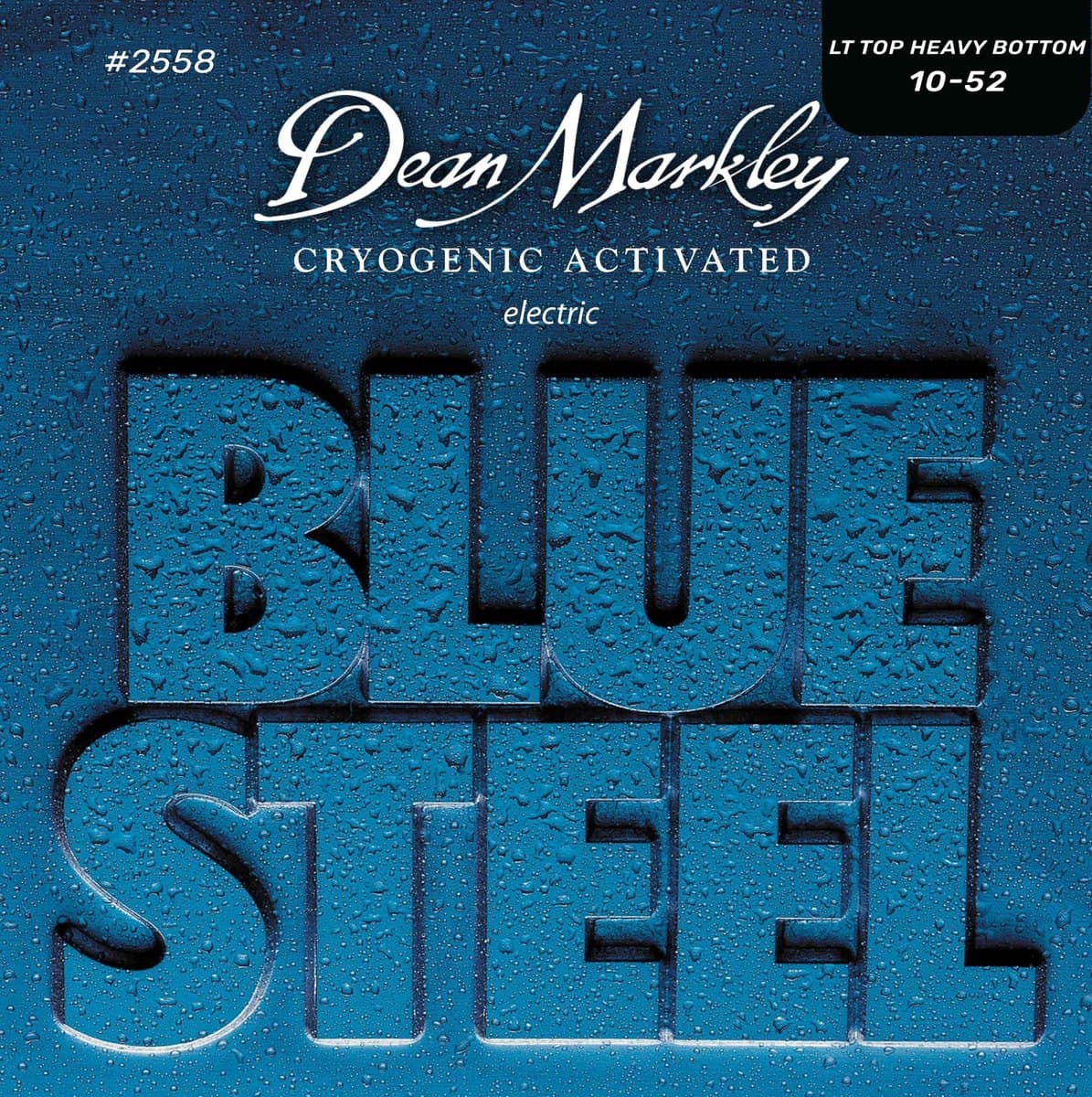
2558 Blue Steel Light Top/Heavy Bottom (.010–.052)
Why this one: The exact gauge Lifeson named to Guitar One in 2007: a heavier Light Top/Heavy Bottom set he adopted after leaning more on acoustic guitar during the Snakes & Arrows writing sessions.
Neil Peart's drum kit
- Drum kit
- DW Drums signature kit from the 1990s onward, a multi-tier acoustic setup augmented with Roland electronics on a rotating touring riser. Earlier kits: Tama Artstar (1980s), Slingerland and Ludwig (1970s).
- Cymbals
- Sabian, specifically the Paragon line Sabian developed with Peart in 2002. Earlier Rush-era cymbals were Zildjian; Peart switched to Sabian in 1989.
- Sticks
- Pro-Mark PW747W Shira Kashi Oak Signature, a denser Japanese-white-oak alternative to American hickory that matched Peart's hard-hitting style. Still in production through D'Addario.
Peart's playing set the template for composed, structural drum fills rather than improvised ones, "YYZ" and "Tom Sawyer" (both Moving Pictures, 1981) are the textbook examples, and his dexterous left-foot hi-hat work gave Rush's odd-time-signature passages a third melodic voice. He died January 7, 2020, of glioblastoma, brain cancer, at age 67.
Rock and Roll Hall of Fame, 2013
Rush was inducted into the Rock and Roll Hall of Fame in 2013, in the Performer category, by Foo Fighters' Dave Grohl and Taylor Hawkins. The Hall's own page credits the trio with "brazen experimentation" that "influenced metal, alternative, punk and even hip-hop," and lists Led Zeppelin, Cream, the Who, the Jimi Hendrix Experience, Yes, King Crimson, and Pink Floyd among the band's own influences. On the other side of the ledger, the Hall credits Rush with influencing Foo Fighters, Metallica, Primus, Smashing Pumpkins, Queensrÿche, and Muse.
They did it from the ground up without help from the mainstream press. Their influence is undeniable.
Foo Fighters; co-inducted Rush into the Rock and Roll Hall of Fame in 2013
Despite the induction and the influence, Rush's own trophy case is lighter than the acclaim suggests: seven Grammy nominations across four decades, six of them for Best Rock Instrumental Performance ("YYZ," "Where's My Thing?," "Leave That Thing Alone," "O Baterista," "Malignant Narcissism," and "Hope [Live for the Art of Peace]"), plus a nomination for the documentary Rush: Beyond the Lighted Stage in what's now called the Best Music Film category (Best Long Form Music Video at the time of the 2011 nomination). None converted into a win.
The 2026 Fifty Something reunion tour
Rush's story looked finished after 2015. The R40 tour closed at the Forum in Los Angeles that August, Peart retired citing tendinitis and a desire to spend time with his daughter, and Lifeson said in 2018 that the band itself was done. Peart's death in January 2020 seemed to close the question for good.
It didn't. In October 2025, Lee and Lifeson sat down at the Rock and Roll Hall of Fame in Cleveland, ostensibly to discuss their 2013 induction, and announced the next morning that Rush was returning. German drummer Anika Nilles, previously known for touring with Jeff Beck, took the drum chair; Peart's widow, Carrie Nuttall-Peart, and daughter Olivia both publicly endorsed the choice. The resulting Fifty Something tour opened June 7, 2026, at the Kia Forum in Los Angeles, the same building where Rush played its final show a decade earlier. It has kept growing since: per Blabbermouth's August 22, 2026 reporting, the 2026 North American leg alone reached 58 shows across 24 cities and sold more than half a million tickets, and Rush added Europe and South America dates for early 2027, its first European shows since 2013 and first South American shows in 17 years.
Where to start listening
- If you're new to Rush
- 2112 (1976). The 20-minute title-track breakthrough that put the band on the map, still the fastest way to hear why Rush mattered.
- If you want the commercial peak
- Moving Pictures (1981). No. 3 on the Billboard 200, more than four million copies sold, "Tom Sawyer" and "YYZ" both here.
- If you want the deep progressive era
- Hemispheres (1978). Recorded in Wales at the height of the band's UK-influenced progressive-rock phase.
- If you want the final chapter
- Clockwork Angels (2012). The band's last studio album before Neil Peart's 2015 retirement.
Related
Related
Further reading and listening
Go deeper on Rush. Books and Audible audiobooks on Amazon, so you can read or listen.
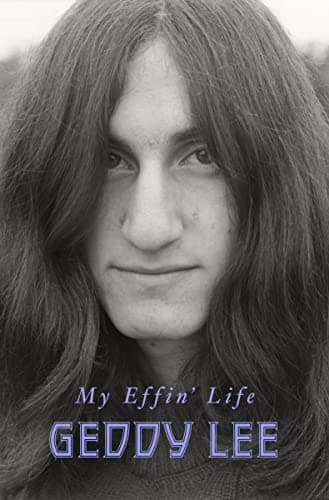
My Effin' Life
by Geddy Lee
Read by the author
Geddy Lee's memoir, Rush from the inside, self-narrated with Alex Lifeson.
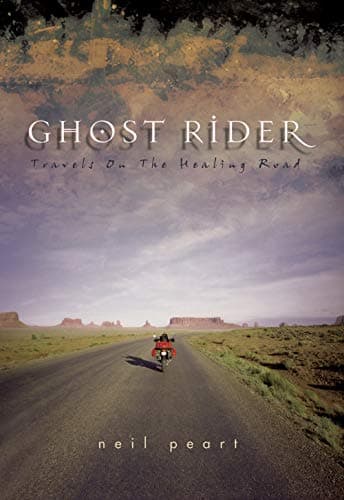
Ghost Rider: Travels on the Healing Road
by Neil Peart
Neil Peart's memoir of loss and the long road back.