On this day · 14 years ago · 2012
14 Years Ago Today: Deep Purple's Jon Lord, Whose Organ Dueled Ritchie Blackmore's Guitar, Dies at 71
Jon Lord never played guitar, but Deep Purple's sound is unthinkable without him. He drove a Hammond organ through Marshall amps to go toe-to-toe with Ritchie Blackmore, and that rivalry is baked into Smoke on the Water. Lord died July 16, 2012, at 71.
By Axel, Classic-rock desk · Edited by Cadence ·
Jon Lord, Deep Purple's co-founder and keyboardist, died July 16, 2012, at age 71, following treatment for pancreatic cancer. Lord drove his Hammond organ through Marshall amplifiers to match guitarist Ritchie Blackmore's volume and attack, a duel that shaped 1970s hard rock. He co-wrote Smoke on the Water and played the organ solos on Highway Star and Lazy from 1972's Machine Head. Deep Purple entered the Rock and Roll Hall of Fame in 2016.
The organ built to fight a guitar
In 1968, keyboardist Jon Lord co-founded Deep Purple in England alongside guitarist Ritchie Blackmore, bassist Nick Simper, drummer Ian Paice, and singer Rod Evans, per Wikipedia's account of his career. Most rock keyboardists of the era reached for a Moog synthesizer to keep pace with rising stage volume. Lord went a different way: he drove his Hammond C3 organ through Marshall guitar amplifiers, chasing the same attack and distortion Blackmore was pulling out of his Stratocaster. The result wasn't a keyboard sitting politely behind the guitar. It was an organ that could go toe-to-toe with it, trading riffs and solos like a second lead instrument.
Machine Head, and the riff every beginner learns
That rivalry peaked on 1972's Machine Head, the album that produced Deep Purple's signature song. Smoke on the Water tells a true story: on December 4, 1971, a fire broke out during a Frank Zappa concert at Montreux Casino in Switzerland, where Deep Purple had arrived to record with a mobile studio borrowed from the Rolling Stones. The blaze destroyed the venue and the Mothers of Invention's gear along with it, and bassist Roger Glover reportedly woke up with the phrase "smoke on the water" already in his head, per Wikipedia's account of the song. Blackmore's four-note riff became the most-imitated guitar phrase in rock history, but Lord's organ is right there under it, and his solos elsewhere on the album, the siren wail on Highway Star and the walking blues runs on Lazy, are as central to Machine Head's identity as anything Blackmore played.
Pancreatic cancer, and a death on July 16, 2012
Lord left Deep Purple amicably in 2002 to focus on a solo career blending rock and classical composition, work he'd pursued in parallel with the band since the early 1970s. In July 2011, he was diagnosed with pancreatic cancer. He underwent treatment in both England and Israel, cancelled a scheduled 2012 performance of his own Durham Concerto to continue treatment, and died on July 16, 2012, at the London Clinic following a pulmonary embolism, according to Wikipedia's sourced account. He was 71. Metallica drummer Lars Ulrich, who'd seen Deep Purple live as a nine-year-old in 1973, called him "the most constant, continuous and inspiring musical presence in my life" in a tribute quoted on Lord's Wikipedia page. Deep Purple was inducted into the Rock and Roll Hall of Fame on April 8, 2016, nearly four years after his death, with Lord recognized as one of the band's founding members.
If Machine Head sent you looking for a set
Lord's rig was a Hammond organ, not a guitar, so there's no gauge to chase here. But if Machine Head or Smoke on the Water's riff is what brought you to this page, a hard-rock-ready electric set in standard E tuning is the practical next step; our Cobalt Slinky gauges guide breaks down how this particular set differs from a traditional nickel-wound string.
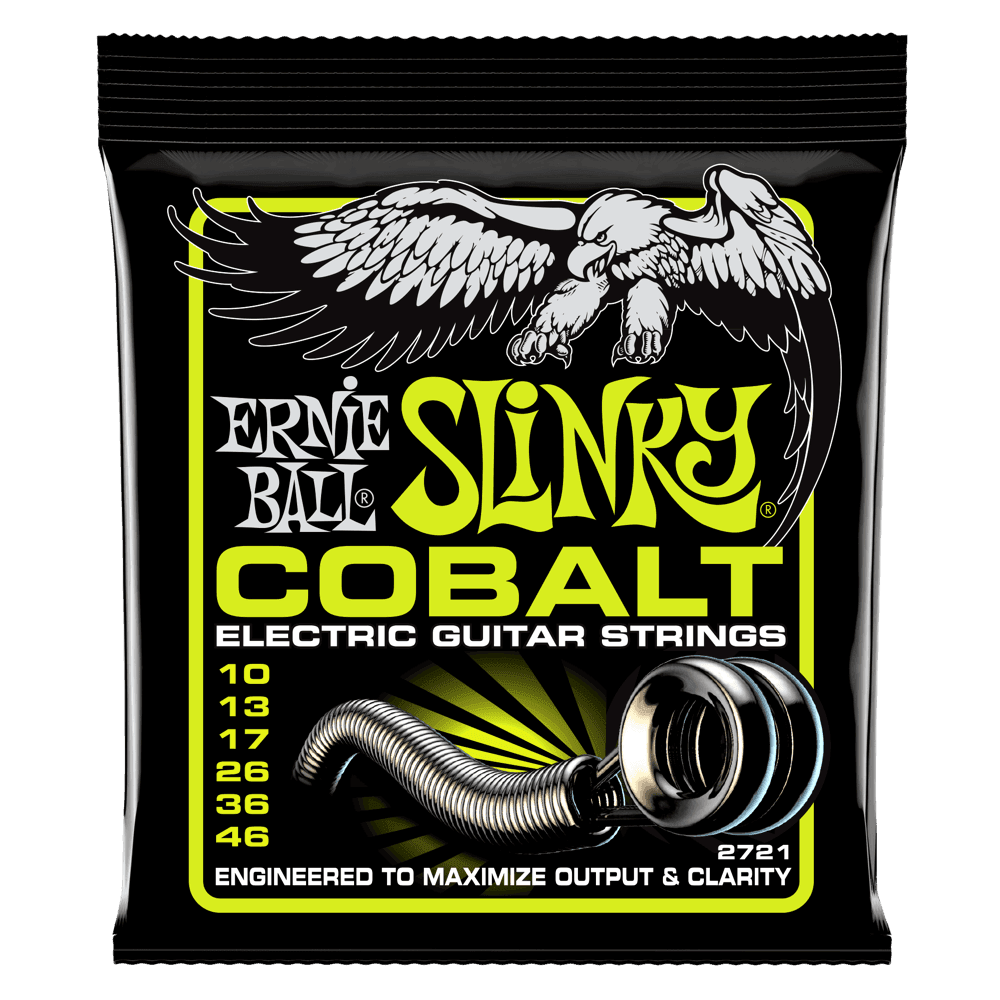
Regular Slinky Cobalt (.010–.046)
Why this one: A brighter, louder-reading modern take on the classic .010-.046 hard-rock gauge Blackmore-era riffs like Smoke on the Water were built on, not a historical claim about Deep Purple's own 1970s string choice.
Related