On This Day in Guitar History: July 16
Edited by Sleuth · Updated
On July 16, guitar history spans a Utah-born Fender Stratocaster pioneer, a genre-defining supergroup, a blues guitar legend's death, and rock's shortest recorded concert. Buddy Merrill, an early Stratocaster face on The Lawrence Welk Show, was born in 1936. Eric Clapton, Jack Bruce, and Ginger Baker are widely dated to have formed Cream on this day in 1966. Blues guitarist Johnny Winter died in 2014. The White Stripes played a one-note show in 2007.
On July 16 in guitar history
1936 · Born
TV guitarist Buddy Merrill, an early Fender Stratocaster face, is born
Guitarist Buddy Merrill was born in Torrey, Utah, and joined The Lawrence Welk Show in 1955, the year the program went national on ABC. He played a Fender Stratocaster during his television appearances and appeared in one of Fender's early print advertisements for the guitar in 1959. Merrill stayed with the Welk show into the 1970s before leaving in 1974 to focus on writing and recording his own material.
Source: Buddy Merrill
1938 · Born
The Searchers' Tony Jackson, who built his own bass guitar, is born
Tony Jackson was born in Dingle, Liverpool, and became the original bassist and an early lead singer of Merseybeat band the Searchers, learning the instrument on a bass guitar he built and customized himself. He sang lead on the band's first two UK hits, Sweets for My Sweet and Sugar and Spice, before leaving in 1964.
Source: Tony Jackson (singer)
1949 · Born
Montrose bassist and future Night Ranger keyboardist Alan Fitzgerald is born
Alan Fitzgerald was born in the United States and went on to become Montrose's second bassist, playing on 1974's Paper Money and 1975's Warner Bros. Presents Montrose!, before switching instruments entirely to become Night Ranger's keyboardist from the band's 1980 origins through 2003, on and off, and later Van Halen's offstage keyboardist on tour.
Source: Alan Fitzgerald
1952 · Born
The Police's Stewart Copeland, whose hi-hat work redefined rock drumming, is born
Stewart Copeland was born in Alexandria, Virginia, and co-founded The Police in 1977, anchoring the band across five studio albums with a reggae-influenced, hi-hat-driven style widely studied by drummers since. Rolling Stone ranked him the 10th-best drummer of all time in 2016. He's in the Rock and Roll Hall of Fame with The Police (2003), the Modern Drummer Hall of Fame (2005), and the Classic Drummer Hall of Fame (2013).
Source: Stewart Copeland
1955 · Born
Divinyls guitarist Mark McEntee, who co-wrote I Touch Myself, is born
Mark McEntee was born in Perth, Western Australia, and went on to co-found Australian rock band Divinyls with singer Chrissy Amphlett in 1980. McEntee co-wrote the band's biggest hit, I Touch Myself (1990), with Amphlett and professional songwriters Billy Steinberg and Tom Kelly; it hit number 1 in Australia and number 4 on the US Billboard Hot 100.
Source: Mark McEntee
1966 · Milestone
Eric Clapton, Jack Bruce, and Ginger Baker form Cream
Drummer Ginger Baker asked Eric Clapton to start a band together while driving him home from a Bluesbreakers gig, and Clapton agreed on one condition: Baker had to hire bassist and singer Jack Bruce. Rock historians date that agreement, and the formation of the trio soon named Cream, to July 16, 1966. The band split within two years, but its run produced Sunshine of Your Love, White Room, and Badge, and it is widely credited as rock's first supergroup.
1969 · Release
The Beatles push Here Comes the Sun and Something toward the finish line
During a 10-hour Abbey Road session, The Beatles overdubbed harmonium onto George Harrison's Here Comes the Sun and had Harrison re-record his lead vocal for Something, with harmony from Paul McCartney. Both songs, released that September on Abbey Road, are widely credited with finally putting Harrison's songwriting on par with Lennon and McCartney's.
Source: 16 July 1969: Recording: Here Comes The Sun, Something
1971 · Born
Live frontman Ed Kowalczyk, who wrote Lightning Crashes, is born
Ed Kowalczyk was born in York, Pennsylvania, and grew up to front alternative rock band Live alongside three high school friends. He was the band's lead singer, guitarist, and primary songwriter through 1994's 8-million-selling Throwing Copper, left amid a royalty dispute in 2009, and rejoined in 2016 before announcing majority ownership of the band in 2022, an arrangement his former bandmates formally contested again in February 2026.
Source: Ed Kowalczyk
1996 · Passed
Styx co-founder and drummer John Panozzo dies at 47
John Panozzo, who formed the band that became Styx with his fraternal twin brother Chuck and neighbor Dennis DeYoung on Chicago's South Side in 1961, was found dead in his Chicago apartment. Cook County officials attributed his death to a gastrointestinal hemorrhage and cirrhosis of the liver from acute alcoholism. He drummed on every Styx album through the band's arena-rock peak, including 1977's triple-platinum The Grand Illusion and 1981's Paradise Theatre.
Source: Styx drummer Panozzo dies of alcohol · 1996-07-16
2007 · Performance
The White Stripes play rock's shortest recorded concert
Jack White and Meg White played a single C-sharp note and one drum hit on George Street in St. John's, Newfoundland, then walked off stage, completing their self-imposed challenge to play a show in every Canadian province and territory. Guinness World Records recognized it as the shortest concert ever in its 2009 edition, then later discontinued the category after a flood of copycat and disputed claims made the record impossible to judge fairly. The duo played a full 26-song set at the city's Mile One Centre later the same night.
Source: Setlist History: The White Stripes Play The Shortest Concert Ever
2012 · Passed
Deep Purple's Jon Lord, whose organ dueled Ritchie Blackmore's guitar, dies at 71
Jon Lord, the keyboardist who co-founded Deep Purple in 1968, died at the London Clinic following a pulmonary embolism after treatment for pancreatic cancer. Lord drove his Hammond organ through Marshall guitar amplifiers to match guitarist Ritchie Blackmore's volume and attack, a rivalry heard across 1972's Machine Head, including Smoke on the Water. Deep Purple entered the Rock and Roll Hall of Fame in 2016, nearly four years after his death.
Source: Jon Lord
2012 · Passed
Motown Funk Brothers bassist Bob Babbitt dies at 74
Bob Babbitt, who traded Detroit bass sessions with Motown's James Jamerson through the Funk Brothers from 1966 to 1972, died in Nashville from brain cancer. His bass lines anchor Stevie Wonder's Signed, Sealed, Delivered, Marvin Gaye's Inner City Blues, and dozens of other Motown and Philadelphia soul hits. Bass Player magazine later ranked him 59th on its list of the 100 greatest bass players of all time.
Source: Bob Babbitt
2014 · Passed
Blues guitarist Johnny Winter dies in Zurich at 70
Texas blues guitarist Johnny Winter died in a hotel room in Zurich, Switzerland, two days after his final performance at the Cahors Blues Festival in southwestern France. Rolling Stone had named him one of the 100 greatest guitarists of all time, and he produced three Grammy-winning albums for his childhood hero Muddy Waters. His younger brother, keyboardist Edgar Winter, is also albino and became a star in his own right leading the Edgar Winter Group.
Source: Johnny Winter Obituary Jul 16, 2014 · 2014-07-16
2020 · Passed
Eric Clapton's longtime drummer Jamie Oldaker dies at 68
Jamie Oldaker, the Tulsa session drummer Eric Clapton's band recruited in 1974 on bassist Carl Radle's recommendation, died in his hometown of Tulsa, Oklahoma, after cancer returned following a prior remission. He played on 11 Clapton albums starting with that year's 461 Ocean Boulevard, including its number-one single I Shot the Sheriff, and also recorded with Peter Frampton, Bob Seger, and Ace Frehley's Comet.
Source: Legendary Eric Clapton Drummer Jamie Oldaker Passes · 2020-07-17
Why we track this
Guitar history keeps getting made on every date on the calendar, not just the ones with round-number anniversaries. This page collects what is actually documented for July 16, and it grows every time we verify another event for the date. Rock's first real supergroup, one of the loudest blues exits in guitar history, and rock's quietest concert all landed on this one date, decades apart. If today has you thinking about your own guitar, the Ernie Ball Regular Slinky is still the closest thing the instrument has to a default set.
Start your own July 16
Whichever era of this page speaks to you, from Buddy Merrill's Stratocaster on network TV to Cream's two-year run to Johnny Winter's blues fireworks, the through-line is six strings under someone's hands. If yours need a change, our history of guitar strings guide covers how we got from gut to cobalt, and the set below is the one we point most beginners to first.
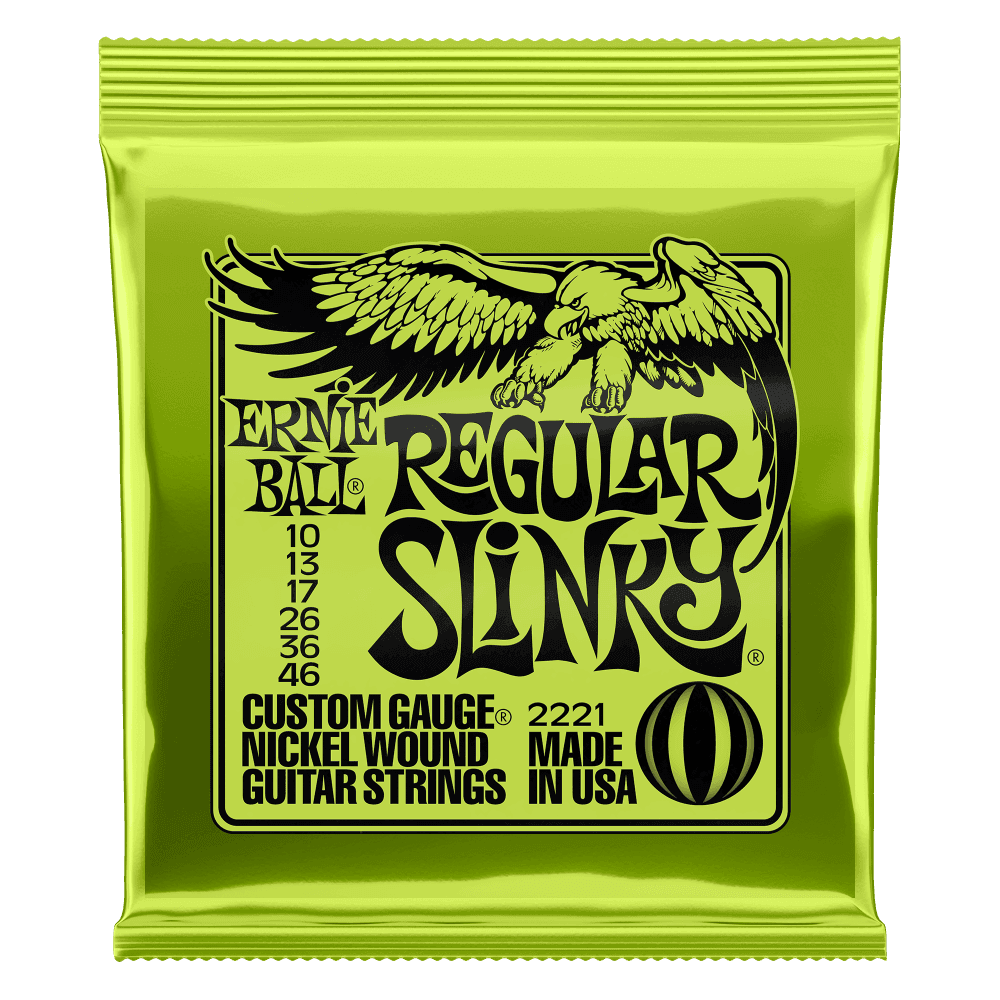
Regular Slinky
Why this one: A widely played, balanced electric set and a safe starting point no matter which era of guitar history brought you here today.
More guitar history
This page is part of an evergreen series, one per calendar day, filled in as we verify more events. Read more about Eric Clapton, George Harrison, Jack White, and Stewart Copeland in our artist and drummer profiles, check today's news desk for what is happening right now, or head to the full history index to see which dates are live so far.