Best Guitar String Cleaners and Fretboard Care: 7 Picks Compared
Written with AI help · Updated
GHS Fast-Fret is the best starting pick for longer string life: per GHS, it is silicone-free and cleans both strings and fingerboard. Dunlop Ultra Glide and MusicNomad String Fuel are the other string-side options. For the fretboard, MusicNomad F-ONE is the broader choice for unfinished rosewood, ebony, and maple. Dunlop Lemon Oil is not for maple. Add a microfiber cloth, and use none of these on a finished surface unless the label says so.
The short answer
String care has two jobs. One is keeping the strings clean. The other is keeping the wood under them healthy. No single bottle does both well, and some products are only safe on certain woods. We checked every claim below against the maker's own product page and left out anything we could not confirm. We have not tested these products ourselves.
Start with a string cleaner and a cloth. Add a fretboard oil only if your fretboard is unfinished wood, and only the right oil for that wood.
| Job | Use it on | Price | |
|---|---|---|---|
| GHS Fast-Fret | String cleaner and lubricant | Strings and fingerboard | $ |
| Dunlop Ultra Glide | String conditioner | Strings | $ |
| MusicNomad String Fuel | String cleaner and lubricant | All strings, including coated | $ |
| MusicNomad F-ONE Oil | Fretboard oil | Unfinished rosewood, ebony, maple | $ |
| Dunlop Lemon Oil | Fretboard oil | Fretboards other than maple | $ |
| Dunlop Guitar Finish Cloth | Polishing cloth | Guitar finishes | $ |
| MusicNomad Suede Cloth | Polishing cloth | Guitars, fretboards, strings | $ |
Our top pick for most players is GHS Fast-Fret. It is simple, it targets strings first, and GHS positions it as the original string cleaner. If you want a fretboard oil that covers maple too, jump to the MusicNomad F-ONE section.

Fast-Fret String Cleaner and Lubricant (A87)
Why this one: Our starting pick. Per GHS, it contains no silicone and cleans both strings and fingerboard.
Strings first: what a string cleaner actually does
Strings pick up sweat, skin oil, and dust. That grime dulls the tone and makes the wound strings feel sticky. A string cleaner or conditioner wipes that off. Some also leave a thin slick film so your fingers glide.
None of that replaces a string change. Cleaners can delay the dead, dull sound. They cannot restore a string that has stretched or lost its wrap. Check our guide on how often to change strings for the replacement side of the equation.
Cleaning also matters less if you already play coated strings. Coatings resist grime on their own. See coated vs uncoated electric strings before you decide how much extra care you need.
Best all-around string cleaner: GHS Fast-Fret
GHS Fast-Fret is the oldest name here. GHS calls it "the ORIGINAL string cleaner" and says it is not a spray and contains no silicone. You apply it to your strings and fingerboard to remove built-up dirt and grime. GHS says Fast-Fret keeps strings sounding bright and new, extending their healthy lifetime.
The detail that matters: the product page says to apply it to the fingerboard too. But GHS describes a separate Fingerboard Care Kit as meant for natural, non-glossy, darker fingerboards. We could not confirm from GHS which fretboard woods or finishes Fast-Fret itself is rated for. Treat the fingerboard use with care, and test a small area first.
The tradeoff is simplicity. It is a cleaner, not a full care system. You still need a cloth, and a separate oil if your fretboard is dry.
Fast-Fret String Cleaner and Lubricant (A87)
Why this one: The original string cleaner per GHS. Silicone-free, for strings and fingerboard.
Best for a smooth feel: Dunlop Formula 65 Ultra Glide
Dunlop calls Ultra Glide "the squeak eliminator" and says it conditions strings with a silky smooth playing surface while shielding against tarnish and corrosion. Dunlop also describes it as the number one way to restore brilliance and increase string life. That is a marketing claim, so weigh it as one.
Dunlop's page for this product does not list compatible finishes or fretboard woods. We would therefore use it on the strings only and keep it off the wood. Wipe your hands before you play, since a slick conditioner can leave a film.
Pick it if squeaky wound strings annoy you most. Skip it if you want one product that also handles the fretboard.

Formula 65 Ultra Glide String Conditioner (6582)
Why this one: Dunlop's string-only conditioner, aimed at squeaks, tarnish, and corrosion.
Best swipe-on applicator: MusicNomad String Fuel
String Fuel comes as a pad-style applicator that is 2.5 inches wide, so you can swipe across all strings at once. MusicNomad describes the formula as a blend of refined natural oils and mineral oils. It says the product is silicone free, safe for any finish, and even conditions unfinished fretboard wood. It includes a lint-free microfiber cloth that stores in the handle.
This is the most useful manufacturer statement on the page for coated-string players. MusicNomad says String Fuel works on all strings, including nylon and coated. On those it acts more as a lubricant, which reduces finger noise and makes slides easier. On uncoated metal strings, it says the formula helps clean and protect against oxidation.
MusicNomad says the applicator should last 750 to 1000 swipes if stored at room temperature. A refill is sold separately as part MN120. The honest tradeoff: it leaves a light oil residue, and MusicNomad suggests wiping it off with the included cloth.
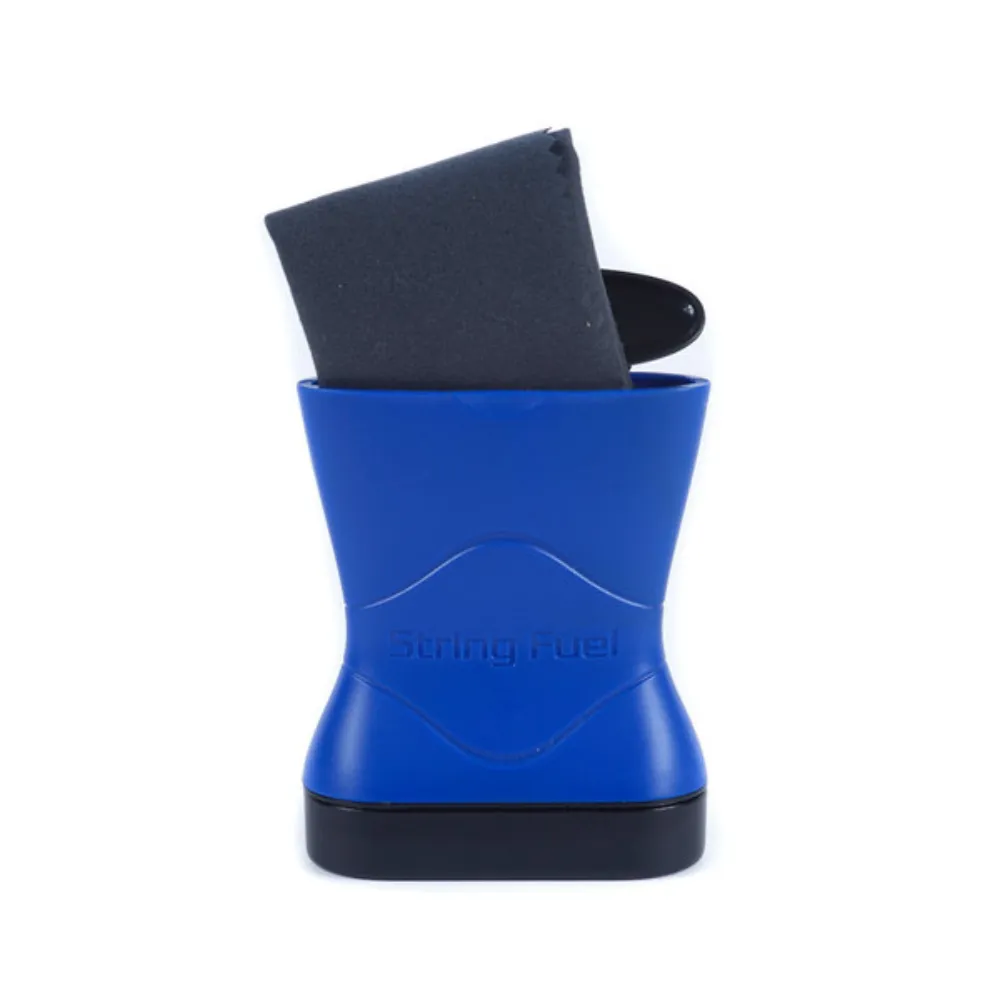
String Fuel Cleaner and Lubricant (MN109)
Why this one: A wide applicator, a built-in cloth, and a stated fit for coated and nylon strings.
Fretboard care: why the wood matters more than the product
Fretboard oils are for unfinished wood. Most rosewood and ebony boards are unfinished. Maple boards vary. Many are finished with a clear coat, and an oil there does nothing useful. Others are raw. Look at yours. If it is glossy, an oil is not what it needs.
Different makers disagree on what is safe, and that disagreement is the point. Dunlop says its lemon oil is not for maple. MusicNomad says its F-ONE oil is safe on unfinished rosewood, ebony, and maple. Both claims are the makers' own, and we followed them exactly.
Do not oil a dry-looking fretboard weekly. Both brands support light use. Small amounts, wiped clean, a few times a year is a common approach. Always follow the label.
Best fretboard oil for maple too: MusicNomad F-ONE
MusicNomad F-ONE is the broadest fretboard oil on this page by stated fit. Per MusicNomad, it is 100 percent natural oils, lemon oil free, petroleum and wax free, and made to clean, condition, and protect your fretboard. The company says it is safe on all unfinished rosewood, ebony, and maple fretboards.
Why no lemon oil? MusicNomad explains that lemon oil contains d-limonene, a strong solvent, and that it believes lemon oil's acidity can dry out a fretboard over time. That is the company's position. We have not tested it.
For schedule, MusicNomad suggests every 4 to 6 months if you play daily, and every 6 to 9 months if you play once or twice a week, with more frequent use in low humidity. It also says F-ONE works on unfinished wood bridges and tuning pegs. It does not say it is for finished surfaces, so keep it off glossy necks.
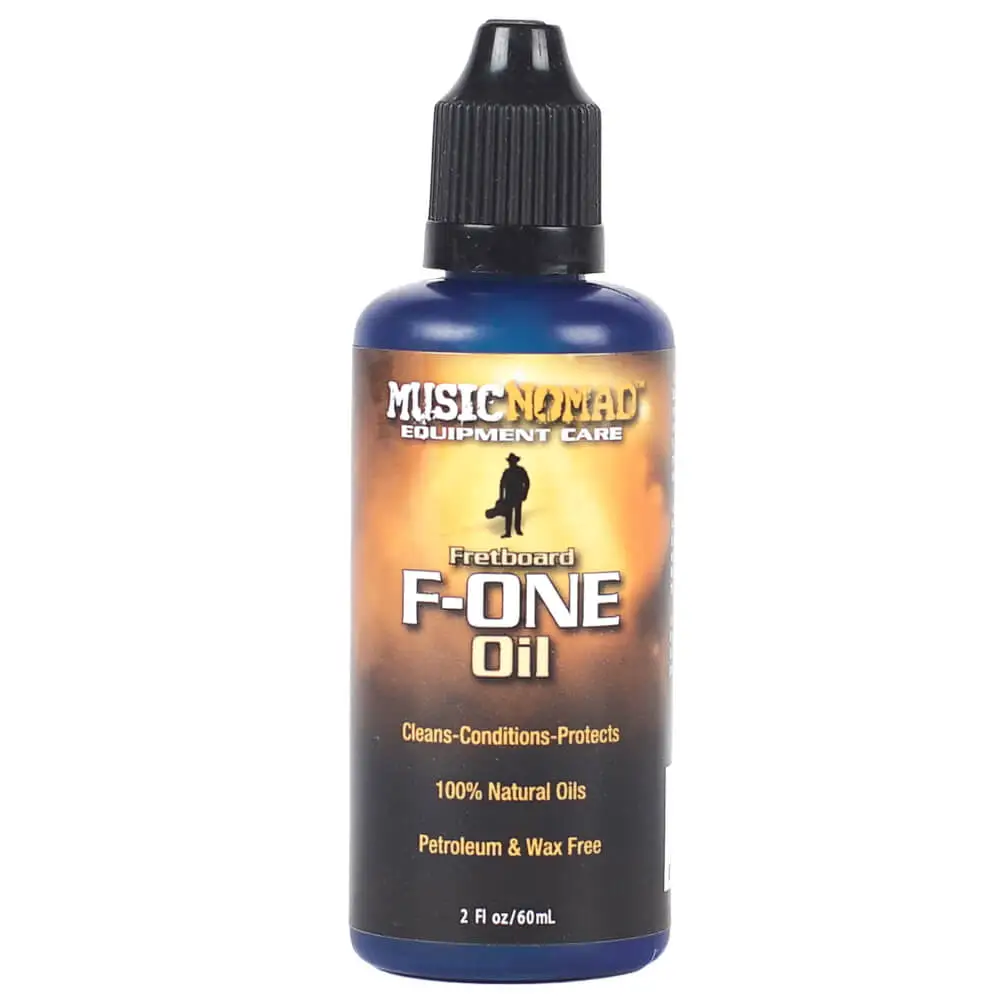
F-ONE Fretboard Oil Cleaner and Conditioner (MN105)
Why this one: Our pick for fretboards. MusicNomad lists unfinished rosewood, ebony, and maple.
Best lemon oil for rosewood and ebony: Dunlop Formula 65 Ultimate Lemon Oil
Dunlop Formula 65 Fretboard Ultimate Lemon Oil is the classic choice. Dunlop says it is specially formulated to remove grime and return the fretboard to its original luster, and that it leaves an invisible sealant that protects against stains and moisture.
The key line on the product page is a warning: "NOT for use on maple fretboards." Dunlop does not list rosewood or ebony by name on that page, so we cannot say it is rated for them. Dunlop's page also gives no usage schedule.
Choose it if you want the familiar lemon scent and the lemon oil approach, and your board is not maple. If your guitar has a maple board, skip this and look at F-ONE instead.

Formula 65 Fretboard Ultimate Lemon Oil (6554)
Why this one: The classic lemon oil. Dunlop states it is not for maple fretboards.
Polishing cloths: the cheapest upgrade
A cloth does more for string life than most players expect. Wiping strings after each session removes sweat before it dries. That costs almost nothing and carries no finish risk. Pair a cloth with a cleaner for the best result. If you are still choosing a set, the string gauge chart and our E standard tuning page are good places to start.
Two options stand out. Dunlop's Guitar Finish Cloth is aimed at bodies and finishes. MusicNomad's Microfiber Suede Polishing Cloth is the broader pick, because the company positions it for guitar care, fretboard care, and string care.

Guitar Finish Cloth (5430)
Why this one: Dunlop calls it non-abrasive and perfect for all popular guitar finishes. Best for bodies.
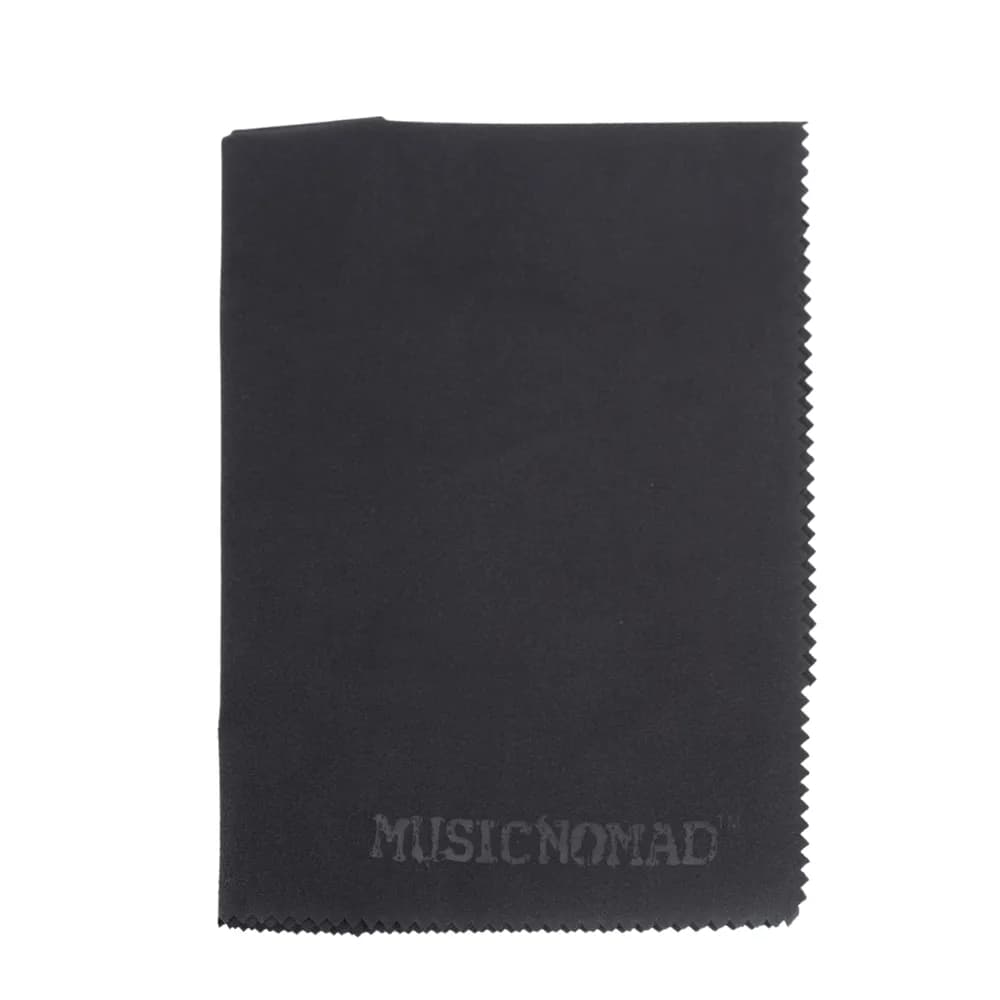
Microfiber Suede Polishing Cloth (MN201)
Why this one: Lint-free microfiber with a non-hemmed edge. MusicNomad positions it for strings, fretboards, and bodies.
MusicNomad says its cloth uses microfiber with 90,000 microfibers per square inch and has a non-hemmed edge so it does not scratch. Wash it by hand or on a gentle cycle with mild detergent, and skip bleach and fabric softener, per MusicNomad. A dirty cloth just moves grime around.
How to apply: a simple routine
Product labels beat this routine. Use ours as a general outline, not a safety guarantee.
A basic string and fretboard routine
- After each session
- Wipe the strings and neck with a dry microfiber cloth. This removes sweat before it dries.
- Every week or two
- Apply your string cleaner as the label directs. Wipe off any excess so it does not build up.
- Every few months
- If your fretboard is unfinished wood, apply a small amount of the right oil, then wipe it clean. Follow the product schedule.
- On a finished body
- Use a soft cloth only. Skip oils unless the label names your finish.
- When tone stays dull
- Change the strings. A cleaner cannot replace a worn set.
For a fretboard, loosening the strings is a common technique, but it is not required by every maker. Check each label. Do not soak the wood. A small amount worked in with a cloth is enough.
How to choose
Pick by your wood and your strings
- You want one simple string cleaner
- GHS Fast-Fret. It targets strings and, per GHS, the fingerboard.
- You hate squeaky wound strings
- Dunlop Ultra Glide. Strings only, no stated wood fit.
- You play coated strings
- MusicNomad String Fuel. The maker says it works on all strings, including coated.
- Your fretboard is unfinished maple, rosewood, or ebony
- MusicNomad F-ONE, per the maker's stated woods.
- Your fretboard is rosewood or ebony and you like lemon oil
- Dunlop Lemon Oil. Not for maple per Dunlop.
- You play a glossy guitar
- Dunlop Guitar Finish Cloth. A cloth is all a finished body needs.
If you are not sure what your fretboard is made of, check the guitar maker's spec page or ask a tech. Do not guess. A wrong oil costs more than any of these bottles.
Bottom line
Buy GHS Fast-Fret and a good microfiber cloth first. That covers strings for a low cost and no finish risk. Add MusicNomad F-ONE or Dunlop Lemon Oil only after you confirm your fretboard is unfinished and the oil fits that wood. These products can help strings last longer, but they do not replace fresh strings when the set is worn.
Fast-Fret String Cleaner and Lubricant (A87)
Why this one: Our starting pick. Silicone-free string and fingerboard cleaner per GHS.