Best Guitar Picks by Playing Style: 7 Picks Compared
Written with AI help · Updated
Dunlop Tortex Standard .73mm is the best all-around guitar pick for most players. It strums cleanly, handles single notes, and costs little. For lead, step up to the Tortex Sharp 1.0mm. For metal rhythm, try the Ultex Standard 1.0mm. Jazz players should start with a Jazz III, and acoustic strummers can pick Fender's medium celluloid for a warmer, rounder tone. Thickness matters more than brand.
The short answer
There is no single best guitar pick. There is a best pick for how you play. Thickness changes feel and attack. Shape changes control and speed. Material changes tone and grip.
We picked one pick per playing style below. Every spec comes from the manufacturer's own product page. We have not tested these picks ourselves, so treat our opinions as guidance, not lab results.
| Best for | Thickness | Price | |
|---|---|---|---|
| Dunlop Tortex Standard .73mm | Best overall, strumming | .73mm | $ |
| Dunlop Tortex Sharp 1.0mm | Best for lead and precision | 1.0mm | $ |
| Dunlop Ultex Standard 1.0mm | Best for metal rhythm | 1.0mm | $ |
| Dunlop Tortex Pitch Black Jazz III 1.0mm | Best for jazz | 1.0mm | $ |
| Fender 351 Premium Celluloid Medium | Best for acoustic warmth | Medium (.71mm per Fender) | $ |
| Ernie Ball Everlast .88mm | Best for non-slip grip | .88mm | $ |
| D'Addario Duralin Precision Heavy | Best for bright articulation | 1.2mm | $ |
Start with the Dunlop Tortex Standard .73mm if you want one pick that does most jobs. Per Dunlop, Tortex is built on a Delrin base with a special treatment that gives a grip-enhancing matte surface and an aggressive attack. Dunlop also says it makes Tortex picks in Benicia, California. The .73mm gauge is flexible enough to strum and firm enough for single notes.

Tortex Standard Pick .73mm Yellow
Why this one: Our overall pick. A flexible, bright Tortex pick that works for strumming and single notes.
How pick thickness works
Thickness is the biggest choice you make. It sets how much the pick bends when it hits the string.
- Thin, under about .60mm. Very flexible. Strums quietly and smoothly. Single notes can feel mushy.
- Medium, about .60mm to .90mm. The all-rounder zone. Most beginners should live here.
- Heavy, about 1.0mm to 1.5mm. Little flex. Notes start cleanly and fast runs stay even. Chords can feel stiff.
- Extra heavy, above 1.5mm. Almost no flex. Popular with players who want maximum control.
Those ranges are common conventions, not official standards. Each brand sets its own names. Fender, for example, labels its medium pick .71mm and its heavy .97mm. D'Addario calls 1.0mm "medium/heavy" and 1.2mm "heavy". Always check the millimeter number, not the word.
Our rule: move one step at a time. If your strumming sounds thin or you miss notes, go up a step. If chords feel stiff, go down. You can read more in our pick gauge by genre guide.
How pick shape and material work
Shape sets control. The standard shape is the rounded triangle you see everywhere. Fender calls its version the 351 shape, and says it is the company's most popular pick design. Jazz shapes are smaller and more pointed, which many players like for fast single-note lines. Sharp shapes add a pointed tip for precision.
Material sets tone and wear. Here is the short version, based on what each manufacturer says.
- Tortex (Delrin). Bright, crisp and snappy, per Dunlop.
- Ultex. Dunlop calls it lightweight and virtually indestructible, with a bright, articulate tone.
- Celluloid. Fender says it gives a traditional feel and a warm, round tone.
- Duralin (acetyl or Delrin). D'Addario says it highlights the bright clicking sound of the pick hitting the strings.
- Everlast (Delrin). Ernie Ball says it gives a more secure, non-slip surface.
Brighter picks cut through a band mix. Warmer picks calm down a harsh guitar. Neither is wrong.
Best for strumming: Dunlop Tortex Standard .73mm
Strumming wants a pick that bends. The .73mm Tortex is the sweet spot for most rhythm players. It flexes across the strings, so chords ring evenly. It also holds up for a quick lick when you need one.
Dunlop's own copy says Tortex suits both "searing electric leads" and "strumming acoustic passages." That range is why this is our overall pick. The tradeoff is simple. If you push hard on aggressive riffs, a .73mm pick may flap. Move up to a 1.0mm pick for that.
If you play acoustic and prefer a heavier feel, Dunlop's Tortex Standard line also comes in .88mm and 1.0mm, per the manufacturer's site. See our Tortex Standard 1.14mm review for the stiff end of the range.
Best for lead: Dunlop Tortex Sharp 1.0mm
Lead playing rewards a firm pick with a clean tip. The Tortex Sharp 1.0mm gives you both. Dunlop says it pairs "the playability and tone of Tortex with a super sharp tip for extra precision and articulation."
A sharp tip releases the string quickly. That helps on fast alternate picking and tight pinch harmonics. The tradeoff is that a sharp tip can feel less forgiving on strumming.
If you want an even stiffer, brighter lead pick, look at the Ultex Sharp 1.14mm, which we cover in its own pick page.

Tortex Sharp Pick 1.0mm Blue
Why this one: A firm 1.0mm Tortex pick with a sharp tip for precise lead lines.
Best for metal rhythm: Dunlop Ultex Standard 1.0mm
Metal rhythm is about stiff, repeatable attack. You want a pick that does not fold during palm-muted downpicking. The Ultex Standard 1.0mm is our pick here.
Dunlop says Ultex picks "project every note at high volume with brightness and articulation while resisting wear under the most aggressive playing conditions." Dunlop also notes that players from James Hetfield to John Petrucci have taken the material up. That is Dunlop's claim, and we are not saying what pick either player runs today.
The tradeoff is feel. Ultex is hard and bright, so it can sound edgy on an already bright guitar. If you want a bigger, signature-style option, see our pages on the Hetfield Tortex Flow and the Petrucci Jazz III Ultex. If you tune low, pair a stiffer pick with the string advice in our best guitar strings for metal guide.

Ultex Standard Pick 1.0mm
Why this one: A stiff, bright, durable pick for fast, aggressive rhythm playing.
Best for jazz: Dunlop Tortex Pitch Black Jazz III 1.0mm
Jazz players tend to want small, pointed and thick. The Jazz III shape does that. Dunlop says the Tortex Jazz III combines the bright tone and snappy attack of Tortex with "the superior control, speed, and definition provided by the Jazz III shape."
At 1.0mm it is firm without being extreme. You get controlled single-note lines and a clear attack. The tradeoff is size. A small pick is easier to drop and harder to grip with a loose hand.
If the standard Jazz III feels tiny, Dunlop also makes a larger Jazz III XL. The Tortex Jazz III XL is listed at 1.0mm on Dunlop's site. For a darker, rounder jazz tone, look at the nylon Jazz III XL Stiffo 1.38mm instead.

Tortex Pitch Black Jazz III Pick 1.0mm
Why this one: A small, pointed Jazz III shape in firm Tortex for controlled single-note lines. This listing is a bulk 72-pack.
Best for acoustic: Fender 351 Premium Celluloid Medium
Celluloid is the classic acoustic pick material. Fender says its celluloid picks give "the traditional feel and a warm, round musical tone." That warmth can tame a bright steel-string acoustic.
Fender lists its 351 pick in four gauges: thin (.46mm), medium (.71mm), heavy (.97mm) and extra heavy (1.22mm). Medium is the right start for strumming. Go to heavy if you flatpick melodies.
The tradeoff is wear. Celluloid is generally softer than Delrin picks like Tortex, so expect it to wear sooner. Buy a 12-pack and rotate through them. The Amazon listing we link names a specific color, so expect that color.
For the other half of your acoustic tone, see our best acoustic guitar strings comparison.
351 Shape Premium Celluloid Pick, Medium (12-pack)
Why this one: Warm, round celluloid tone in the classic 351 shape. A natural fit for acoustic strumming.
Best for grip: Ernie Ball Everlast .88mm
Slippery picks are a real problem on stage. The Ernie Ball Everlast is made from Delrin with a surface Ernie Ball describes as "more secure, non-slip." It comes in eight thicknesses, from .48mm to 2.0mm, and each pack holds 12 picks, per Ernie Ball.
We chose the .88mm green. Ernie Ball classes the Everlast as medium thickness overall and suggests adjusting up or down if the pick feels too hard or too floppy. That is sensible, simple advice.
The tradeoff is that grip is not tone. If you want brightness or a specific tip, a Tortex or Ultex may serve you better. Everlast is the pick for players who just want it to stay put.
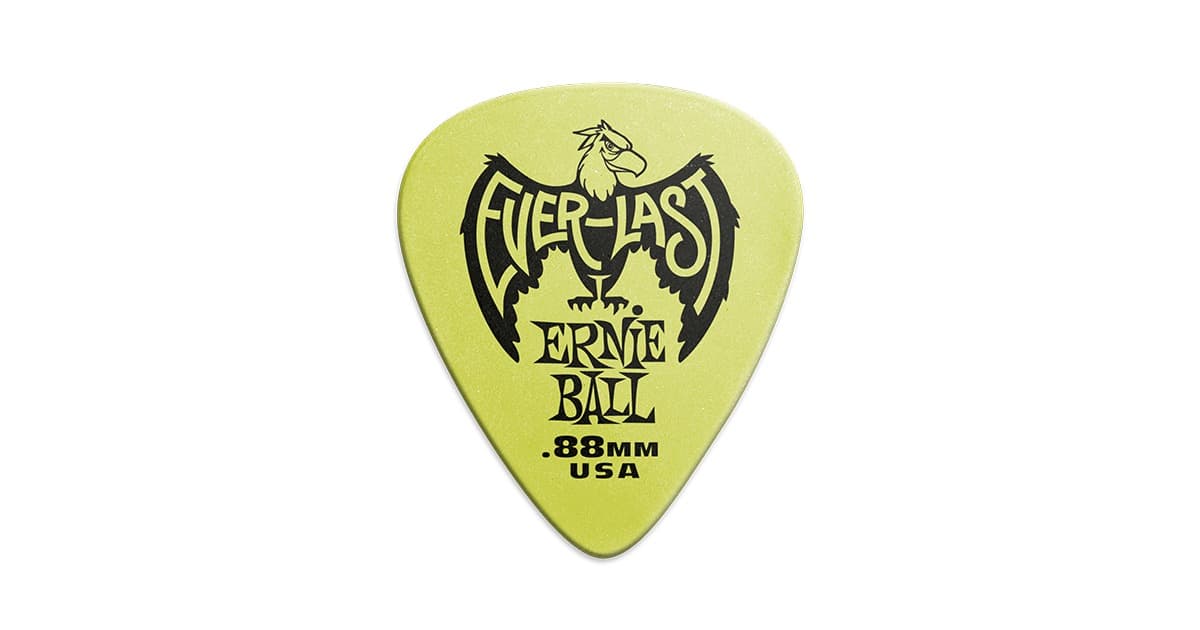
Everlast Pick .88mm Green (12-pack)
Why this one: A non-slip Delrin pick in a medium-heavy gauge. Good for players who drop picks.
Best for bright articulation: D'Addario Duralin Precision 1.2mm
The Precision shape is a hybrid. D'Addario says it "combines the standard body with the Black Ice point for added control during articulation." You get a familiar grip with a more pointed tip.
D'Addario says Duralin picks "allow an artist to highlight the bright clicking sound of the pick hitting the strings." Duralin is also sold as acetyl or Delrin, per the manufacturer. The Heavy gauge is 1.2mm.
The tradeoff is that this is a stiff, clicky pick. It will sound bright and a little percussive. Acoustic players who want warmth should pick celluloid instead. The Amazon listing we link is a 25-pack, which is a lot of picks, but they are cheap.

Duralin Precision Pick, Heavy 1.2mm (25-pack)
Why this one: A stiff Duralin pick with a pointed Precision tip for clear, bright articulation.
How to choose
Pick by how you play, then adjust one step at a time
- New player or mostly strumming
- Dunlop Tortex Standard .73mm. Flexible, bright and forgiving.
- Fast lead lines
- Dunlop Tortex Sharp 1.0mm. Firm body, pointed tip.
- Palm-muted metal rhythm
- Dunlop Ultex Standard 1.0mm. Stiff, bright and hard-wearing.
- Jazz and fast single-note work
- Dunlop Tortex Pitch Black Jazz III 1.0mm. Small and controlled.
- Acoustic strumming
- Fender 351 Premium Celluloid Medium. Warm and round.
- Picks that keep slipping
- Ernie Ball Everlast .88mm. Non-slip Delrin surface.
- Bright, clicky attack
- D'Addario Duralin Precision 1.2mm. Stiff with a pointed tip.
Buy cheap and test a few. A pack of picks costs little, and your hand tells you more than any spec. Change one variable at a time. If you change thickness, shape and material together, you will not know what helped.
Your strings matter too. Heavier strings and lower tunings often pair well with a stiffer pick. Our string gauge by genre page explains how gauge tracks tuning. If your picks wear fast, check your string age as well, using our how often to change strings guide.
Bottom line
If you want one pack and no research, buy the Dunlop Tortex Standard .73mm. It strums well, picks single notes well, and it is the least risky starting point. Then adjust. Go up to 1.0mm for lead or metal rhythm. Go to celluloid for a warmer acoustic sound. Go to a Jazz III if you play fast single-note lines.
Tortex Standard Pick .73mm Yellow
Why this one: Our overall pick. Flexible, bright and a safe starting gauge for most players.