String gauge by genre: what do metal, blues, jazz, and country players use?
Written with AI help · Updated
Genre does not pick your gauge, your tuning and your hands do. The patterns are real though: metal and hard rock skew heavier for low-tuning tension, blues and jazz skew heavy for tone, country and pop sit mid, and shred can go light for fast bends. You can absolutely play metal on thin strings. Match the gauge to your tuning first, then nudge for the tone your style wants.
Genre is a tendency, not a rule
There is no metal gauge, no blues gauge, no jazz gauge. There are gauge tendencies that cluster around genres, and they exist for reasons you can understand and then ignore when it suits you.
Metal skews heavy because it tunes low, and low tunings need mass to stay tight. Jazz skews heavy because it wants warmth and rarely bends. Blues sits at medium for vocal bends with body. Shred and pop skew lighter for fast bends and an easy touch. Country sits in the middle on a bright, snappy platform. Every one of those is a habit built on a real tradeoff, and every one has famous exceptions.
The working defaults
Metal and hard rock: .010-.046 in standard, heavier as you detune. Drop C wants .011-.054 or more.
Blues: .010 or .011 in standard. Heavier if you want a denser tone and you bend less.
Jazz: .012-.052 or .013-.056 with a wound third for warmth.
Country: .010 or .011 on a bright, fixed-bridge platform.
Pop and singer-songwriter (electric): .009 or .010 for an easy, bend-friendly touch.
Acoustic strumming: light .012-.054, medium .013-.056 for maximum projection.
A do-everything default
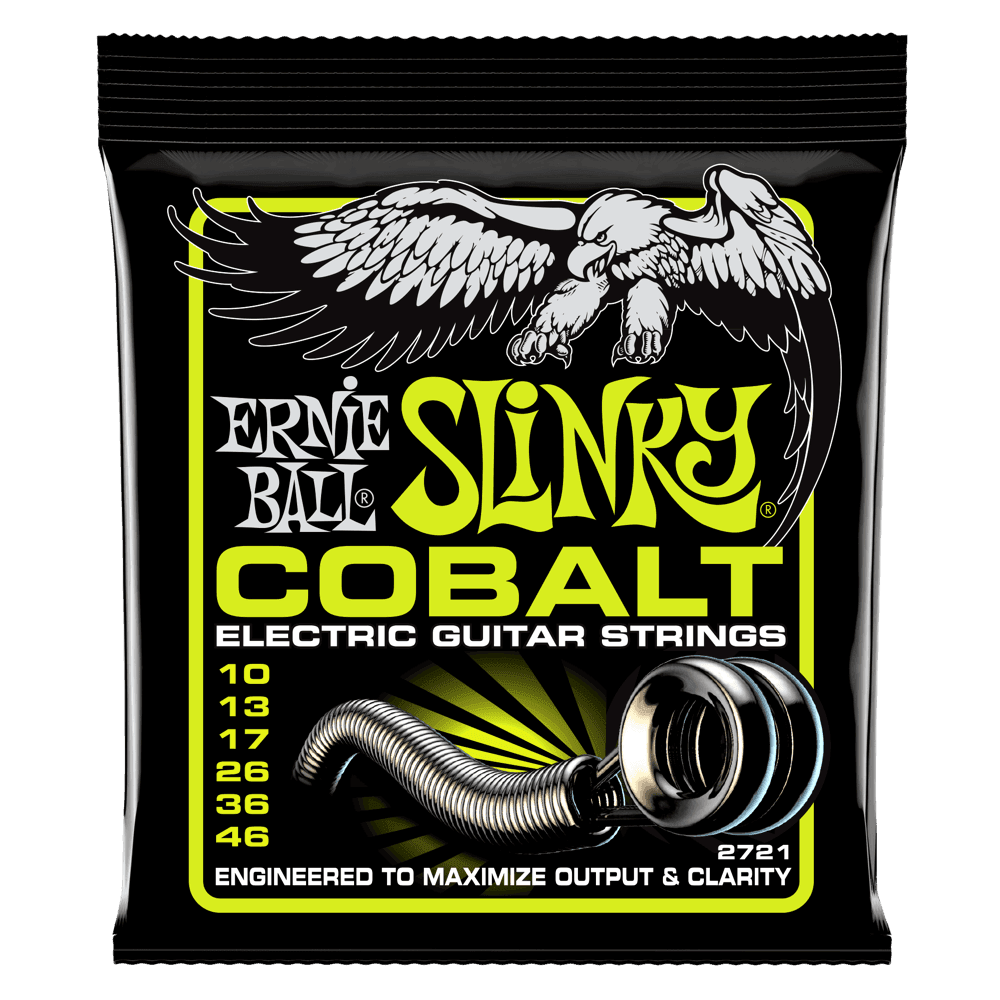
Regular Slinky Cobalt (.010-.046)
Why this one: The genre-neutral default. A .010 set covers rock, blues, country, and pop in standard tuning, and the Cobalt wrap reads bright and present across clean and high-gain tones. The set to reach for when your style spans several genres and you tune at or near standard.
Start from your tuning
The fastest way to pick a gauge is to ignore your genre for a second and answer one question: what tuning do you play most? Pick the lightest set that still feels tight there. Then, if your style wants more warmth or more bite, nudge up or down a gauge. The genre tendency is a useful starting point, but your tuning and your hands cast the deciding vote.