Bass scale length and dropping to B: why a 34-inch long scale (and heavy strings) hold the low end
Written with AI help · Updated
A standard 4-string bass is a 34-inch long scale, the Fender Jazz Bass and Geddy Lee signature spec. That length is what keeps a low string tight and clear. Drop a 4-string to B (B E A D) and the long scale plus a heavy set is what holds the tension; a short scale goes floppy and loses the low end. Some players step to a 35-inch extra-long scale for the lowest tunings.
Ask what you need to drop a 4-string bass to B and the honest first answer is not a string brand, it is scale length. Length is what sets tension, and tension is what keeps a low B tight instead of flopping. The reference point most players already know is the Fender Jazz Bass, and the Geddy Lee signature is a clean example of the standard spec: a 34-inch long scale. Here is why that number matters, and what finishes the build.
The bass scale-length ladder
Scale length is the distance the string vibrates, from nut to saddle. Longer means more tension at the same pitch, which means a tighter, clearer low end.
| Range | Feel and low end | |
|---|---|---|
| Short scale | 30 to 32 inches | Warm and easy to play, but strings go slack and lose the low end when tuned down |
| Medium scale | 32 to 34 inches | A middle ground: a little more tension than short, a little less reach than long |
| Long scale | 34 inches | The standard. Best balance of playability, tone, and tension. The Fender Jazz / Geddy Lee spec |
| Extra-long scale | 35 inches and up | Maximum tension. Common on 5-strings and for aggressive drop tuning |
Why 34 inches is the default (and the Geddy Lee reference)
The most common electric bass scale is 34 inches, long scale, because it is the balance point: enough tension to keep the low string tight and defined, without the reach getting unwieldy. It is the Fender Jazz Bass spec, and the Geddy Lee Jazz Bass is a fair archetype of it, a 34-inch long scale with an alder body and maple neck. That is the tone and tension most players are already building from, whether they know it or not.
The practical point: if a low B sounds floppy and undefined, the fix is rarely "a different brand of string." It is tension, which comes from scale length first and gauge second.
Dropping a 4-string to B: long scale plus a heavy set
Tune a 4-string down to B E A D (a low B) and a 34-inch long scale is doing the heavy lifting on tension. But the scale can only do so much with a light string. The other half is gauge: a low B wants a thick low string, around .130, so it stays tight at pitch instead of buzzing and drifting.
That is exactly what a heavy, purpose-built down-tuning set is for:
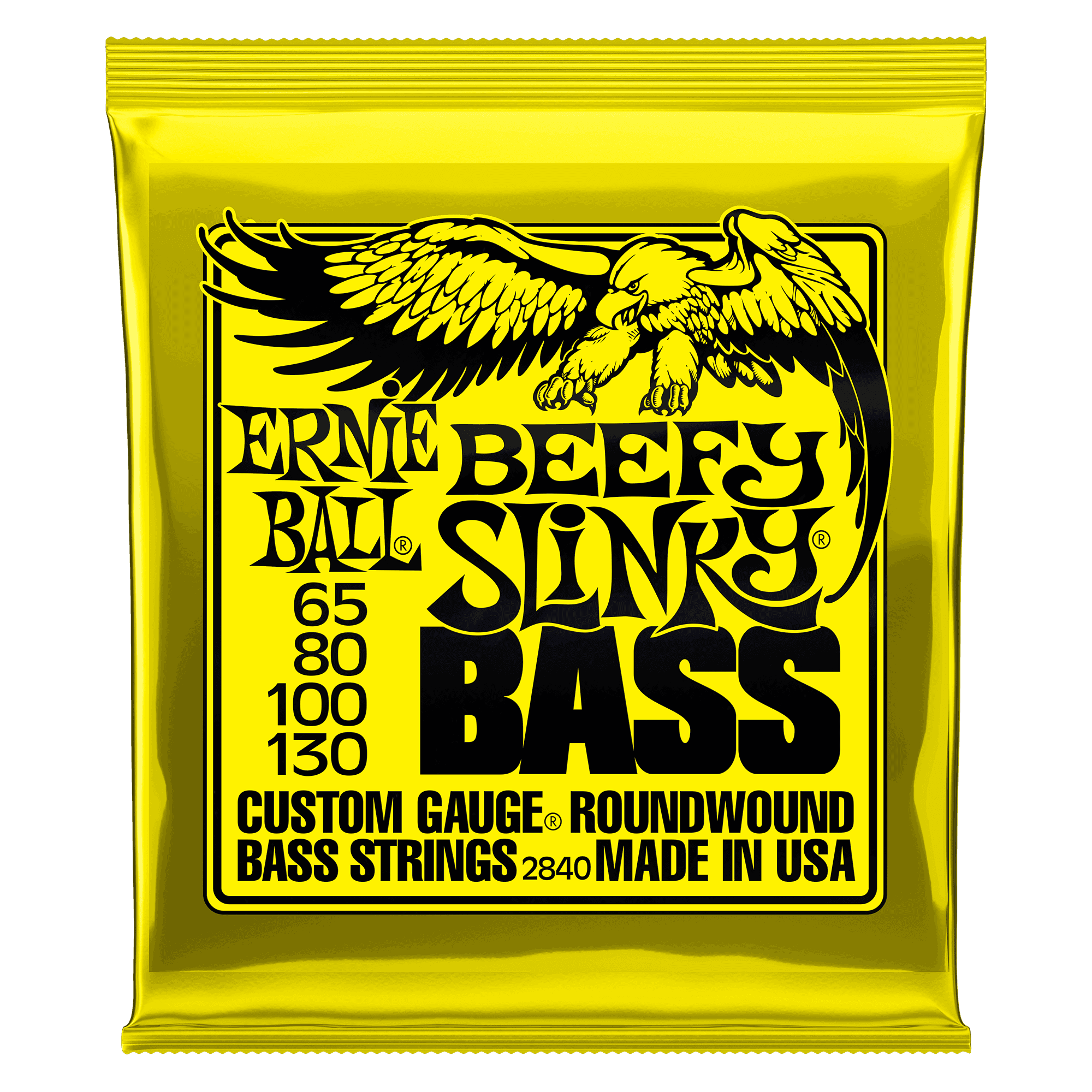
Beefy Slinky Bass (.065–.130)
Why this one: A .065 to .130 set built to tune a 4-string down to B E A D. On a 34-inch long scale, the .130 low string stays tight and defined instead of flopping.
If you want the low B tighter still, a 35-inch extra-long scale is the next step. For most players, a 34-inch long scale plus a heavy set covers Drop B cleanly.
Next steps
Go deeper on the numbers in bass string gauges explained and down-tuned bass strings explained, see how the same tension logic works on guitar in tonewoods by genre, and browse every heavy set in the strings catalog.
Frequently asked questions
What scale length is a standard 4-string bass?
34 inches, called long scale. It is the most common electric bass scale and the spec on the Fender Jazz Bass, including the Geddy Lee signature. 34 inches is the balance point for playability, reach, tone, and string tension, which is why it became the default.
Does scale length matter for dropping to B on bass?
Yes, a lot. A longer scale stretches the same string over more distance, so it holds more tension at a given pitch. Tune a 4-string down to B and a 34-inch long scale keeps the low string tight and defined, while a short scale (30 to 32 inches) tends to go slack and lose the low end fast.
Is the Geddy Lee Jazz Bass long scale?
Yes. The Fender Geddy Lee Jazz Bass is a 34-inch long-scale bass with an alder body and maple neck, the classic long-scale Jazz spec. It is a fair reference point for the standard 4-string tone and tension most players build from.
What gauge do I need to drop a 4-string to B?
Heavy. A low B on a 4-string wants a thick low string, around .130, so it stays tight at pitch. A set like the Ernie Ball Beefy Slinky Bass (.065 to .130) is built for exactly that, tuning a 4-string down to B E A D without turning to spaghetti.
Should I get a 35-inch bass for low tunings?
You can. 35-inch extra-long scale holds even more tension, which is why it is common on 5-strings and for aggressive drop tuning. For a 4-string dropped to B, a 34-inch long scale plus a heavy set is usually enough; 35 inches is the next step if you want the low B even tighter.
Why does a short-scale bass struggle in low tunings?
Less length means less tension at the same pitch. Short-scale basses (30 to 32 inches) sound warm and are easy to play, but tuned low the strings go slack, the intonation drifts, and the low note loses focus. They are a feel-first choice, not a low-tuning tool.