Ernie Ball Extra Slinky Cobalt (.008–.038): the lightest Cobalt set
Written with AI help · Updated
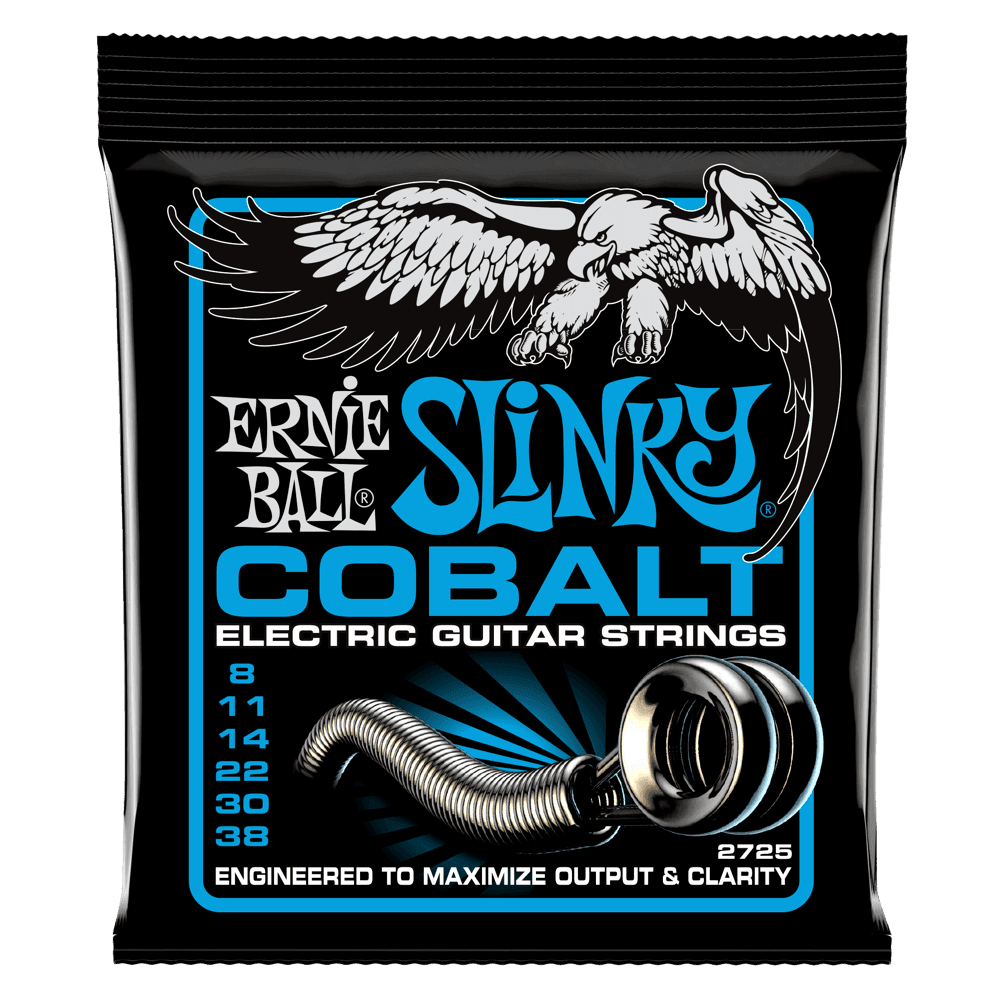
Ernie Ball Extra Slinky Cobalt (2725) is the lightest set in the Cobalt line at .008, .011, .014, .022, .030, .038. It's built for E standard only, an almost pure shred and speed-metal gauge for players who want the fastest, easiest-bending strings Ernie Ball makes in Cobalt. Total tension at 25.5-inch scale, E standard, runs around 86 lbs, the lowest of any 6-string Cobalt set. Skip it below E standard; the .038 low string goes flabby fast. Pick it if raw bend speed matters more than low-end punch.

Anatomy
- SKU
- Ernie Ball 2725
- MPN
- P02725
- Gauge
- .008 – .038 (Extra Slinky)
- Gauge set
- .008, .011, .014, .022, .030, .038
- Core wire
- Tin-plated hex steel
- Wrap wire
- Cobalt-iron alloy
- Plain strings
- Tin-plated hex-core steel (.008, .011, .014 plain)
- Coating
- None, uncoated
- Winding
- Standard roundwound
- Intended scale
- 25.5" (Fender-scale) primary
- Intended tunings
- E standard only
- Total tension (25.5", E standard)
- ~86 lbs (lightest 6-string Cobalt set)
- Launched
- January 2012 (Cobalt line debut, NAMM)
- Package
- Single pack
Tone
Extra Slinky Cobalt carries the same voicing shift as the rest of the line, just on the lightest strings Ernie Ball makes in Cobalt.
Voicing through a passive pickup
- Output
- 2–3 dB louder than the equivalent nickel-wound Extra Slinky set, same gauge, matching the comparison across the rest of the Cobalt line.
- Top end
- More present upper midrange (roughly 2–4 kHz) on the wound strings. The plain .008, .011, and .014 strings stay neutral, they aren't wrapped wire.
- Low end
- The .038 low string is already light on tension. Cobalt's extra attack helps it stay defined, but it can't add mass that isn't there.
- Bend feel
- The lightest bend feel in the Cobalt lineup. Fast legato and wide bends take the least effort of any Cobalt gauge.
For the full measured breakdown of Cobalt vs nickel voicing (output dB, brightness curve, longevity, bend feel, pickup compatibility), see Cobalt vs nickel Slinky: the voicing difference, measured.
Where this set sits in the Cobalt range
Extra Slinky Cobalt is the lightest of the twelve standard 6-string Cobalt gauges:
- Lightest overall: This set, Extra Slinky Cobalt (.008–.038).
- Light, uniform: Super Slinky Cobalt (.009–.042).
- Light top, Regular-gauge bottom: Hybrid Slinky Cobalt (.009–.046).
- Uniform default: Regular Slinky Cobalt (.010–.046).
- Heavier, uniform: Power Slinky Cobalt (.011–.048), Beefy Slinky Cobalt (.011–.054).
Full picking guide across all twelve 6-string gauges: Cobalt Slinky gauges explained.
Who plays Extra Slinky Cobalt
We could not confirm a widely-documented guitarist citing this exact 6-string .008–.038 Cobalt set in a sourced interview, rig rundown, or official artist page. Ernie Ball's own Cobalt category page lists the gauge without an attached artist testimonial.
For the pro users who are sourced to a specific 6-string Cobalt gauge, most land on Regular Slinky Cobalt, Super Slinky Cobalt, or Power Slinky Cobalt, one or two steps heavier than this set. See Who plays Cobalt Slinky strings: the 30-player roster for the full documented list with sourcing.
Best for
- Fast lead and shred playing in E standard. The lightest bend feel of any Cobalt set makes wide bends and fast legato easier on the fretting hand.
- Players upgrading from a light nickel set who want more output. Same .008 gauge feel, more presence through a passive pickup.
- Speed-focused players who never detune. This set is built around staying in E standard, not dropping.
- Smaller hands or lighter touch players. Less finger pressure needed to fret and bend than any heavier Cobalt gauge.
Worst for
- Any tuning below E standard. The .038 low string is already the lightest in the line at full E-standard tension; dropping it further makes it flabby and indistinct.
- Palm-muted rhythm playing. The light gauge and low tension work against a tight, percussive low end.
- Heavy-handed players. Aggressive picking or strumming can overpower this gauge's tension, causing fret buzz and pitch instability.
- Anyone chasing a specific documented artist's exact gauge. This set doesn't have a sourced pro anchor the way Regular or Super Slinky Cobalt do.
Install and break-in
Because this is the lightest gauge in the Cobalt line, a guitar previously set up for .010s or heavier will likely need a truss rod and action check after installing Extra Slinky Cobalt, lower string tension changes neck relief. Break-in runs about 20 to 30 minutes of playing before the bright top end settles. Stretch each string (press behind the 12th fret, pull up about an inch, 3 to 4 times per string, retune, repeat) before extended play.
Coming from a .009 or .010 set, expect noticeably looser tension across all six strings, especially on the wound strings, until you adjust your picking and fretting attack.
Verdict
Extra Slinky Cobalt is a purpose-built gauge: the lightest, fastest-bending Cobalt set Ernie Ball makes, aimed squarely at E-standard shred and speed-focused lead playing. It shares the Cobalt line's output and brightness bump, just on the thinnest strings available.
It's not a rhythm gauge, not a drop-tuning gauge, and it doesn't have a documented pro anchor the way Regular or Super Slinky Cobalt do. If speed and bend ease matter more than low-end body and you never detune, this is the lightest option in the line. If you're not sure, Super Slinky Cobalt's .009–.042 is a safer general-purpose starting point.
Related
Related