What gear was used on Green Day's Basket Case: the Dookie rig, sourced
The exact gear on Green Day's Basket Case (1994): Billie Joe's Fernandes Strat Blue with a Bill Lawrence pickup, a Marshall Plexi, and Ernie Ball Slinkys.
Green Day · reviewed by the Change Your Strings editorial team ·
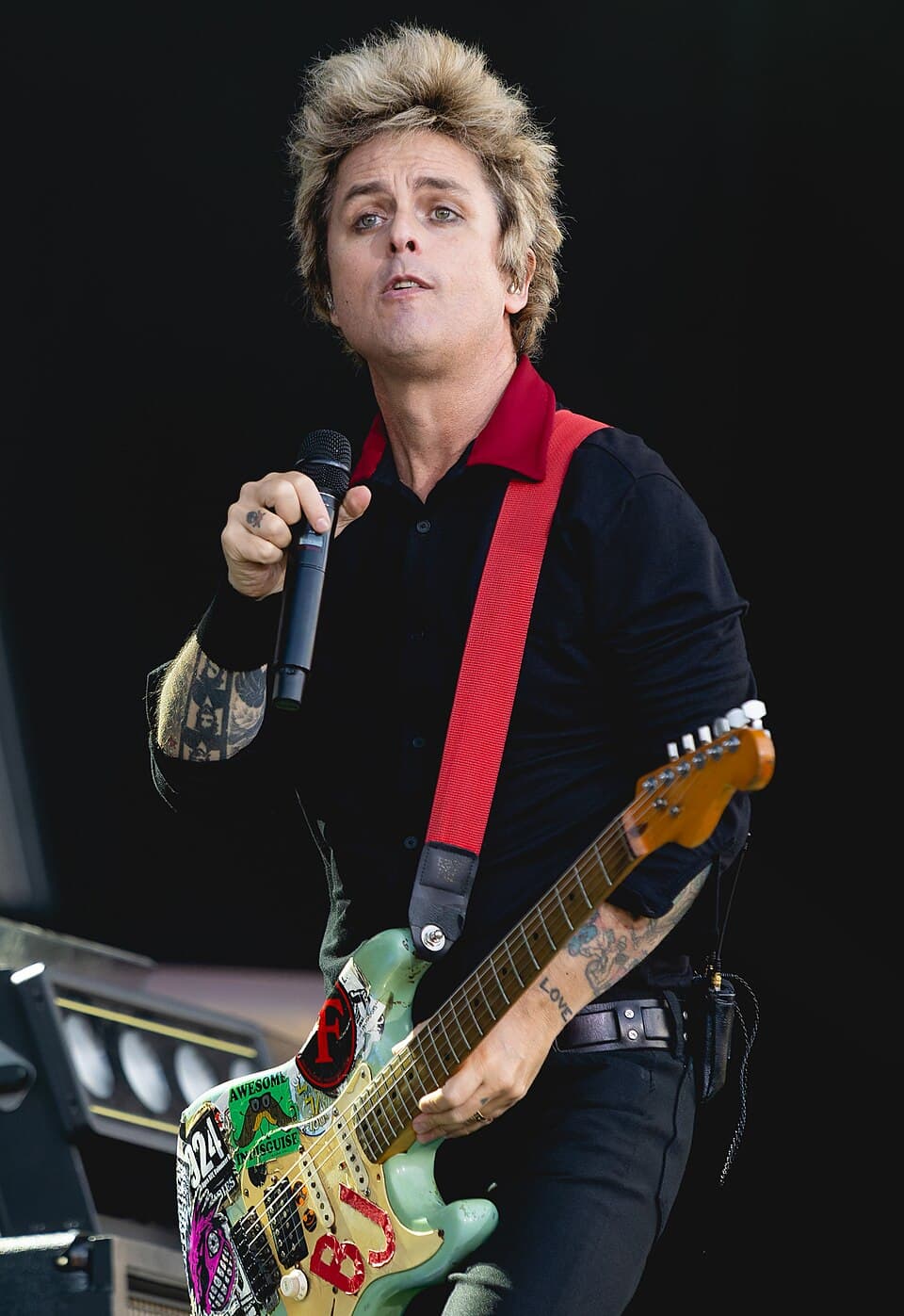
Basket Case's bright, buzzy rhythm tone is Billie Joe Armstrong playing Blue, his Fernandes Stratocaster fitted with a Bill Lawrence L-500XL humbucker, straight into a Marshall 1959SLP Plexi head that producer Rob Cavallo brought to the Dookie sessions. The strings are Ernie Ball Regular Slinky (.010–.046) and the pick is a Dunlop Tortex .73mm. The guitars are tuned a half step down to E-flat.
The sound of Basket Case
"Basket Case" is the sound of a bright single-pickup guitar slammed through a cranked British amp, and almost nothing else. Released August 1, 1994 as the second single from Dookie, it spent five weeks at number one on Billboard's Alternative Songs chart and earned a Grammy nomination for Best Rock Vocal Performance by a Duo or Group. Rolling Stone later ranked it number 150 on its 2021 list of the 500 Greatest Songs of All Time.
The tone is deceptively simple. Billie Joe Armstrong plays fast, palm-muted eighth-note power chords on the verses, then lets them ring on the chorus. There is no chorus pedal, no delay, no rack of processing. What makes it cut is the gear and the attack: a hot bridge pickup, a Plexi pushed into natural overdrive, and Armstrong's all-down-stroke right hand.
The lyric came from a real place. Armstrong later said he rewrote the words around his experience with panic attacks, calling it "the best decision I'd ever made, probably, as a songwriter," per the song's documented history. The nervous, racing feel of the track is baked into both the words and the tone.
Electric guitar
One guitar carries the whole record: Blue.
On the record, 1994 · Nickname "Blue" · Bridge humbucker
Fernandes RST-50 Stratocaster with a Bill Lawrence L-500XL
Armstrong's first electric, a Japanese-built Strat copy he got for his 11th birthday. In the Dookie era it was fitted with a Bill Lawrence L-500XL humbucker in the bridge, the hot, tight pickup behind the buzzy Basket Case rhythm tone. Ground Guitar documents later pickup swaps (a Seymour Duncan JB at Woodstock '94, then a Seymour Duncan SH-4 JB by 1995), all after the record itself was made.
Amp
The tone is 90 percent this amp.
Recording amp · 100W · Later nicknamed "Pete"
Marshall 1959SLP Super Lead Plexi
Per Ground Guitar, producer Rob Cavallo brought a Marshall 1959 SLP Plexi head to the studio when Green Day started Dookie, and Armstrong used it for the entire album. He bought it afterward and had Martin Golub add the "Dookie mod," nicknaming it Pete. On Basket Case itself it was a cranked, essentially stock Plexi doing the crunch.
Effects
There is not much to report, and that is the point.
On the record · Signal chain
Guitar straight into the amp
The Basket Case rhythm tone is a guitar plugged into a loud Plexi, no pedals in front. The grit is the amp breaking up, not a distortion box. If you are chasing this sound, the fastest win is a cranked British-voiced amp, not a pedalboard.
Released 2019 · The tone in a box
MXR Dookie Drive (recreation, not on the record)
MXR built this pedal for Dookie's 25th anniversary to capture the album's dirty-yet-articulate sound. Per MXR, engineers analyzed Armstrong's amps and rebuilt them as blendable gain voices in one box. The original DD25 is discontinued; MXR now sells a 30th-anniversary version. A useful shortcut if you do not own a Plexi.
Strings
The set on the record is the same one Armstrong has used his whole career.
On the record · .010–.046
Ernie Ball Regular Slinky (.010–.046)
Ground Guitar documents Ernie Ball Regular Slinky as Armstrong's long-running set, gauged .010 to .046, on Blue and his Les Paul Juniors since the early days. It is the canonical pop-punk rhythm gauge: light enough for fast down-strokes, heavy enough to stay tight under a cranked amp.
Picks
Since the Dookie era, 1994 · .73mm
Dunlop Tortex Standard .73mm (yellow)
Per Ground Guitar, Armstrong has used the .73mm yellow Tortex since at least the Dookie era, and his tech and Dunlop both confirm it as his current gauge. The .73 is stiff enough for a driving down-stroke but flexes enough to skate across strings at Basket Case's tempo.
Source: Ground Guitar: Dunlop Tortex .73mm.
The tone recipe
The whole signal chain on one card. This is the shortest path to the Basket Case rhythm sound.
Basket Case signal chain
- Guitar
- Fernandes RST-50 Stratocaster (Blue), any bright single-cut or Strat-style works
- Bridge pickup
- Bill Lawrence L-500XL (a hot, tight humbucker in the bridge)
- Amp
- Marshall 1959SLP Plexi, cranked into natural overdrive, no boost pedal
- Strings
- Ernie Ball Regular Slinky (.010–.046)
- Pick
- Dunlop Tortex .73mm, held for all-down-stroke rhythm
- Tuning
- E-flat standard (a half step down)
- Key
- E-flat major
How to get this tone
You do not need Armstrong's exact guitar. You need three things in the right relationship: a hot bridge pickup, a genuinely loud amp, and a light-but-not-flimsy gauge.
Start with the strings, because they are the cheapest and most exact match. Ernie Ball Regular Slinky in .010–.046 is the literal set on the record. Put them in E-flat standard and play open E-shape chords; the half-step drop is why the record sounds a touch darker and looser than a standard-tuned copy.
Then get the amp breaking up. A pedal into a clean amp will get you close, but the Basket Case grit is power-tube compression, so a cranked tube amp (or a good Plexi model) is the real thing. Set the bridge pickup, roll the guitar volume near full, and dig in with a stiff .73mm pick.
One honest caveat: this is a light, bright setup. If you want thicker low-end chug for heavier styles, a .011 or heavier set and a lower tuning will serve you better; the .010–.046-in-E-flat recipe is tuned for fast, jangly punk, not for down-tuned metal.
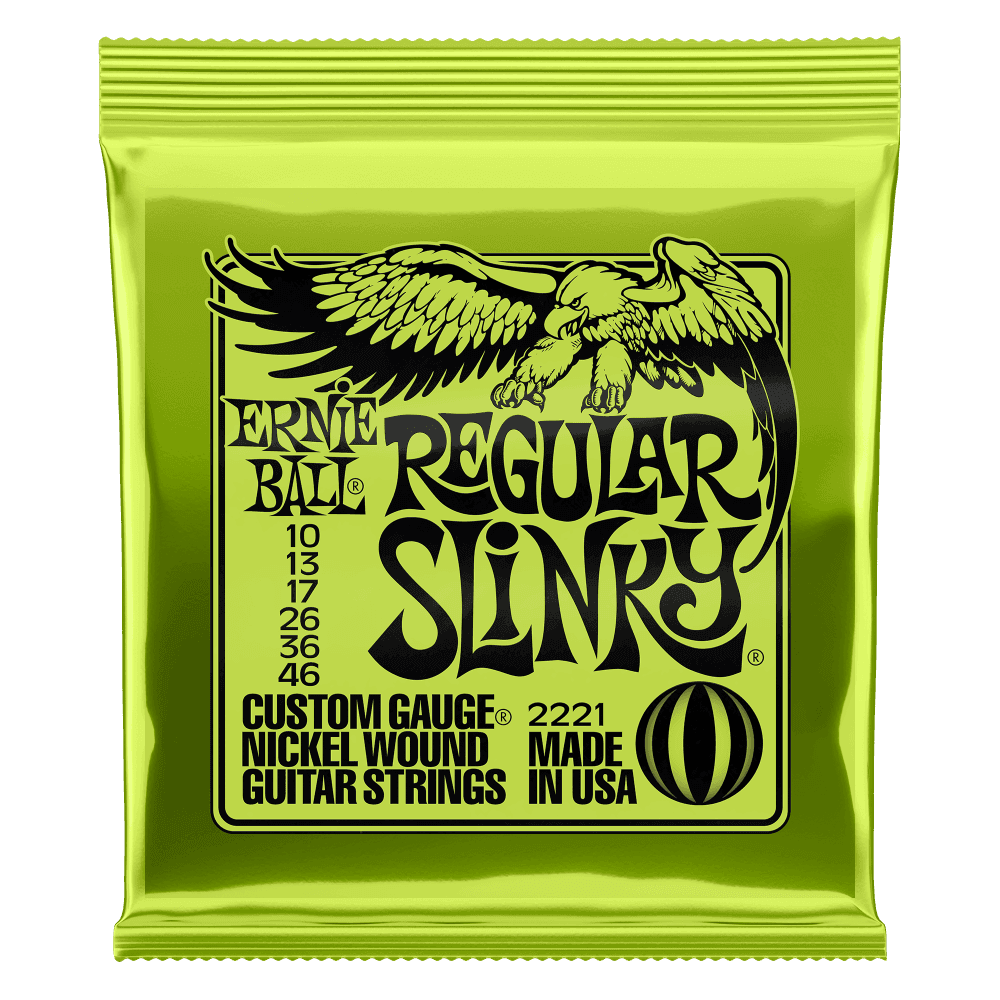
Regular Slinky (.010–.046)
Why this one: The exact set documented on Blue and Armstrong's fleet across the Green Day catalog. The canonical pop-punk rhythm gauge, and the literal strings on Basket Case.
The rest of the band
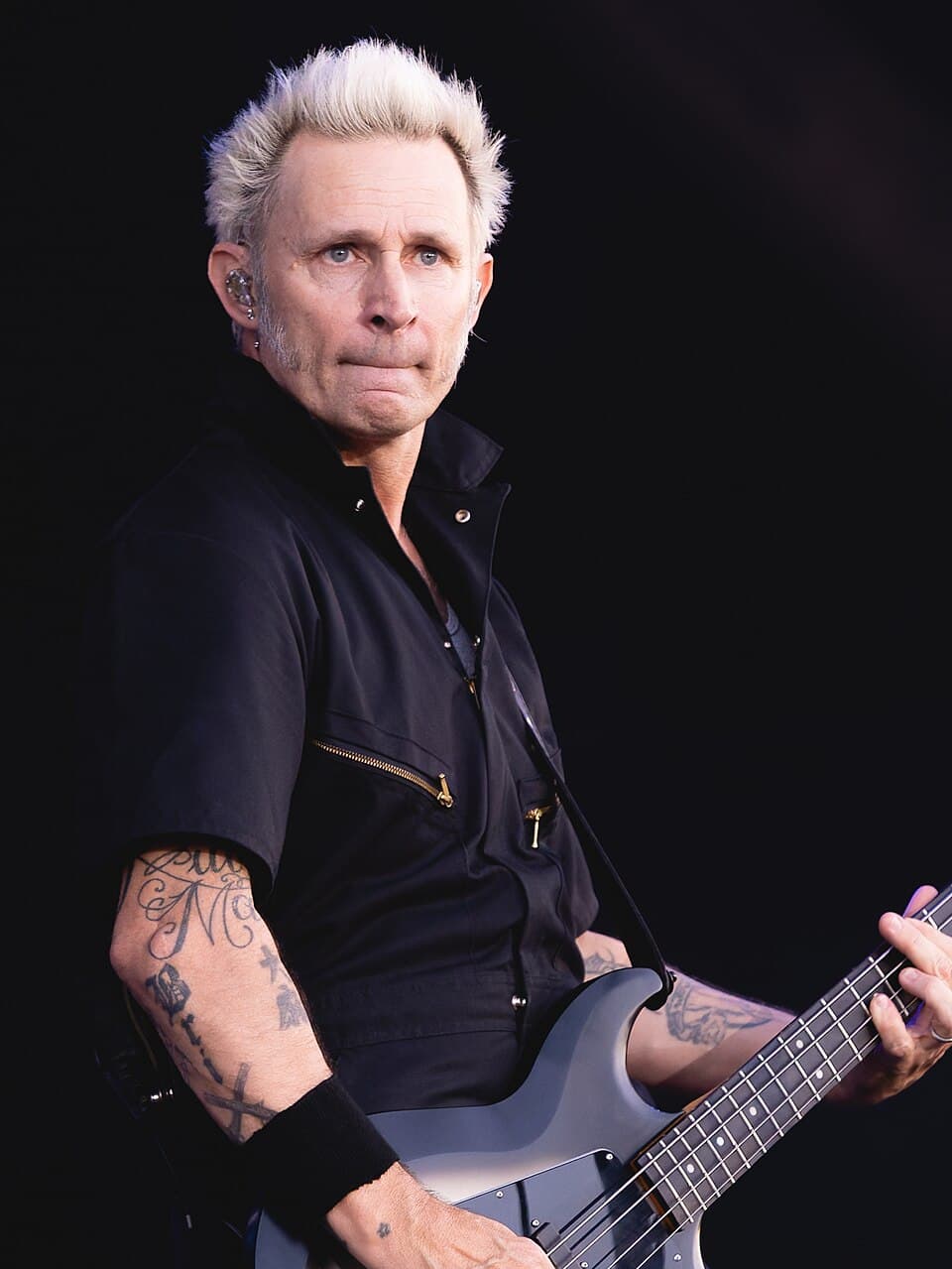
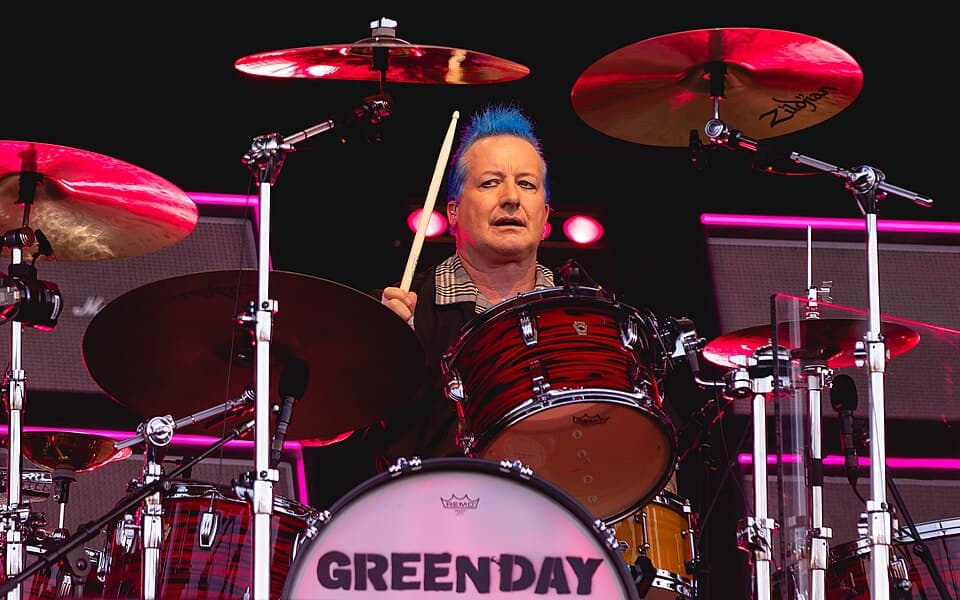
Basket Case is a three-piece performance. The guitar is the tone story, but the pocket underneath is Mike Dirnt's bass locked to Tré Cool's drums, both moving at the same relentless eighth-note pulse Armstrong strums. Producer Rob Cavallo shaped the record's punchy, radio-ready mix, and he is the reason the Marshall Plexi was in the room in the first place. For the full band gear encyclopedia, the Green Day band page pulls every member's documented rig together.