The history of guitar strings: from sheep gut to cobalt
Written with AI help · Updated
Guitar strings have gone through five revolutions: gut, wound in villages like Salle, Italy, where the D'Addario family made strings from at least 1680; steel, standard on Martin flat-tops from 1922; nylon, developed by Albert Augustine and Andres Segovia in 1947-48; custom-gauge rock sets, the 1962 Ernie Ball Slinky; and modern materials, from 1974 phosphor bronze to 1997 Elixir coatings and 2012 cobalt alloys.
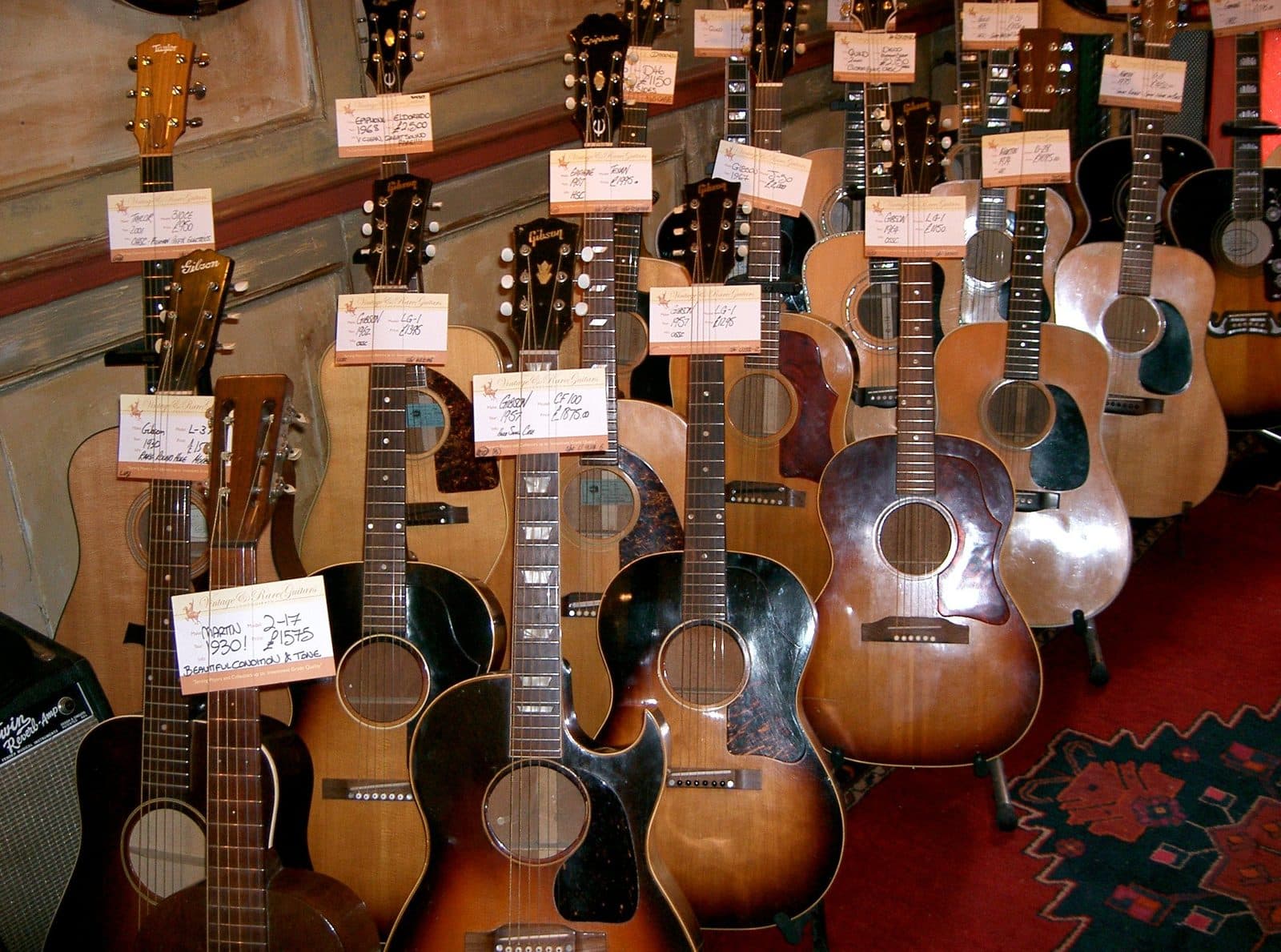
The strings on your guitar are the end of a supply chain that starts with sheep farmers in seventeenth-century Italy. Every major string innovation since then solved one specific player problem: louder, easier to bend, longer lasting, or hotter output. This page walks the whole timeline, with the receipts.
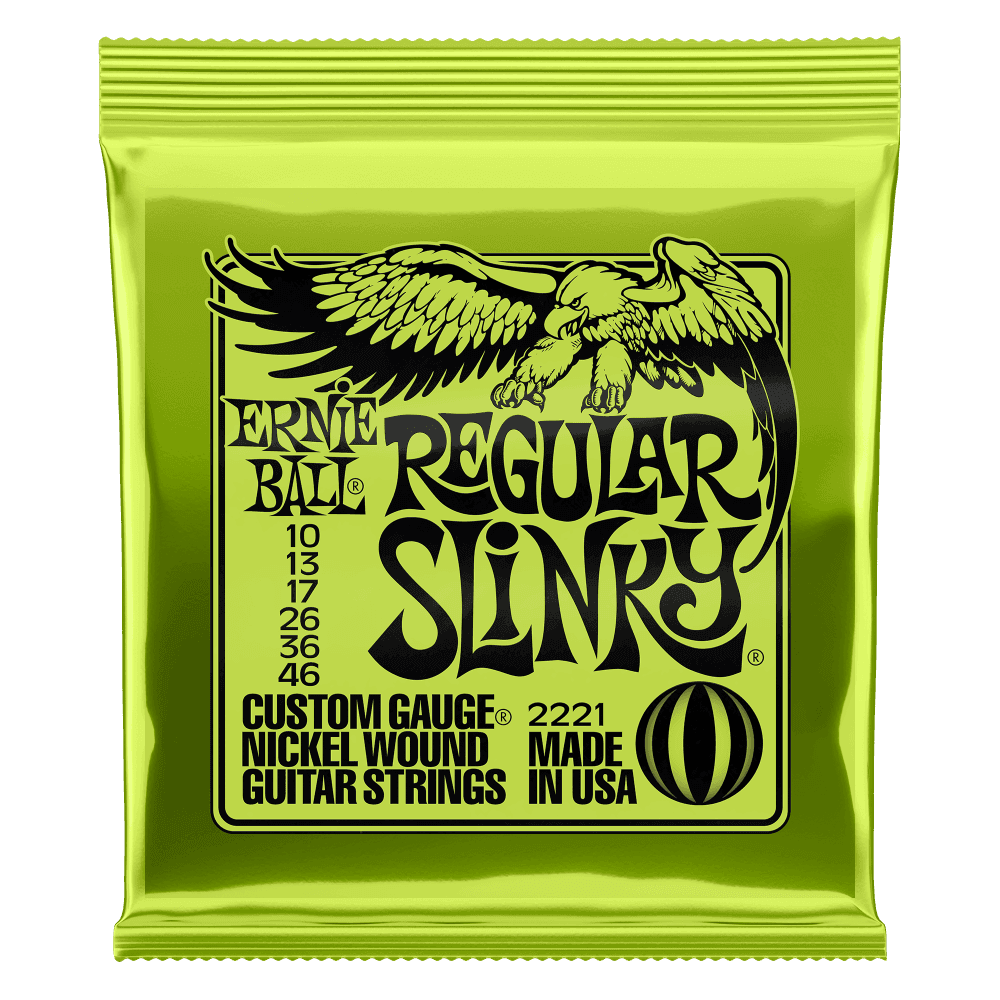
Regular Slinky (.010–.046)
Why this one: The most historically important electric set still in production. The 1962 custom-gauge idea, unchanged in concept for six decades.
The gut era: Salle, Italy, and four centuries of cordari
Before steel, every plucked string was gut. Lutes, ouds, early guitars, violins: all of them ran cords twisted from cleaned, stretched sheep intestine. The craft concentrated in a few places with the right combination of sheep herds and string-making tradition, and the most famous was Salle, a small village in the Abruzzo region of Italy.
Salle was a string-making town in the same way Cremona was a violin-making town. Per D'Addario's own company history, Italian records place the D'Addario family in the trade from at least 1680, when Donato D'Addario's occupation was recorded as "cordaro", Italian for string maker. The family worked gut in Salle for more than two centuries after that.
Gut strings sounded warm and sang beautifully, but they were fragile, expensive, and allergic to humidity. They went flat when the weather changed and snapped without warning. Players lived with this for centuries because there was no alternative.
The American chapter starts with a disaster. A 1905 earthquake devastated Salle, and per company histories, Carmine "Charles" D'Addario emigrated to Queens, New York, where he began importing strings from relatives back home and then making them in America. That family operation eventually became the largest string maker in the world.
Steel takes over: 1900-1929
Steel music wire existed in the 1800s, but guitars built for gut could not safely hold the extra tension. The shift needed louder music to demand it and braced guitars to survive it. Both arrived in the early twentieth century, pushed hard by the Hawaiian guitar craze that dominated American popular music in the 1910s and 1920s.
Martin is the cleanest marker for the transition. Per the Vintage Martin strings archive, the Style 2-17 of 1922 was Martin's first production Spanish-style guitar braced for steel strings as standard equipment. Style 18 followed in 1923 and Style 28 in 1926, and by the end of the decade steel was standard across the flat-top line, with gut stringing demoted to special order.
Steel solved volume. A steel-strung flat-top could hold its own against banjos and fiddles in a string band, and early blues and country players adopted it fast. Everything about the modern acoustic guitar, X-bracing, the dreadnought body, the truss rod, exists to manage steel-string tension.
Nylon replaces gut: Segovia, Augustine, and DuPont, 1947-48
Classical players held out on gut the longest, and the second world war forced the issue. Gut supplies went to surgical sutures, and Andres Segovia, the most famous guitarist alive, could not get reliable strings.
Per Classical Guitar Magazine's account, Segovia received experimental nylon strings through contacts at DuPont in the mid-1940s, and in 1946 he was introduced to Albert Augustine, a Danish-born luthier in New York who had been experimenting with string making. DuPont supplied the nylon monofilament; Augustine did the development work to turn it into a musical string. Per Augustine's company history, the first nylon sets reached players in 1947-48, manufactured with help from the Mari family's La Bella factory in New York.
Nylon won on every practical axis: consistent diameter, stable tuning, immune to humidity, far cheaper. Within roughly a decade gut was a historical-performance specialty item, and the "classical guitar" became, in material terms, the nylon-string guitar.
The Slinky and the custom-gauge revolution: 1962
Electric guitars in the 1950s shipped with heavy strings. Factory sets commonly ran a wound third string and gauges that fought back hard against the string bending that defined the emerging rock vocabulary.
Ernie Ball was teaching guitar and running a music store in Tarzana, California, and watched students give up against those sets every day. Per Ernie Ball's Slinky Story, he started offering lighter custom-gauge sets in 1962 when the big manufacturers declined to, and the Slinky line was born from that catalog. The plain third string and the light top end made modern bending technique accessible to ordinary players, not just pros with custom-ordered singles.
Word spread from California students to the British players rewriting rock guitar. By the mid-1960s names like Jimmy Page, Eric Clapton, and Jeff Beck were associated with the lighter sets, and custom gauge stopped being a niche request and became the product. The gauge menu you take for granted today, .009s versus .010s versus skinny-top-heavy-bottom hybrids, descends from that 1962 decision. Today's Regular Slinky .010–.046 is the direct descendant, and the full lineup logic is covered in our Cobalt Slinky gauge guide.
Roundwound bass and the British bright sound: 1966
Electric bass strings in the early 1960s were flatwound: smooth, thumpy, and dark. That sound worked for Motown, but it buried bass players in the mix of louder rock bands.
Rotosound, founded in the late 1950s by British engineer and musician James How, changed that. Per Rotosound's company history and Guitar World's retrospective, John Entwistle of The Who came to the factory looking for an even, aggressive, piano-like bass string, spent an afternoon testing prototypes, and the stainless steel roundwound set that emerged became Swing Bass 66, first produced in 1966.
The roundwound bass string moved the instrument from felt to heard. The bright attack and growl of Swing Bass 66 runs through Entwistle, John Paul Jones, Geddy Lee, and effectively the entire lineage of rock bass tone that followed. The set is still in production, still stainless, still bright.
Swing Bass 66 (.045–.105)
Why this one: The 1966 original that invented the bright roundwound bass sound, still made in England to the same recipe.
The alloy wars: phosphor bronze, 1974
Acoustic players spent the mid-century on 80/20 bronze, a copper-zinc wrap that sounds brilliant for about a week and then dies fast as the alloy oxidizes. The fix came from the D'Addario company, by then re-established on Long Island and incorporating as J. D'Addario and Co. in the early 1970s.
Per D'Addario's own product history, the company was the first to wind acoustic strings in phosphor bronze, introduced in 1974. Adding tin and a trace of phosphorus to the copper slows oxidation dramatically, so the strings keep their tone several times longer than 80/20, with a warmer, more balanced voice.
Phosphor bronze became the industry default and remains it. The D'Addario EJ16, the light-gauge phosphor bronze workhorse, is plausibly the best-selling acoustic set on earth.
The coating wars: Elixir, 1997
The next problem was string death itself. Skin oils and sweat corrode any wrap alloy, and until the late 1990s the only fix was changing strings constantly.
The answer came from outside the music industry. Per Elixir's company history, engineers at W.L. Gore and Associates, the Gore-Tex company, had been coating push-pull control cables for animatronics with fluoropolymer to cut friction. Engineer Dave Myers found guitar strings were an ideal test article, and Gore launched Elixir Strings in 1997 with the original thick Polyweb coating. The thinner Nanoweb followed, trading a little of Polyweb's slickness for a brighter, more conventional feel, and became the line's best seller.
Coated strings created a new product axis. Every major maker now ships a coated line, from Elixir Nanoweb and Polyweb to D'Addario's XS and Ernie Ball's Paradigm, and "how long do they last" became a spec you shop on, not just a complaint.
The modern materials era: cobalt and beyond, 2012-today
The most recent material revolution targeted the magnetic relationship between string and pickup. Per Premier Guitar's launch coverage, Ernie Ball announced the Cobalt Slinky line in January 2012: wrap wire made from an iron-cobalt alloy that is more magnetically responsive than nickel, driving pickups harder with more output, wider dynamic range, and stronger lows and highs.
The same decade brought D'Addario's NYXL line, built on reformulated high-carbon steel cores for break resistance and tuning stability, and Ernie Ball's Paradigm treatment, which reinforces the string against breakage while resisting corrosion. The through-line of the modern era: the winding machines are mature, so the innovation moved into metallurgy and surface chemistry.
If you want to hear the newest layer of this history on your own guitar, the Regular Slinky Cobalt is the canonical entry point: check price on Amazon.
The full timeline at a glance
| Innovation | Who | Why it mattered | |
|---|---|---|---|
| 1680 | Gut string craft documented in Salle, Italy | D'Addario family ('cordaro') | The pre-industrial gut trade that fed every lute, violin, and early guitar |
| 1905 | Salle earthquake; string making emigrates | Charles D'Addario to Queens, NY | Moves the craft to America, seeds the modern industry |
| 1922 | First production steel-string model | Martin Style 2-17 | Steel becomes standard; volume wins; the modern flat-top is born |
| 1947-48 | Nylon classical strings | Albert Augustine, Segovia, DuPont | Gut retired within a decade; classical guitar stabilizes |
| 1962 | Custom-gauge electric sets (Slinky) | Ernie Ball | Light gauges make string bending accessible; rock technique follows |
| 1966 | Stainless roundwound bass (Swing Bass 66) | James How / Rotosound, with John Entwistle | Bass moves from felt to heard; British rock bass tone is born |
| 1974 | Phosphor bronze acoustic wrap | D'Addario | Longer life, warmer voice; becomes the acoustic default alloy |
| 1997 | Fluoropolymer-coated strings (Elixir) | W.L. Gore / Dave Myers | String longevity becomes a buying spec; every brand follows |
| 2012 | Cobalt alloy wrap (Cobalt Slinky) | Ernie Ball | Metallurgy targets the pickup itself: more output, wider dynamics |
One honest caveat on dates: company histories are written by the companies. Where independent archives exist, like the Vintage Martin ledger work, we cite them; where only the manufacturer's own telling exists, treat the year as the company's claim. The shape of the timeline is not in dispute.
Next steps
Keep going deeper:
- Pick your own layer of the timeline with our Cobalt Slinky gauge guide, the modern end of the story.
- See how gauge and tension actually work in the string gauge and scale length guide.
- Read the full review of the set that started the custom-gauge era, the Ernie Ball Regular Slinky, or the one that started roundwound bass, the Rotosound Swing Bass 66.
Frequently asked questions
What were the first guitar strings made of?
Gut. For centuries before steel, plucked instruments were strung with cords twisted from sheep intestine, a craft concentrated in Italian villages like Salle in Abruzzo. Italian records place the D'Addario family in that trade from at least 1680, when Donato D'Addario was recorded with the occupation 'cordaro', Italian for string maker.
When did guitarists switch from gut to steel strings?
Gradually through the 1900s-1920s, pushed by louder ensemble music and the Hawaiian guitar craze. Martin shipped its first production model built for steel strings, the Style 2-17, in 1922, and by the late 1920s steel was standard across Martin's flat-top line with gut available only on special order.
Who invented nylon guitar strings?
Albert Augustine, working with Andres Segovia and DuPont nylon in the late 1940s. Wartime gut shortages pushed Segovia to seek an alternative; Augustine developed a usable nylon treble string, and the first Augustine nylon sets reached players in 1947-48. Nylon replaced gut on classical guitars almost completely within a decade.
When were Ernie Ball Slinky strings invented?
1962. Ernie Ball, then a guitar teacher and music store owner, saw students struggle to bend the heavy factory sets of the day, so he began selling lighter custom-gauge sets. The Slinky line grew from that idea and by the mid-1960s had spread to British players like Jimmy Page, Eric Clapton, and Jeff Beck.
What was the first famous roundwound bass string?
Rotosound Swing Bass 66, first produced in 1966. James How's company developed the stainless steel roundwound set with input from John Entwistle of The Who, who came to the factory looking for a brighter, more even bass string. It became the industry-standard roundwound and shaped the sound of British rock bass.
When was phosphor bronze introduced for acoustic strings?
1974. D'Addario was the first to wind acoustic guitar strings with phosphor bronze, an alloy of copper, tin, and a trace of phosphorus. It lasts longer than 80/20 bronze and sounds warmer and more balanced, and it has since become the default acoustic string alloy across the industry.
When did coated guitar strings come out?
1997, when W.L. Gore and Associates, the company behind Gore-Tex, launched Elixir Strings. Engineer Dave Myers had been coating push-pull cables for animatronics with fluoropolymer and found guitar strings were an ideal application. The original thick Polyweb coating came first; the thinner Nanoweb followed and became the best seller.
What is the newest major string material?
Cobalt alloy wrap wire, introduced by Ernie Ball in January 2012 as the Cobalt Slinky line. Cobalt is more magnetically responsive than nickel, so the strings drive pickups harder with more output and wider dynamic range. Other modern developments include D'Addario's NYXL high-carbon core line and Ernie Ball's Paradigm reinforced sets.