Valeton GP-5 review: a pocket-sized NAM amp modeler and multi-effects pedal
An editorial review of the Valeton GP-5 pocket-sized amp modeler and multi-effects pedal: SnapTone NAM capture loading, 100+ effects, a 20-slot IR loader, Bluetooth, and how it stacks up against the IK Multimedia TONEX ONE.
Written with AI help · Updated
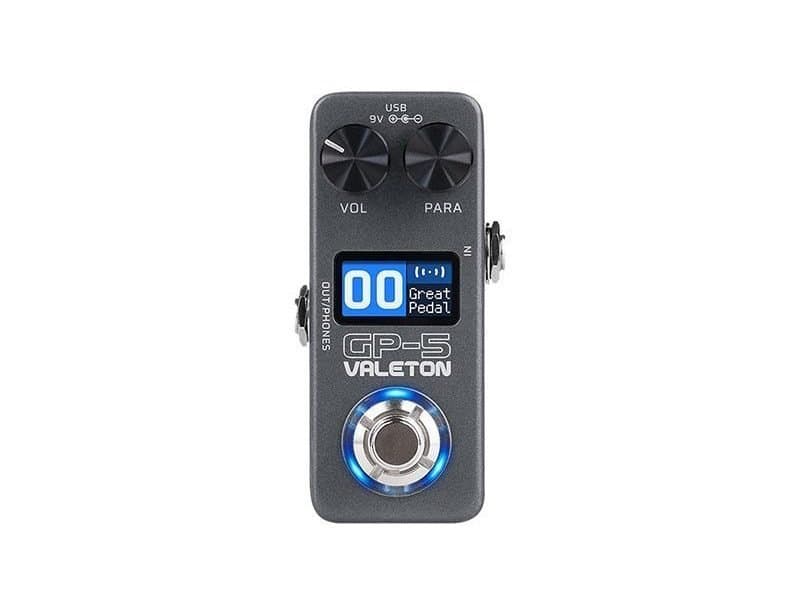
The Valeton GP-5 is a pocket-sized multi-effects processor and NAM amp modeler: 100+ effects, up to 9 simultaneous modules, and Bluetooth 5.0 packed into a 237g stompbox under 10cm wide. Its SnapTone engine loads open-source Neural Amp Modeler captures (50 preloaded, 80-file capacity), plus 20 custom IR slots and a built-in USB audio interface. At a fraction of a flagship modeler's price, it's a legitimate practice, recording, and backup-gig rig, not a toy.
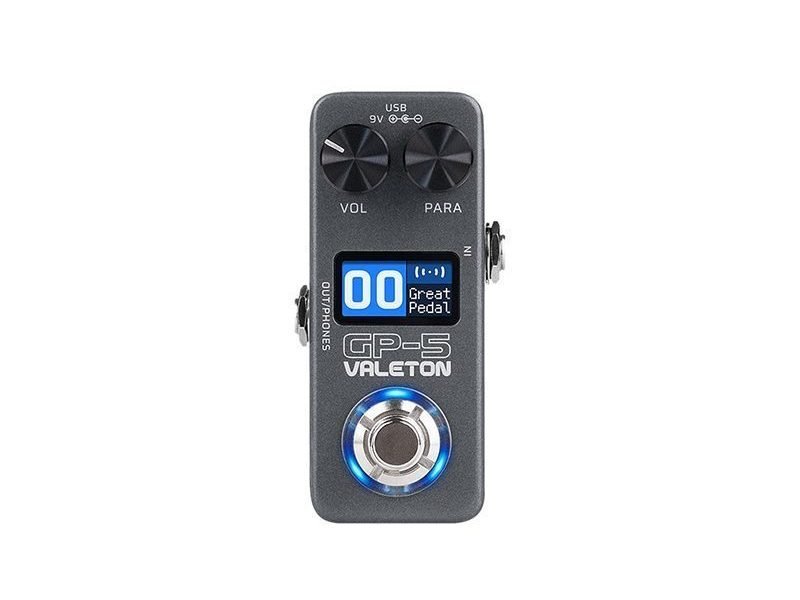
Image: Photo: Valeton
Affiliate links: we earn commission on qualifying Amazon purchases. See our full disclosure.
What it is, in one paragraph
The Valeton GP-5 is the latest entry in Valeton's GP line of guitar amp modelers and multi-effects units, a category the brand has quietly built a reputation in without the name recognition of Line 6, Fractal, Neural DSP, or Kemper. The GP-5 shrinks that category down: a 237g metal stompbox, about the footprint of a mini pedal, that models amps and cabs, runs up to 9 effect modules at once, loads captures through Valeton's SnapTone system, and doubles as a USB audio interface. Valeton's own product page frames it as squeezing flagship-processor power into a palm-sized enclosure, and the spec sheet mostly backs that framing up. Guitar World's launch coverage positioned it directly against the IK Multimedia TONEX ONE, at a noticeably lower price. That comparison holds up well enough that it's the backbone of this review.
Full spec sheet
- Brand / model
- Valeton GP-5
- A/D/A converter
- 24-bit, 44.1kHz sampling, 100dB SNR
- Simultaneous modules
- Up to 9
- Patch memory
- 100 slots (50 factory, 50 user)
- SnapTone (NAM) capacity
- 80 files, 50 preloaded
- IR loader
- 20 user IR slots
- Bluetooth
- 5.0, dual-mode (BLE and audio)
- Instrument input
- 1/4-inch unbalanced TS, 1M ohm impedance
- Output
- 1/4-inch unbalanced stereo TRS, headphone-compatible, 100 ohm impedance
- USB
- USB 2.0 Type-C, 2-in/2-out audio interface
- Dimensions
- 93.5 x 42 x 52mm (W x D x H)
- Weight
- 237g
- Power
- DC 9V center-negative or USB 5V, 100mA / 190mA draw
Every number above comes straight from Valeton's own GP-5 spec sheet, fetched and cross-checked against the Sound On Sound and Guitar World reviews.
The signal chain: what's actually in each slot
Sound On Sound's hands-on review is the clearest breakdown of how the GP-5's editing app actually organizes a patch. Each patch is built from effect slot types you fill and reorder by dragging within the app:
The effect-slot types
- NR
- Noise reduction, typically first in the chain to keep hiss out of everything downstream.
- Pre
- Preamp and boost-style pedals for pushing the front end.
- Dst
- Overdrive and distortion models.
- EQ
- Tone shaping, independent of the amp block's own EQ.
- Mod
- Chorus, phaser, and flanger options.
- Dly
- Delay.
- Rvb
- Reverb.
Those seven slot types sit alongside the separate Amp, Cab, and SnapTone blocks, and the whole chain tops out at 9 simultaneous modules. You pick one option per slot, reorder slots by dragging in the free iOS/Android/desktop app, and the routing on select modules is customizable rather than fixed. It's not a fully modular grid like a Helix or Quad Cortex, but the reorderable slots and independently switchable Amp/Cab blocks give you real control over the signal path instead of a locked preset chain.
Amp, cab, and SnapTone: three ways to get a tone
The Amp and Cab modules are Valeton's own modeling, covering clean Fender-style platforms, Vox and classic Marshall-style crunch, and modern Marshall, Mesa, and Peavey-style high-gain, according to Sound On Sound's hands-on notes. Each model exposes a small set of editable parameters (volume, gain, EQ), and the Amp and Cab blocks can be toggled independently, so you can disable the Cab model if you're running into a real guitar cabinet.
SnapTone is the third path to a tone, and it's the GP-5's headline feature: a loader for captures made with the open-source Neural Amp Modeler (NAM) project. A NAM capture reproduces one specific real amp or pedal rather than a generic simulation, the same underlying idea behind pricier capture devices. The GP-5 ships with 50 SnapTone files preloaded and stores up to 80, with more available from community sites like Tone3000 and loaded over USB via Valeton's desktop software. Engaging the SnapTone module automatically bypasses the Amp and Cab blocks, a sensible guardrail against stacking two amp simulations on top of each other.
Free tones for the GP-5: start with STORMBLADE
The GP-5's SnapTone loader is a door to a growing world of FREE tones, because it reads open-source Neural Amp Modeler (NAM) captures. The best place to start is STORMBLADE, the free high-gain amp from Glenn Fricker's Spectre Sound Studios. It costs nothing: no demo, no subscription, no rental. Stormblade 2 is built around NAM technology, so a capture of it drops straight into the GP-5's 80-slot SnapTone bank alongside the 50 tones that ship on the pedal.
From there the free-capture rabbit hole is deep. Community libraries like Tone3000 host thousands of user-made NAM captures of real amps and pedals, all loadable over USB through Valeton's desktop software. The takeaway: the GP-5's ceiling is not the 50 factory SnapTones, it is however many free NAM captures you are willing to load, and STORMBLADE is the strongest free starting point for a metal-ready high-gain tone.
Footswitch, screen, and workflow
Controls are deliberately minimal: a Volume knob, a multi-function push/turn Parameter encoder, a small color LCD, and a single footswitch. Valeton's own spec sheet lists four footswitch modes, selectable via the app:
Footswitch modes
- Preset
- Step forward through your saved patches one at a time, the default way to move through a set.
- Setlist
- Pre-build a Song List so the footswitch steps only through tonight's patches, in order.
- Stompbox
- Turn the footswitch into a single on/off stomp for one effect inside the current patch.
- Tuner / Bypass
- Long-press to mute the output and pull up the built-in chromatic tuner.
Sound On Sound's real-world gripe is worth repeating honestly: there's no mode that simply toggles back and forth between two adjacent patches, the way a two-footswitch unit lets you flip between a rhythm and a lead tone instantly. The Song List mode gets you most of the way there if your set is pre-planned, but spontaneous A/B switching mid-song takes more setup than on a unit built around two footswitches.
GP-5 vs TONEX ONE: the mini-modeler face-off
Every review of the GP-5 reaches for the same comparison: IK Multimedia's TONEX ONE, the best-selling mini modeler it's chasing. Pulling verified specs from both manufacturers' own pages instead of relying on either brand's marketing copy:
| Valeton GP-5 | IK Multimedia TONEX ONE | |
|---|---|---|
| Capture technology | SnapTone loads open-source NAM captures | Proprietary AI Machine Modeling |
| Onboard patch storage | 100 patch slots (50 factory, 50 user) plus 80 SnapTone slots | 20 presets total (2 in A/B mode, 1 in Stomp mode) |
| Included tone models | 100+ built-in effects and amp models, 50 SnapTones preloaded | 320+ Premium Tone Models included |
| Cloud preset library | None built-in, loads third-party NAM files manually | 60,000+ Tone Models on ToneNET |
| Effect modules | Up to 9 simultaneous, reorderable | Onboard EQ, compressor, noise gate, reverb, plus 5 modulation and 2 delay via desktop software |
| IR loading | 20 user IR slots | VIR multi-IR cabs plus a custom IR loader |
| Bluetooth | Yes, 5.0 dual-mode (BLE and audio) | Not listed |
| Onboard display | Color LCD screen | No screen, RGB micro-knob indicators only |
| Audio interface | 2-in/2-out USB-C, 24-bit / 44.1kHz | USB-C, 24-bit / 44.1kHz |
| Size and weight | 93.5 x 42 x 52mm, 237g | 94 x 48 x 53mm, 160g |
The honest read: the GP-5 wins on onboard storage, screen, Bluetooth, and IR slots, and it costs less. The TONEX ONE wins on capture-technology polish (IK's AI Machine Modeling has a longer track record than the open-source NAM project SnapTone builds on) and on day-one library size, 60,000+ community Tone Models on ToneNET dwarfs anything the GP-5 ships with out of the box. Sound On Sound's reviewer had both units side by side and called it a genuine toss-up on tone, "there's no clear winner or loser in terms of sound."
Who it's for, and who should skip it
Good fits: bedroom practice with headphones (the stereo output doubles as a silent-practice jack), budget home recording through the built-in USB interface, a backup or travel rig for a gigging player whose main amp might not survive a flight, and anyone who wants a screen and Bluetooth without living inside a phone app to do basic navigation.
Skip it, or budget for something else, if you need instant two-footswitch A/B switching between a rhythm and lead tone without pre-planning a Song List, if you want deep per-block parameter editing closer to a full-size modeler, or if a same-day library of tens of thousands of community presets matters more to you than price. TONEX ONE, a Line 6 HX Stomp, or a full pedalboard all cover those needs better. None of that makes the GP-5 a bad unit. It makes it a specific tool with a specific ceiling, which is exactly what a sub-flagship price should buy you.
Verdict and the affiliate hook
Valeton have absolutely knocked it out the park with the GP-5. It's a great-sounding practice tool and a full live performance rig, all in a pocket-sized pedal for a ridiculously affordable price.
Reviewer, Sound On Sound
If you want one small box that covers practice, budget recording, and a legitimate backup gig rig, all built around real amp captures instead of generic simulations, the Valeton GP-5 is a strong, honestly-reviewed pick well below flagship-modeler money. It won't replace a Kemper, a Quad Cortex, or a full pedalboard, and its single footswitch means live patch-switching takes more planning than a two-switch unit. For everything short of that, it earns the praise the independent reviews have given it.
GP-5
Why this one: Pocket-sized NAM capture loading, 100+ effects, a 20-slot IR loader, Bluetooth, and a built-in USB audio interface, all well below flagship-modeler pricing.
Related
Building out a compact signal chain: our MXR M76 Studio Compressor review covers the always-on glue pedal that pairs naturally in front of a modeler like the GP-5.
Chasing the high-gain tones the GP-5 models: pair the right amp captures with the right strings. Our best guitar strings for metal guide covers the gauges and alloys that hold up under drop tunings and high-gain amp settings.
Gear hub: Gear index.