Guitar weight: why it matters, what's heavy, and why bands like All Time Low go light
Written with AI help · Updated
Guitar weight comes mostly from the body wood and whether it's chambered. Mahogany and hard ash are heavy; basswood, poplar, and alder are lighter; chambering or weight relief drops pounds. A no-relief Les Paul can hit 9 to 11 pounds, while a thin, all-mahogany PRS SE Mira lands near 6.5. Bands that move hard onstage tend to pick the lighter guitar.
Guitar tone gets all the ink, but weight is the spec you feel every night. A heavy guitar is a different instrument to play a two-hour set on, to jump around with, or (if your band is that kind of band) to hurl across a stage. Here is what makes a guitar heavy or light, the tone tradeoff, and why the bands that move hardest tend to pick the lightest instruments.
Where the weight comes from
Almost all of it is the body: the density of the wood and how much of it is there. A recent study that weighed more than 450 guitars put it plainly, weight "impacts both playability and tone." The rough order, lightest to heaviest:
| Weight class | Feel | |
|---|---|---|
| Basswood, poplar, okoume | Lightest | Easy on the shoulder, great for long sets and hard movers |
| Alder, swamp ash | Middle | The balanced Strat and Tele weight most players find comfortable |
| Mahogany, hard ash | Heavy | Dense and substantial, the Les Paul feel, more strap fatigue over a set |
| Chambered / weight-relieved body | Lightened | Same wood, hollowed to cut pounds and open up resonance |
| Thin body (PRS Mira, Gibson SG) | Lightened | Less wood overall, so a lighter guitar in the same tonal family |
The Les Paul is the clearest example of how much build changes the number. A Gibson Les Paul with no weight relief typically runs 9.5 to 11 pounds; a Traditional 9-hole relief lands around 9 to 10; and a chambered Les Paul drops to roughly 7.5 to 8.5. Same silhouette, up to three pounds of difference.
Why All Time Low went light: the PRS Mira
All Time Low built their name on chaotic, physical pop-punk shows. So it is no accident that Alex Gaskarth's guitar of choice is not a heavy mahogany Les Paul. He is documented playing the PRS Mira, a deliberately lightweight, thin, all-mahogany double-cut. The SE version weighs about 6.5 pounds, with a body around 7mm thinner than PRS's USA standard, and PRS designs it to be light and comfortable.
Put the numbers side by side and the logic is obvious. A no-relief Les Paul at 9 to 11 pounds is a lot of guitar to sling low, run with, and throw around night after night. A 6.5-pound Mira is not. For a band that treats the stage like a contact sport, a light, thin, durable guitar is the practical pick, and it still delivers a mahogany voice.
How to buy light
- Lighter wood
- Basswood, poplar, or alder over mahogany or hard ash, if you can choose the body.
- Weight relief
- A chambered or weight-relieved body cuts pounds from the same wood. Gibson's chambered Les Pauls are its lightest.
- Thinner body
- A PRS Mira or Gibson SG uses less wood than a slab Les Paul, so it lands lighter in the same tonal family.
- Weigh before you buy
- Two guitars of the same model can differ by pounds. If weight matters, put it on a scale, not just a spec sheet.
The tone side of the tradeoff
Weight is not purely a comfort call, it nudges tone. Heavier guitars are often credited with more sustain and a fatter low end; lighter, chambered ones with a more open, resonant, semi-acoustic quality. The 450-guitar study treated weight as a real variable in both playability and tone, and how much it matters on a solidbody is part of the same debate we cover in tonewoods by genre.
The honest takeaway: pick weight for how the guitar feels to play and move with first, and treat the tonal shift as a secondary factor you can dial back in with pickups and, of course, your strings. If you move hard onstage, a lighter guitar with a fresh, well-chosen set will serve you better than a back-breaking slab you fight all night.
Match the strings to the way you play
A light, fast-moving rig wants strings that hold tune through the abuse. A reliable, punchy set is the cheap half of the equation:
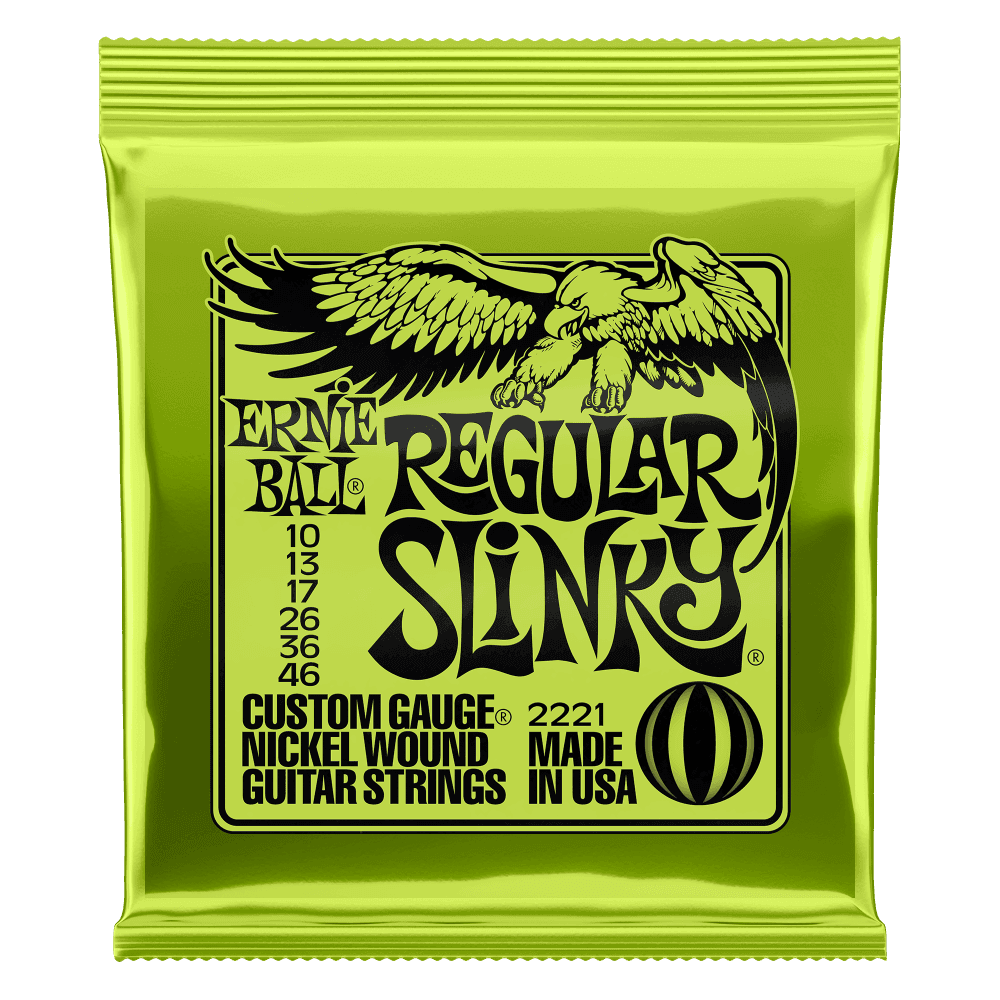
Regular Slinky (.010–.046)
Why this one: The pop-punk and rock standard in E: bend-friendly, punchy, and cheap enough to change often on a band that beats up its gear.
Next steps
Go deeper on the build in tonewoods by genre, see how the pros keep guitars recording-ready in producers on strings for recording, and browse the full strings catalog by brand and gauge.
Frequently asked questions
What makes a guitar heavy or light?
Mostly the body: the wood's density and how much of it there is. Mahogany and hard ash are heavy woods; basswood, poplar, okoume, and alder are lighter. Then build matters: chambering or weight relief hollows out wood to cut pounds, and a thinner body simply uses less. A solid mahogany Les Paul with no weight relief can reach 9 to 11 pounds.
How much does a Les Paul weigh?
It depends on the weight relief. A Gibson Les Paul with no weight relief typically runs 9.5 to 11 pounds, a Traditional 9-hole relief around 9 to 10, and a chambered Les Paul roughly 7.5 to 8.5. Chambering produces the lightest Les Pauls Gibson makes.
Why do some bands avoid heavy guitars onstage?
Comfort and movement. A heavy guitar hangs harder on your shoulder and back over a full set, and it is more punishing if you jump, run, or throw your body (and your guitar) around. Players known for physical, high-energy shows often gravitate to lighter instruments for exactly that reason.
What guitar does Alex Gaskarth of All Time Low play, and why is it light?
Gaskarth is documented playing the PRS Mira. The Mira is a deliberately lightweight, thin, all-mahogany double-cut: the SE version weighs around 6.5 pounds with a body about 7mm thinner than PRS's USA standard. That is a very different guitar to lug and swing around than a 9-to-11-pound Les Paul.
Does a heavier guitar sound better?
This is debated. Heavier guitars are often credited with more sustain and a fatter low end, and lighter, chambered ones with a more open, resonant, semi-acoustic quality. A recent study weighing over 450 guitars framed weight as affecting both playability and tone. Treat weight as a feel-first decision with a tonal side effect, not a simple better or worse.
How do I get a lighter guitar without changing tone completely?
Three levers: choose a lighter body wood (basswood, poplar, alder over mahogany or hard ash), choose a chambered or weight-relieved body, or choose a thinner body like the PRS Mira or a Gibson SG. Each drops weight while keeping you in roughly the same tonal family.