
Ronnie Wood's guitars and strings: the Rolling Stones rig, sourced
Ronnie Wood's documented rig: the 1955 Stratocaster, the Zemaitis 'Stay With Me' guitar, the black B-Bender Telecaster, and the Ernie Ball strings behind his Rolling Stones tone.
The Rolling Stones / Faces / Jeff Beck Group · written with AI help · updated
Ronnie Wood's main stage guitar since the 1970s is a hardtail 1955 Fender Stratocaster, gifted to him by Warner Brothers in 1974. He also plays a custom Zemaitis disc-front solidbody (the 'Stay With Me' guitar) and a Ron Wood signature black B-Bender Fender Telecaster nicknamed 'BBB.' He is an Ernie Ball artist-roster guitarist. Wood joined the Rolling Stones on tour in 1975 and became an official member on April 23, 1976.
Who Ronnie Wood is
Ronald David Wood was born June 1, 1947, in the Hillingdon area of London to a family he's described as "water gypsies." He joined his first notable band, the R&B outfit the Birds, at 17 in 1964. In 1967 he joined the Jeff Beck Group as a guitarist and bassist alongside a young Rod Stewart, playing on the albums Truth and Beck-Ola. When that group split in 1969, Wood and Stewart formed Faces with former Small Faces members Ronnie Lane, Ian McLagan, and Kenny Jones, with Wood moving to lead guitar. Faces built a reputation as a genuine live rival to the Who and Led Zeppelin, and their 1971 track "Stay With Me" remains one of Wood's signature recordings.
After Mick Taylor left the Rolling Stones, longtime friend Keith Richards invited Wood to join. Per Wikipedia's account of his career, he toured with the band through 1975 while technically still a member of Faces, which broke up that December, and was officially declared a Rolling Stones member on April 23, 1976. He's held the guitar chair alongside Richards ever since, across records from Some Girls (1978) through Hackney Diamonds (2023). Beyond the Stones, Wood is also an accomplished painter and has released solo albums including 2010's I Feel Like Playing, featuring guest spots from Billy Gibbons, Slash, and Eddie Vedder, per Premier Guitar's 2010 interview.
What he plays
A hardtail 1955 Fender Stratocaster is Wood's constant, his "#1 guitar" per his own official site and, separately, Vintage Guitar magazine's pick for his most-used stage instrument. Around it rotates a small stable of well-documented guitars built for very different jobs: the Zemaitis "Stay With Me" solidbody for open-E slide work, a Ron Wood signature black B-Bender Telecaster nicknamed "BBB" for pedal-steel-style bends without leaving a six-string, and a 1953 Esquire that's seen heavier use since Faces reunion shows.
The rig, sourced
- Main stage guitar
- 1955 Fender Stratocaster, hardtail (no tremolo), a 1974 gift from Warner Brothers. Strings load through the body like a Telecaster.
- Signature slide guitar
- Zemaitis disc-front solidbody, the "Stay With Me" guitar. Three Gibson PAFs, a built-in treble booster, played in open E.
- B-Bender guitar
- "BBB": a black, Ron Wood signature B-Bender Telecaster, for pedal-steel-style string bends on a six-string.
- Strings
- Named on Ernie Ball's official artist roster. Personal gauge unconfirmed; Regular Slinky (.010-.046) is the standard-tuning default.
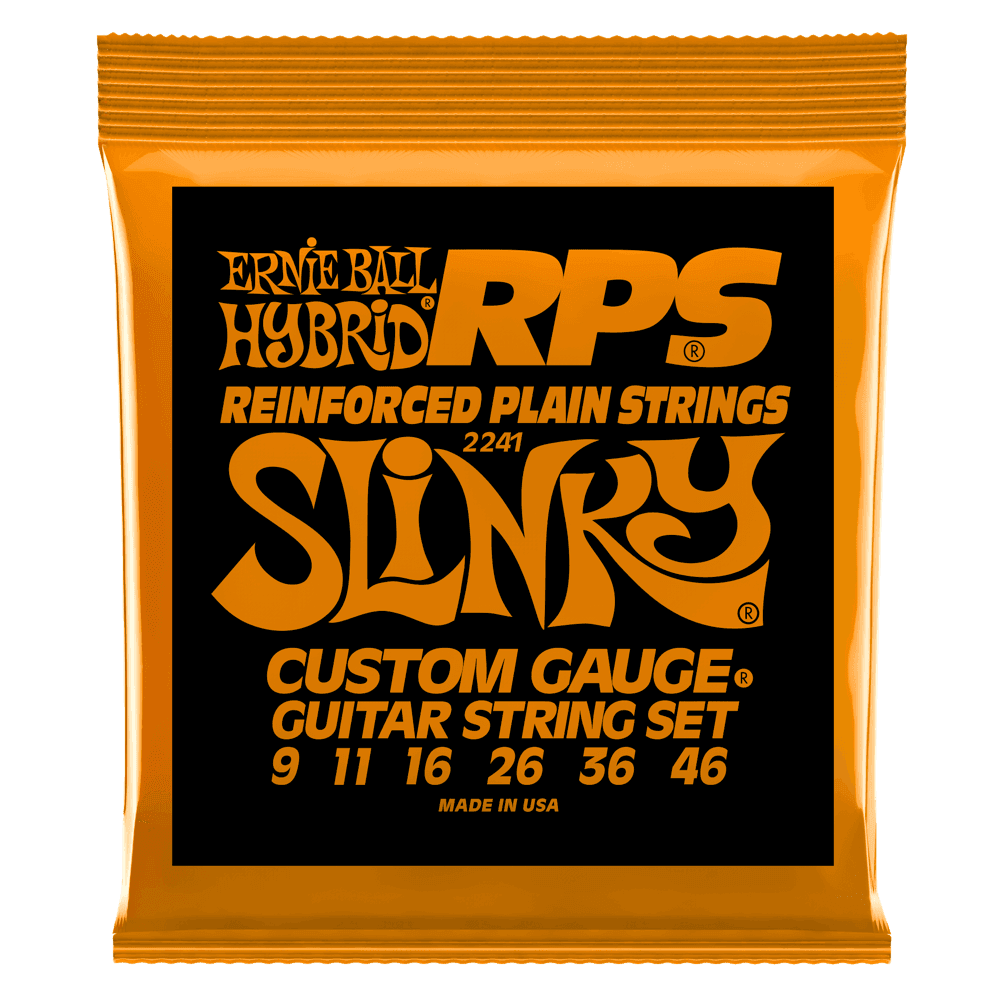
Regular Slinky RPS 2241 Nickel Wound (.010–.046)
Why this one: Ernie Ball's conventional Regular Slinky configuration, the standard-tuning starting point for a documented Ernie Ball roster guitarist whose exact personal gauge isn't publicly confirmed.
Why this fits
I usually go with a Strat with a whammy bar, or a slide, or a B-Bender. I didn't use a B-Bender on this album, which I would have liked to have done, but I did use a pedal steel, so that's even better.
On his usual guitar choices in the studio
That quote is the whole rig in miniature: a Strat for straightforward rock rhythm and lead, a slide guitar for the open-tuning Faces-era sound, and a B-Bender when he wants pedal-steel-style bends without switching instruments mid-song. The hardtail '55 Strat's lack of a tremolo unit and through-body stringing give it extra sustain and stability for the pick-attack-driven rhythm tone he's known for alongside Richards, a two-guitar interplay Richards himself once described as "the ancient art of weaving."
The Zemaitis disc-front solidbody solves a different problem: open-E slide work needs sustain and a bit of natural grit, and its built-in treble booster (engaged by pulling the master volume knob) pushes a clean amp like the Hiwatt Wood used on "Stay with Me" into a midrange growl without a separate pedal.
Electric guitars
1955 · Hardtail · His #1 guitar
Fender Stratocaster
A non-tremolo Strat, strings loaded through the body like a Telecaster. Warner Brothers bought it as a gift when Wood signed to the label in 1974, and it's been the frontline of his guitar arsenal ever since, on almost everything he's recorded.
Source: RonnieWood.com, official site.
Early 1970s · Custom-built · Tuned to open E
Zemaitis disc-front solidbody, "Stay With Me"
Built by Tony Zemaitis. Three Gibson PAF humbuckers with individual volume, tone, and push switches, a circular aluminum scratch plate, and a battery-powered treble booster engaged by pulling up the master volume control.
Source: Guitar World, citing Guitar Aficionado, Nov/Dec 2015.
Acquired c. 2009 · Faces reunion favorite
Fender 1953 Esquire
Wood's own site calls this his newer alternative to the '55 Strat, with heavier use documented during Faces reunion shows.
Source: RonnieWood.com, official site.
Signature model · Nicknamed "BBB"
Fender Telecaster, black B-Bender
A Ron Wood signature black B-Bender Telecaster. The B-Bender mechanism bends the B string a step by pulling down on the guitar strap, a pedal-steel-style effect on a standard six-string.
Source: Vintage Guitar magazine.
Documented onstage · Voodoo Lounge tour, 1994
Gibson Les Paul Special
Photographed in Premier Guitar playing this onstage with the Rolling Stones at the RCA Dome in Indianapolis, August 10, 1994.
Source: Premier Guitar, 2010-10-20.
Acoustic guitars
Documented 2010
Gibson J-200
Named as one of his main acoustics in a Vintage Guitar magazine interview, a classic jumbo-body workhorse for full-strum acoustic parts.
Source: Vintage Guitar magazine.
Documented 2010 · Silver-adorned
Zemaitis acoustic
A separate acoustic model from the same luthier behind his "Stay With Me" electric, named alongside the J-200 as one of his go-to acoustics.
Source: Vintage Guitar magazine.
Amps
1950s tweed · "Old standby"
Fender Champ
In Wood's own words to Premier Guitar: "My old standby is my '55 Strat and a Champ amp. Have guitar and amp, will travel!"
Source: Premier Guitar, 2010-10-20.
Faces era · "Stay With Me" tone
Hiwatt
Wood named this amp directly as the one behind the Faces' "Stay with Me" tone in the November/December 2015 issue of Guitar Aficionado.
Source: Guitar World, citing Guitar Aficionado.
Documented 2010 solo touring rig
Fender Tremolux, two Twin variants, Vibro-King
A 1950s Fender Tremolux, a '56 low-powered tweed Twin, a '58 high-powered Twin, and a (then-new) Fender Vibro-King, all documented for the recording of his solo album I Feel Like Playing.
Source: Vintage Guitar magazine.
1960 · For an early Shadows-style tone
Watkins Dominator
Added specifically to chase an early Hank Marvin/Shadows-style sound on his 2010 solo record, per Vintage Guitar magazine.
Source: Vintage Guitar magazine.
Strings
Confirmed artist-roster relationship
Ernie Ball
Ernie Ball's own blog names Wood on its official artist roster, alongside bandmate Keith Richards. No interview CYS has found states his personal gauge, so we don't claim one. The set below is Ernie Ball's conventional Regular Slinky configuration, a reasonable standard-tuning default rather than a confirmed personal spec.
Slide and technique
In his own words
3/4-inch copper pipe (slide)
"Copper pipe, that's what I use! 3/4 inch." Wood also uses a Stevens bar with lap steel and a Bullet bar with pedal steel, and has said he's occasionally reached for knives and lighters instead of a proper slide.
Source: Jas Obrecht interview.
If you want this rig
Regular Slinky RPS 2241 Nickel Wound (.010–.046)
Why this one: Not a confirmed personal spec, Wood's own gauge isn't documented, but the same brand he's named on and Ernie Ball's conventional standard-tuning configuration, reviewed and available on CYS today.