Marshall Launches Billie Joe Armstrong's 1959BJA Signature Amp
Marshall's first artist signature amp in 14 years puts Billie Joe Armstrong's Dookie-era crunch on a store shelf: a hand-wired 100-watt plexi in baby blue, on sale July 21 for $3,999.99. His actual touring rig and guitar strings haven't changed.
By Axel, Classic Rock desk · Edited by Cadence ·
 Billie Joe Armstrong
Marshall launched the 1959BJA on July 13, 2026: its first artist signature amp in 14 years, built with Green Day's Billie Joe Armstrong. The 100-watt head is based on Marshall's hand-wired 1959HW plexi with a custom 'Dookie Mod,' the same crunch that shaped 1994's Dookie alongside producer Rob Cavallo. It ships July 21 at $3,999.99, head only. Armstrong's actual guitar strings are unchanged: Ernie Ball Regular Slinky, .010-.046.
Marshall's first artist signature amp in 14 years
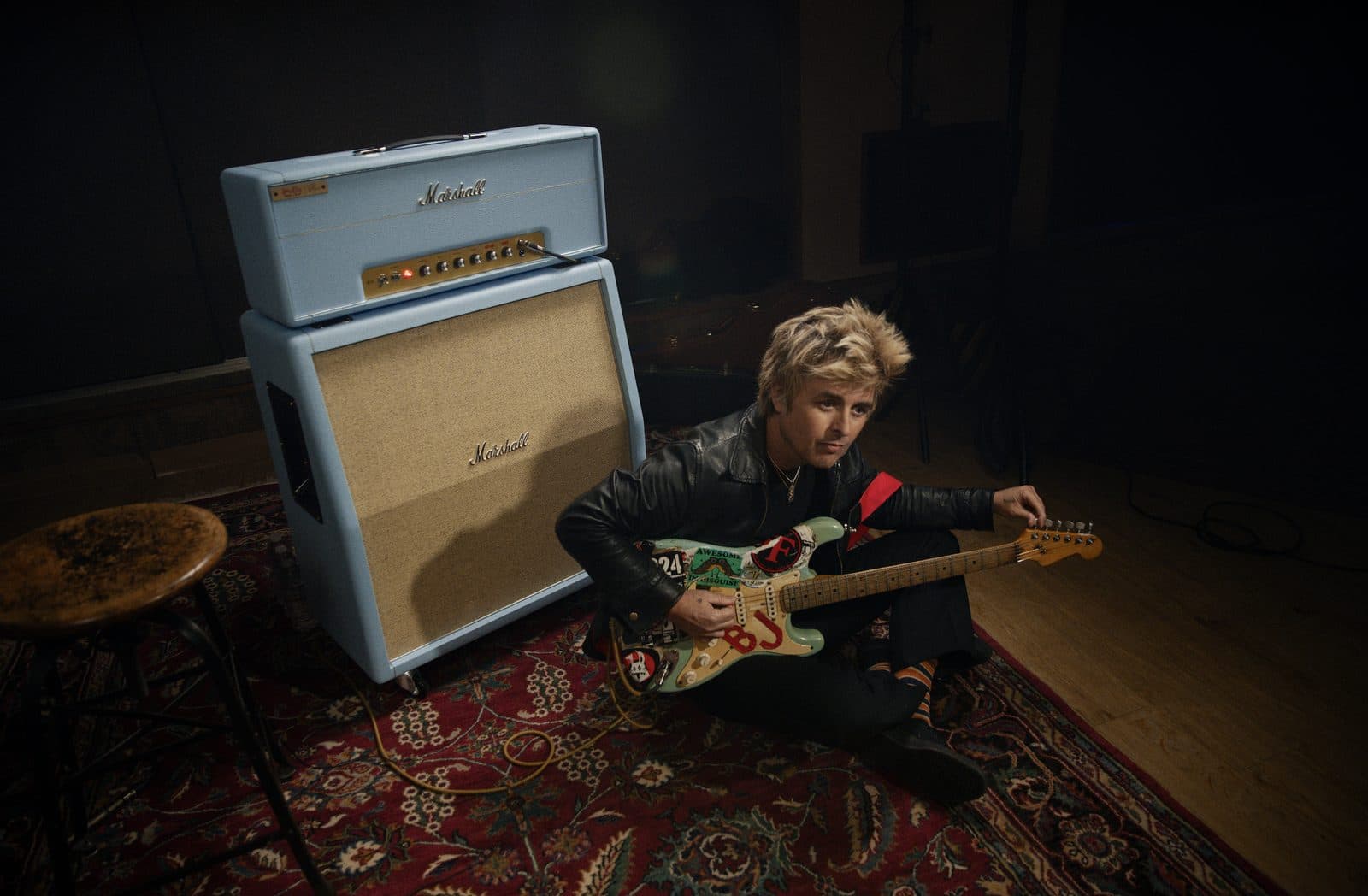
Marshall's newest signature amplifier belongs to Billie Joe Armstrong, the founding guitarist and frontman of Green Day. The 1959BJA Artist Signature, unveiled July 13, 2026, is Marshall's first artist signature amp in 14 years. It's a 100-watt, hand-wired head built on the company's 1959HW plexi platform, finished in a baby-blue covering that has nothing to do with Marshall's usual black-and-gold house look.
If "1959HW plexi" doesn't mean anything to you: it's shorthand for a specific lineage of Marshall's most iconic high-gain head, the type that built the sound of arena rock and punk rock alike since the late 1960s. "Hand-wired" means point-to-point construction instead of a printed circuit board: pricier and more labor-intensive than Marshall's PCB-based Vintage Reissue amps, and the standard for its separate, dedicated Handwired series. The 1959BJA borrows that platform and reworks it specifically around Armstrong's crunch.
It ships July 21, 2026, at $3,999.99 / £3,099.99 / €3,699, sold as a head only. You bring your own cabinet.
- Amp
- Marshall 1959BJA Billie Joe Armstrong Artist Signature
- Announced
- July 13, 2026
- On sale
- July 21, 2026
- Price
- $3,999.99 / £3,099.99 / €3,699
- Format
- Head only, no matching cabinet
- Platform
- Marshall 1959HW hand-wired Plexi + custom "Dookie Mod"
- Power
- 100W (3x ECC83 preamp, 4x EL34 power amp)
- Controls
- Presence, 3-band EQ, Master Volume, Gain
- Build
- Hand-wired in the UK
- Weight
- 20.1 kg / 44.3 lbs
Here is the baby-blue head in action, demoed by the outlets that covered the launch:
The Dookie Mod, and the amp CYS already had on file
The 1959BJA isn't a new tone. It's a production version of an old one. During the sessions for Green Day's 1994 breakthrough Dookie, producer Rob Cavallo let Armstrong play his own modified Plexi. Armstrong liked it enough to take the amp on tour afterward, where it picked up the nickname "Pete" (Gearnews).
That lines up with what CYS's own sourced Armstrong profile has documented for months: "Pete" is a Marshall 1959SLP reissue modified by tech Martin Golub at L.A. Sound Design, running the same crunch mod Premier Guitar's 2024 Rig Rundown calls the "Dookie" or "Bradshaw" gain mod, after amp tech Bob Bradshaw. Pete still shares stage duty today with a second head, "Meat," both routed through two Marshall 1960B cabinets loaded with Celestion Vintage 30s. Whatever the exact lineage between the original Cavallo-era amp and today's Pete, the mod's name and the tone it describes have stayed consistent across both Armstrong's own gear history and this new signature release.
Marshall's own announcement keeps the credit where the sources put it: the 1959BJA is "refined with a custom 'Dookie Mod' inspired by the tone shaped alongside producer Rob Cavallo during Green Day's breakthrough era" (Marshall). Steph Carter, Marshall's Culture Marketing Director, put it more plainly: "From the moment you hear those opening chords on Dookie, you know exactly who it is."
Baby blue, on purpose
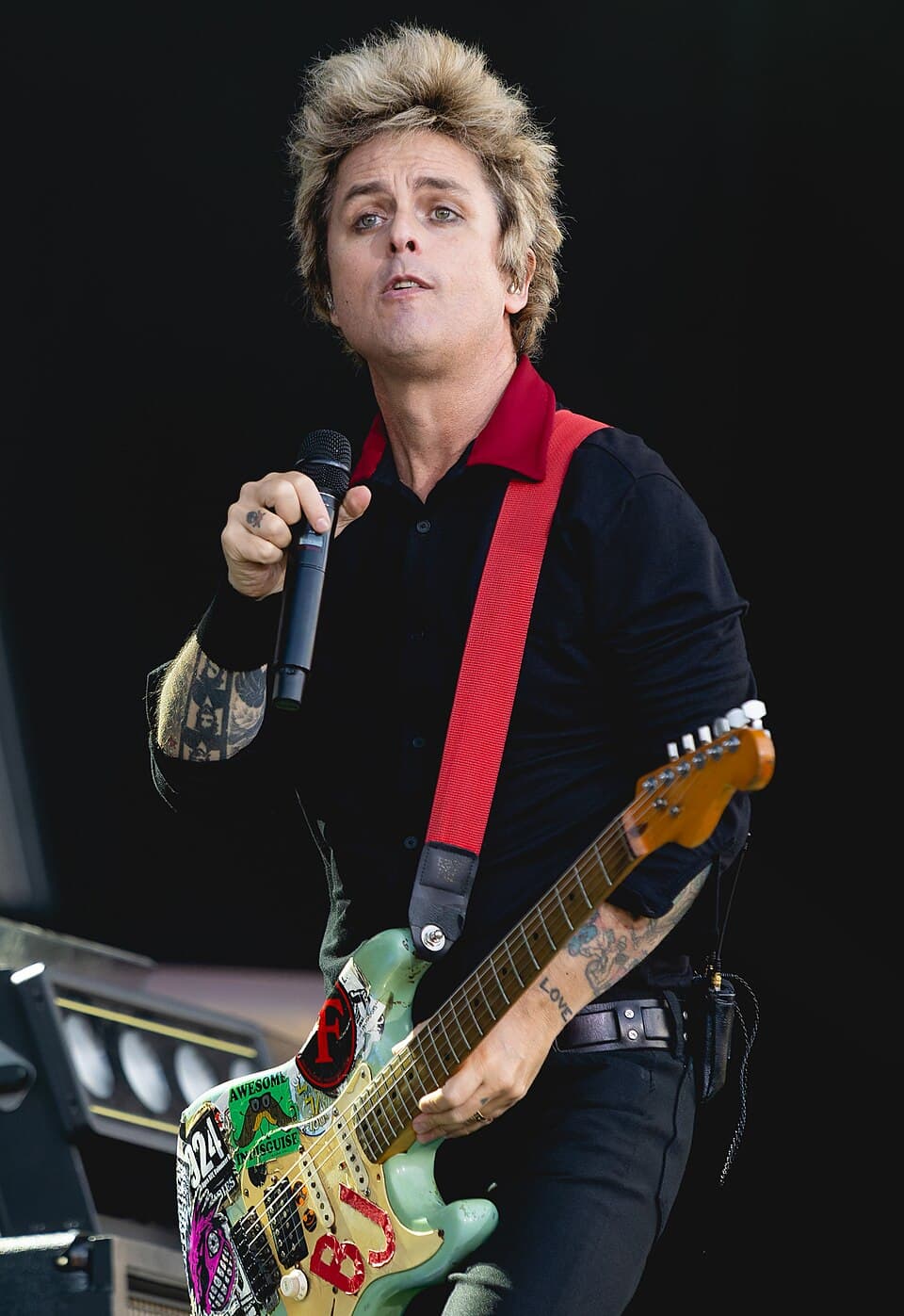
The color isn't random. It matches Blue, Armstrong's Fernandes RST-50 Stratocaster copy and main stage guitar since 1983, played on every Green Day record from 39/Smooth (1990) through Saviors (2024). Guitar World frames the finish as a deliberate break from Marshall's usual look, and Gearnews is blunter about it: baby blue isn't the first word most players reach for when they picture "rock 'n' roll," but it's the right color if the whole point is Armstrong's own guitar staring back at him from behind his amp head.
The amp had, in a sense, already leaked. Green Day played the 2026 Super Bowl with a new baby-blue Marshall head visible behind Armstrong, and the guitar press spent months speculating about what it was before Marshall confirmed it this month (Marshall; Guitar World). The launch is also tied to Marshall's new Amplify loyalty program, which commits 1% of member purchases to grassroots music, starting with independent venues (Premier Guitar).
The CYS angle: the amp is new, the strings aren't
If you're chasing this tone and don't have four thousand dollars for an amp head, start with the cheaper half of the signal chain. Armstrong's guitar strings haven't changed: Ernie Ball Regular Slinky, .010 to .046, the set documented across Blue, his Gibson Les Paul Juniors, and his own signature Gibson model. On the road he switches to the coated Paradigm Regular Slinky in the same gauge, built to survive his all-down-stroke strumming attack over a full tour.
Armstrong already has a cheaper way to get close to this specific tone: the MXR Dookie Drive, a pedal recreation of the same amp blend that's been available since 2019. The 1959BJA is a different product for a different budget: a real hand-wired Plexi head instead of a pedal emulating one, priced accordingly.
Related