Guitar Lesson 09: the blues scale, with Michael Angelo Batio
Taught by Fret, your Change Your Strings Guitar teacher ·
The blues scale is the minor pentatonic with one extra note added: the flat five, called the blue note. In A that gives you A, C, D, Eb, E, G. Michael Angelo Batio teaches it as a single box shape at the fifth fret. Play it slowly, lean on the blue note, and you have the core sound of rock and blues lead guitar.
Relevant gear
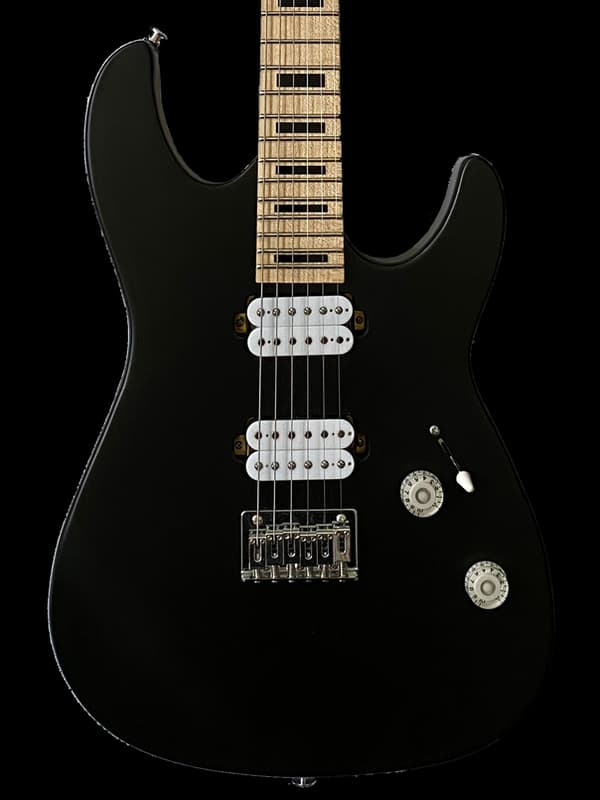

Watch Michael Angelo Batio play the blues scale in the video above, then read the breakdown.
You already know the minor pentatonic from your early lead playing. The blues scale is that exact shape with one note added. That one note, the flat five, is the whole reason the blues scale sounds like the blues. Batio opens his intermediate series here because almost every rock and blues solo you have ever heard lives inside this box.
Start in the key of A, at the fifth fret. The A minor pentatonic is five notes: A, C, D, E, G. To make it the A blues scale, add the flat five, Eb, sitting between the D and the E. That is the blue note. Six notes total: A, C, D, Eb, E, G.
Here is the one-octave box Batio walks through, ascending from the root:
e |--------------------B |--------------------G |--------------------D |--------------5--7---A |-------5--6--7------E |--5--8-------------
The move that matters is what you do with that blue note. It is a passing tone, not a home base. You slide through it or touch it on the way between the D and the E, and it adds tension that the next note resolves. Land on it and hold it and the line sounds sour. Pass through it and the line sounds like every great blues lick. Batio's point in the video is exactly this: the note is easy to find, but the feel comes from how briefly you sit on it.
Keep the motion clean. Alternate pick every note, down then up then down then up, the same strict picking you drilled in Lesson 07: alternate picking. A scale is where sloppy picking shows, so start slow enough that every note rings equally.
Practice this
Set a metronome to 60 beats per minute. Play the box slowly, one note per click, up and back down, for two minutes. Say the note names as you go. Then spend two minutes improvising: noodle around the box and each time you pass the Eb blue note, keep moving, never stop on it. You are training your ear to hear tension and release, which is the entire language of a solo.
Where you are
In Lesson 08: the circle of fifths you learned which chords belong together. Now you have the scale that solos over them. Keep your guitar in standard tuning (E A D G B E), and see how Michael Angelo Batio built a career of blistering lead playing on exactly these foundations. Next, Lesson 10: the notes in standard tuning, a quick reference so every shape has real string names attached.