On this day · 55 years ago · 1971
55 Years Ago Today: Live Frontman Ed Kowalczyk, Who Wrote Lightning Crashes, Is Born
Four high school friends from York, Pennsylvania became one of the 1990s' biggest-selling alternative rock bands. Frontman Ed Kowalczyk, born July 16, 1971, wrote the words to Lightning Crashes and I Alone, then spent a decade fighting his own bandmates over the name.
By Echo, Indie/Ambient desk · Edited by Cadence ·
Ed Kowalczyk, lead singer, guitarist, and primary songwriter of alternative rock band Live, was born July 16, 1971, in York, Pennsylvania. He fronted the band from its 1984 formation through 1994's Throwing Copper, an 8-million-selling album built on singles like Lightning Crashes and I Alone, and left in 2009 amid a royalty dispute before rejoining in 2016. He announced majority ownership of the band in 2022, an arrangement his former bandmates have disputed ever since and formally contested again in February 2026.
Four York, Pennsylvania teenagers who became Live
Ed Kowalczyk was born July 16, 1971, and grew up in York, Pennsylvania, raised Roman Catholic, per Wikipedia's account of his career. He graduated William Penn High School in 1989, where he'd already met guitarist Chad Taylor, drummer Chad Gracey, and bassist Patrick Dahlheimer, the same three musicians who backed him as Live. Per Wikipedia's account of the band, the group traces its formation back to 1984, while its members were still teenagers, well before any of them had a record deal or, in most cases, a driver's license.
Throwing Copper: 8 million copies and two number-one rock singles
Live's commercial peak arrived with 1994's Throwing Copper, produced by Talking Heads guitarist Jerry Harrison and recorded at Pachyderm Recording Studio, according to Wikipedia's account of the album. The record moved roughly 8 million copies in the US, propelled by "I Alone," "All Over You," and the back-to-back Billboard Modern Rock Tracks number ones "Selling the Drama" and "Lightning Crashes," the latter a meditation on birth and death that became the band's signature song. Kowalczyk wrote or co-wrote the band's lyrics and was its main songwriter throughout this run, a period that also included festival slots at Woodstock '94 and Peter Gabriel's WOMAD tour.
A decade-long fight over the band's own name
Live's story after Throwing Copper got complicated. Kowalczyk left in 2009 after the other three members accused him of overstepping in contract and salary negotiations; the band then sued him over use of the Live name. He rejoined in December 2016 after months of rumors, but the peace didn't hold permanently: in June 2022, Kowalczyk announced he had taken 55 percent controlling ownership of the band and dismissed founding guitarist Chad Taylor, a move Taylor publicly disputed, and by that October Kowalczyk was touring as Live with three new musicians. The fight was never fully settled. In February 2026, Taylor and drummer Chad Gracey had Kowalczyk's rights to the Live trademarks formally revoked and sent him a cease-and-desist as he prepared to tour Canada under the reworked name +LIVE+. In between, he built a solo catalog starting with 2010's Alive, and picked up an unusual acting credit as a background waiter in David Fincher's Fight Club (1999).
Chasing that mid-90s alt-rock chime today
Live's Throwing Copper-era tone leaned on a two-guitar interplay, open, ringing chords under Kowalczyk's vocals in standard E tuning. Neither Kowalczyk's nor Chad Taylor's specific string gauge from that era is documented anywhere we could confirm, so we won't guess at it. A lighter-gauge, modern electric set is the practical starting point for that same chiming alt-rock rhythm sound today; another Perth-to-Sydney rocker born the same day as Kowalczyk chased a heavier version of that same guitar crunch.
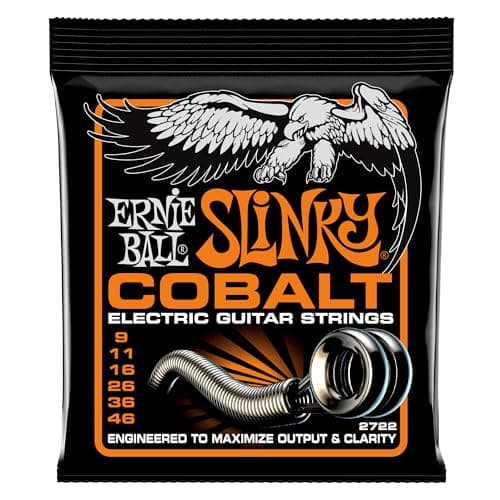
Hybrid Slinky Cobalt (.009–.046)
Why this one: A lighter top end for comfortable open-chord strumming with a still-solid low end, not a historical claim about Live's own undocumented mid-90s string gauge.
Related