On this day · 58 years ago · 1968
58 Years Ago Today: The Beatles Finish Cry Baby Cry and Begin Helter Skelter
Two sessions at Abbey Road on July 18, 1968, finished Cry Baby Cry and opened the White Album's loudest chapter. One Helter Skelter take that night ran 27 minutes and 11 seconds, still the longest recording the Beatles ever made.
By Axel, Classic rock desk · Edited by Cadence ·
On July 18, 1968, the Beatles held two sessions at EMI's Abbey Road Studio Two. The first completed Cry Baby Cry with a full band overdub pass. The second, starting at 10:30pm, cut the first three takes of Helter Skelter as loose, blues-based jams, the longest of which ran 27 minutes and 11 seconds, still the longest recording in the band's career. The song wasn't revisited until a tighter, more aggressive September 9 remake that became the White Album version.
Two sessions, one very long jam
The Beatles booked Abbey Road's Studio Two for two sessions on July 18, 1968, in the middle of the White Album sessions. The first, 2:30pm to 9:30pm, finished "Cry Baby Cry." With only one track free on the four-track tape, the band crammed a full overdub pass into it at once: John Lennon redid his lead vocal, Paul McCartney added harmonies, producer George Martin played a descending harmonium line, Ringo Starr shook a tambourine, and George Harrison layered in electric guitar plus odd tea-party sound effects for the song's "Duchess of Kirkcaldy" verse.
The second session started at 10:30pm and ran until 3:30 the next morning. This was the first time the band touched "Helter Skelter," and what they cut bore almost no resemblance to the song most people know. McCartney had written it after reading an interview where the Who's Pete Townshend described their 1967 single "I Can See for Miles" as the loudest, rawest, dirtiest song the Who had ever recorded; McCartney said he set out to write something with "the most raucous vocal, the loudest drums." That night's lineup swapped the band's usual roles: McCartney on guitar, Lennon on bass, Harrison on guitar, and Starr on drums. The three takes that resulted were essentially rehearsals, a loose, blues-based jam with most of the lyrics and chord changes worked out but the arrangement still wide open. The first ran 10 minutes 40 seconds, the second 12:35, and the third stretched to 27 minutes and 11 seconds, the longest single recording the Beatles ever made, before or after.
The longest outtake in the catalog
Engineer Brian Gibson later described the chaos of running live tape echo on a machine spinning at a different speed than the main recorder, meaning the band, oblivious in their headphones, kept jamming for what felt to them like half an hour but was actually closer to fifteen minutes of echo capacity. One version of the jam drifted into a strange cover of "Blue Moon" before drifting back out, all four Beatles playing instruments outside their usual roles that night.
None of the July 18 material made the final album. The Beatles didn't touch "Helter Skelter" again until September 9, 1968, when Chris Thomas, producing in George Martin's absence, oversaw a faster, far more aggressive remake, the version everyone knows from the White Album, complete with Ringo Starr's famous closing shout about blistered fingers. The July 18 outtakes stayed unreleased until 1996's Anthology 3, and even then only after Beatles historian Mark Lewisohn had to talk Martin into including an edited mix of take two, arguing that fans considered the extended Helter Skelter jams from that night the single most important outtake in the band's entire archive.
Building toward that raw sound
The White Album's loudest moments, "Helter Skelter" especially, came from pushing basic gear past its comfortable limits rather than from anything exotic in the signal chain. Harrison and the rest of the band worked from the same light-gauge electric sets common to the era.
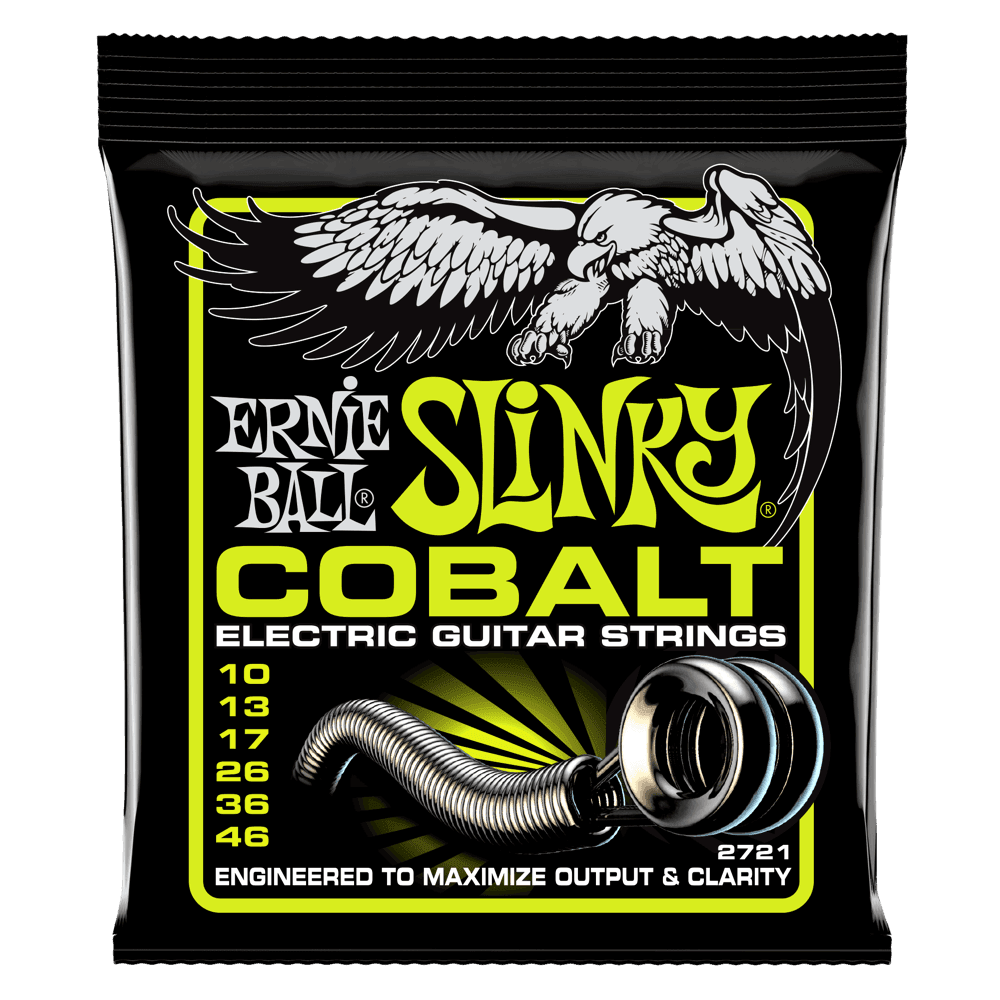
Regular Slinky Cobalt
Why this one: Not a claim about 1968 studio gear, Cobalt strings didn't exist yet, but the same light .010-.046 territory documented on Harrison's own Beatles-era rig, on a modern wrap with more output for pushing an amp hard.
Related