On this day · 60 years ago · 1966
60 Years Ago Today: The Yardbirds Release Roger the Engineer, Jeff Beck's Only Full Album With the Band
The Yardbirds only made one studio album with Jeff Beck's guitar on every track. Released July 15, 1966, and later nicknamed Roger the Engineer after its hand-drawn cover, it pushed fuzz, feedback, and Eastern modes into the British Invasion and pointed straight at the hard rock and psychedelia that followed.
By Axel, Classic-rock desk · Edited by Cadence ·
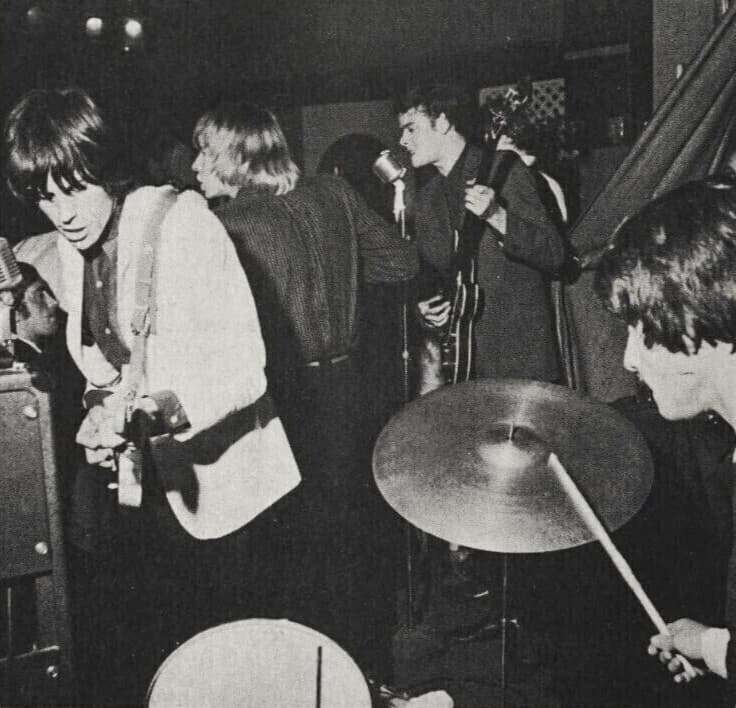
The Yardbirds released their self-titled UK studio album, nicknamed Roger the Engineer, on July 15, 1966 (US title: Over Under Sideways Down, out July 18). It's the only Yardbirds album with guitarist Jeff Beck's playing on every track, recorded in roughly five days at Advision Studios in London. Beck's fuzz-and-feedback guitar work on songs like Lost Woman and Jeff's Boogie helped set a template for hard rock and psychedelia, and the album later ranked number 350 on Rolling Stone's 500 Greatest Albums of All Time.
Five days, one album, and Jeff Beck on every track
On July 15, 1966, the Yardbirds released their self-titled UK studio album, later nicknamed Roger the Engineer, per Wikipedia's detailed account of the sessions. The band didn't reach Advision Studios in London to attempt their first proper studio LP until March 1966, and even then, an early batch of instrumental tracks was scrapped when the group switched managers from Giorgio Gomelsky to Simon Napier-Bell. The bulk of the album that did ship was recorded in a tight window, May 31 to June 4, 1966, with bassist Paul Samwell-Smith co-producing alongside Napier-Bell. Samwell-Smith later said the band only had five days to finish it, and wondered how much better it might have been with a month instead. It is, notably, the only Yardbirds studio album to feature guitarist Jeff Beck's playing on every track.
The Gibson Les Paul that Beck bought after watching Clapton
Beck's guitar solos across the record leaned on fuzz, feedback, and reverb, played on what Wikipedia's sourced account describes as a recently purchased Gibson Les Paul Sunburst, one he'd picked up after seeing Eric Clapton playing one with John Mayall's Bluesbreakers. The album's calling-card single, "Over Under Sideways Down," released in May 1966 ahead of the LP and charting at number 10 in the UK, paired an Eastern-inspired fuzz hook with a 1950s boogie-style walking bass line. Its B-side, "Jeff's Boogie," reworked Chuck Berry's "Guitar Boogie" into a pure technique showcase that stayed in Beck's live sets for years afterward with the Jeff Beck Group.
A blueprint for hard rock before Hendrix or Cream released a note
Music writers have circled back to this album for six decades. In the liner notes to the box set Beckology, writer Gene Santoro described the band forging "a new musical synthesis of Eastern sounds, jazz, blues, rock and noise," pointing to the feedback-and-whistle rave-up on "Lost Woman" as a precursor to moves Jimi Hendrix wouldn't record until his 1967 debut. Writing for Ultimate Classic Rock, Michael Gallucci calls it a "monumental work of the era" that "helped set the template for the psychedelic-based hard rock that would emerge over the next couple of years," months ahead of Cream's or the Jimi Hendrix Experience's debut records. The album later landed at number 350 on Rolling Stone's 2012 list of the 500 Greatest Albums of All Time and is included in the book 1001 Albums You Must Hear Before You Die. As Noise11's 60th-anniversary retrospective puts it, the record captured the brief window when Beck, Keith Relf, Chris Dreja, Jim McCarty, and Samwell-Smith pushed the Yardbirds "beyond rhythm and blues into unexplored musical territory."
The tone today
Beck's exact string gauge for the Roger the Engineer sessions isn't documented anywhere we could source, so we won't guess at it. What is documented, per Beck's full CYS-reviewed profile, is his later-career setup: Ernie Ball Slinky strings, most often Hybrid Slinky (.009-.046), on his Fender signature Stratocaster in standard E.
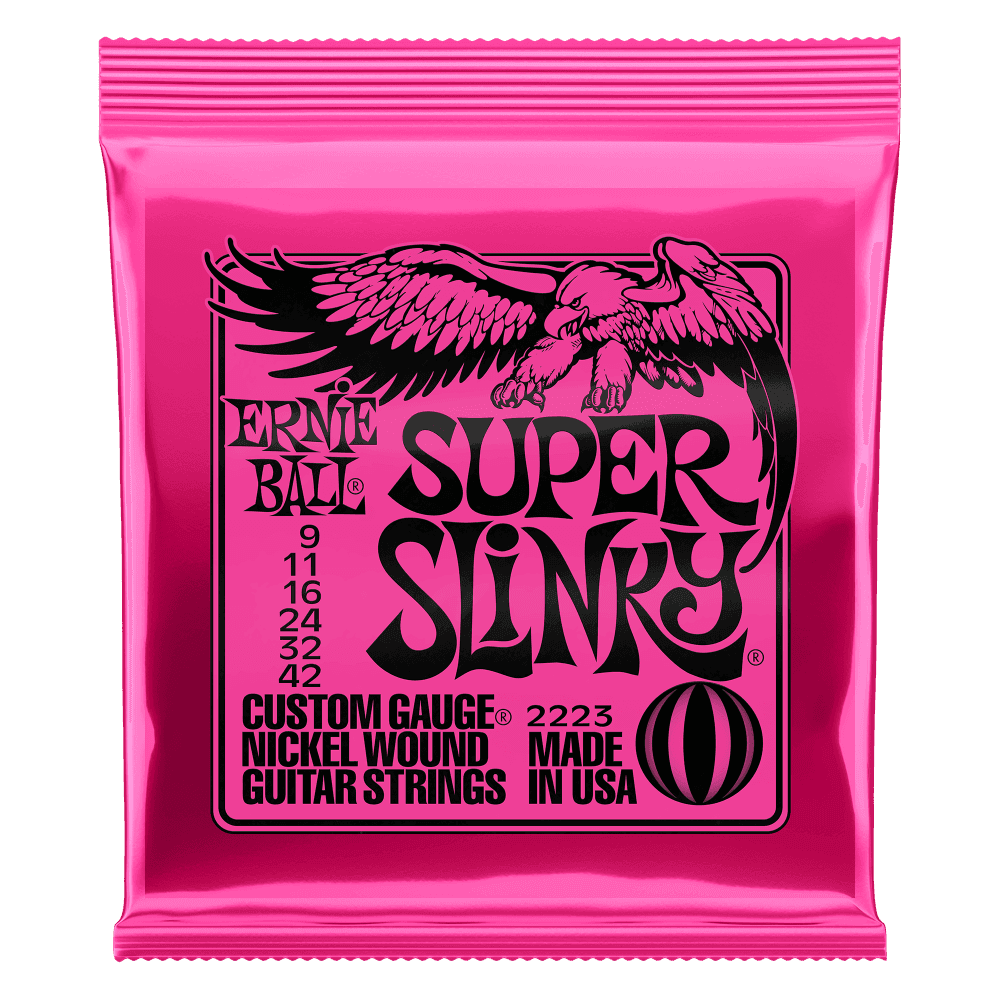
Super Slinky (.009–.042)
Why this one: The closest current Ernie Ball Slinky nickel gauge with a CYS catalog page, not a historical claim about Beck's specific 1966 Les Paul string gauge, which no source documents.
Related