Best Guitar Cables: 5 Picks for Stage, Studio and Beginners
Written with AI help · Updated
D'Addario Custom Series is our pick for most guitarists, based on manufacturer specs. Per D'Addario, it pairs oxygen-free copper conductors with two layers of shielding for low capacitance, and it carries a limited lifetime guarantee. Mogami Gold Instrument is the studio-minded upgrade, Boss BIC-10A the braided-shield stage option, Ernie Ball Flex the easy-coiling pick, and Hosa GTR-210 the budget choice for beginners.
The short answer
There is no single best guitar cable. There is a best cable for where you play. A bedroom player and a touring player need different things, and both can get a good one without overspending. We have not tested these cables ourselves, so every spec below is "per the manufacturer," checked against each maker's own product page.
If you want one pick, buy the D'Addario Custom Series. If you record a lot, look at the Mogami Gold Instrument. If you gig, the Boss BIC-10A is built around a braided shield and a woven jacket. If you just need a decent cable that will not cost much, the Hosa GTR-210 is the starter pick.
| Best for | Key feature, per the maker | Price | |
|---|---|---|---|
| D'Addario Custom Series | Best overall | Two layers of shielding, low capacitance | $$ |
| Mogami Gold Instrument | Best for studio | OFC core, carbon impregnated PVC | $$$ |
| Boss BIC-10A | Best for the stage | Braided shield, woven jacket | $$ |
| Ernie Ball Flex | Best for easy coiling | Single conductor, 95% shielding | $ |
| Hosa GTR-210 | Best for beginners | 24 AWG OFC conductor, 90% OFC braid | $ |
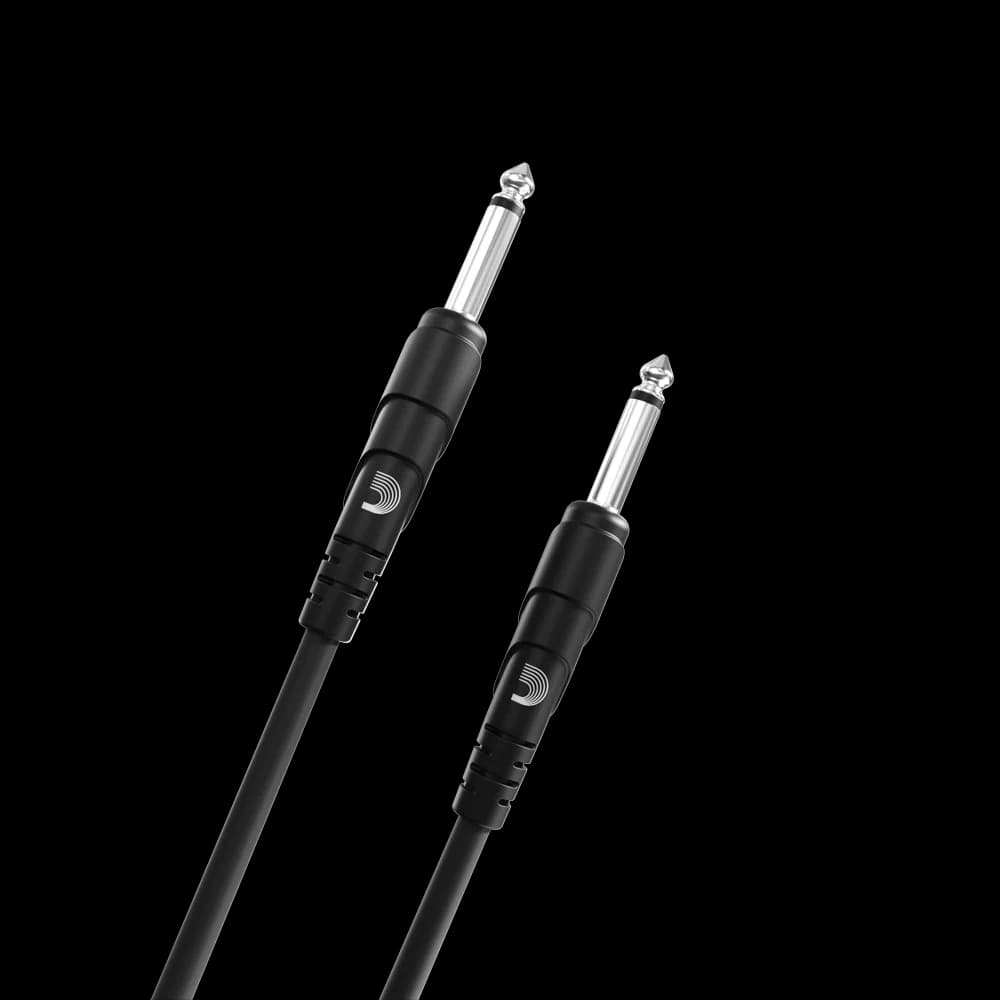
Custom Series Instrument Cable, Straight, 10 ft
Why this one: Our overall pick. Per D'Addario, twisted pair oxygen-free copper conductors and two layers of shielding keep capacitance low and noise down.
What actually matters in a guitar cable
Most cable marketing is noise. A few things are worth your attention.
Shielding comes first. A guitar pickup puts out a weak, high impedance signal, and a poorly shielded cable can pick up hum and radio noise. Look for a clearly described shield, whether it is a braid, a spiral wrap or two layers. Makers describe theirs differently, so compare the wording on their own pages.
Capacitance comes second. Per D'Addario, lower capacitance lets a pickup's brightness and presence pass through with less loss. This matters more as the cable gets longer. It is one reason a 10 ft cable is the usual starting point, and why a 25 ft cable is a bigger tone decision than it looks.
Plugs and strain relief come third. The plug is where most cables fail. Look for metal plugs, a solid strain relief and a real guarantee. Every cable on this page lists a lifetime guarantee or warranty in some form, but the terms differ, so read the fine print before you count on one.
Handling noise comes last. Some cables tap out a thump when they move or hit the floor. Mogami says its Gold line uses carbon impregnated PVC to cut that handling noise. If you move a lot on stage or tap your cable on a hard floor, that detail is worth a look.
Cables also work together with your strings. A dull set of strings sounds dull through a great cable, so before you blame your cable, consider refreshing your strings. See our guides to the best electric guitar strings and how often to change strings.
Best overall: D'Addario Custom Series
The D'Addario Custom Series is the cable we would hand to most players. D'Addario says the line uses twisted pair, oxygen-free copper conductors with two layers of noise-rejecting shielding formulated for low capacitance. The product page also lists 24k gold plated plugs, 24 AWG oxygen-free copper conductors, and a limited lifetime guarantee. D'Addario sells it in 5, 10, 15, 20, 25 and 30 ft lengths.
One quirk is worth knowing. D'Addario says certain Custom Series cables mark one end as "shield." That end should go to the sound-source destination, which D'Addario says creates a single path to ground for interference. Read the markings on your cable before you plug in.
The listing we link is the 10 ft straight to straight version. If your guitar jack is side mounted, check the maker's page for the straight to right-angle option, since that is often the better fit. It is a safe choice for rehearsal, small gigs and home recording. It is not the cheapest cable here, and it is not the most rugged, but it is the best balance of price, features and availability.
Custom Series Instrument Cable, Straight, 10 ft
Why this one: A balanced all-rounder. Two layers of shielding, low capacitance and a limited lifetime guarantee, per D'Addario.
Best for the studio: Mogami Gold Instrument
Studio players tend to hear small things. A cable that adds hum, loses top end or thumps when it moves becomes a problem on a quiet track. The Mogami Gold Instrument is built for that player.
Mogami lists an OFC (oxygen-free copper) core, carbon impregnated PVC to eliminate handling noise, an ultra high density spiral shield, a conductive polymer sub-shield and a lifetime warranty. Mogami sells the Gold Instrument in 3, 6, 10, 18 and 25 ft lengths. The Amazon listing we link is the 10 ft straight version, with gold contact plugs.
It costs more than most cables here, and the benefit shows mostly in a quiet room or on long runs, not at a loud gig. If you are tracking guitar at home, it is a fair upgrade. If you play loud and live, the extra money may be better spent elsewhere.
Mogami also makes a Silent Gold version with a Neutrik silentPLUG so you can swap guitars without a pop. That is a stage feature, and it is a separate product from the one we link. If you plan to track in a room with other gear, our guide to prepping your guitar for the studio covers the rest of the signal chain.
Gold Instrument Cable, Straight, 10 ft
Why this one: The studio pick. Per Mogami, an OFC core, carbon impregnated PVC against handling noise, and a spiral plus conductive polymer shield.
Best for the stage: Boss BIC-10A
A stage cable gets stepped on, tugged and coiled by the end of a long night. The Boss BIC-10A is made for that.
Per BOSS, the BIC-10A is a 10 ft cable with a straight plug on one end and a right-angle plug on the other. BOSS describes studio-grade, oxygen-free copper core wire, custom 1/4 inch connectors with 24K gold-plated contacts, heavy-duty braided shielding for quiet operation, a woven outer jacket for flexibility and added durability, and a lifetime guarantee. BOSS also lists a 15 ft version, the BIC-15A.
The straight to right-angle layout is the practical bit. Put the angled plug in your guitar and it sits close to the body instead of sticking out. That is easier on the jack and less likely to snag.
BIC-10A Instrument Cable, Straight/Angle, 10 ft
Why this one: A stage-minded cable. Per BOSS, braided shielding, a woven jacket, gold-plated contacts and a lifetime guarantee.
Best for easy coiling: Ernie Ball Flex
Some cables fight you. They hold their shape, kink and take forever to wrap. Ernie Ball Flex cables are built to avoid that.
Per Ernie Ball, the Flex line is a single conductor design that gives clear tone and extra flex for easy coiling. It lists 95% shielding to reject unwanted noise, a durable PVC jacket, and a limited lifetime warranty. Ernie Ball sells it in 10 ft and 20 ft lengths, in straight to straight and straight to angle versions, in a range of colors.
The color range is part of the appeal. A bright cable is easy to see on a dark stage and hard to leave behind. The Amazon listing we link is the 10 ft straight to straight Orange version. If you want the angled plug, check the maker's page for the straight to angle option.
Flex Instrument Cable, Straight/Straight, 10 ft
Why this one: A flexible, easy-coiling cable in bright colors. Per Ernie Ball, 95% shielding and a limited lifetime warranty.
Best for beginners and budgets: Hosa GTR-210
If you are buying your first cable, you do not need to spend much. The Hosa GTR-210 is the low-cost pick.
Hosa lists all-metal plugs that it calls serviceable, an oxygen-free copper conductor (24 AWG) and a high-density OFC braided shield (90%). Hosa sells the GTR-200 series in 5, 10, 15, 20 and 25 ft lengths, with straight or right-angle options. The GTR-210 is the 10 ft straight to straight model.
It is a plain cable, and that is the point. It does the job at home or in a practice space and costs little to replace. If it ever fails, you have not lost much. Pair it with a fresh set of strings and a tuner, and you have a solid starter rig. Our guide to the best clip-on guitar tuners covers the next purchase.
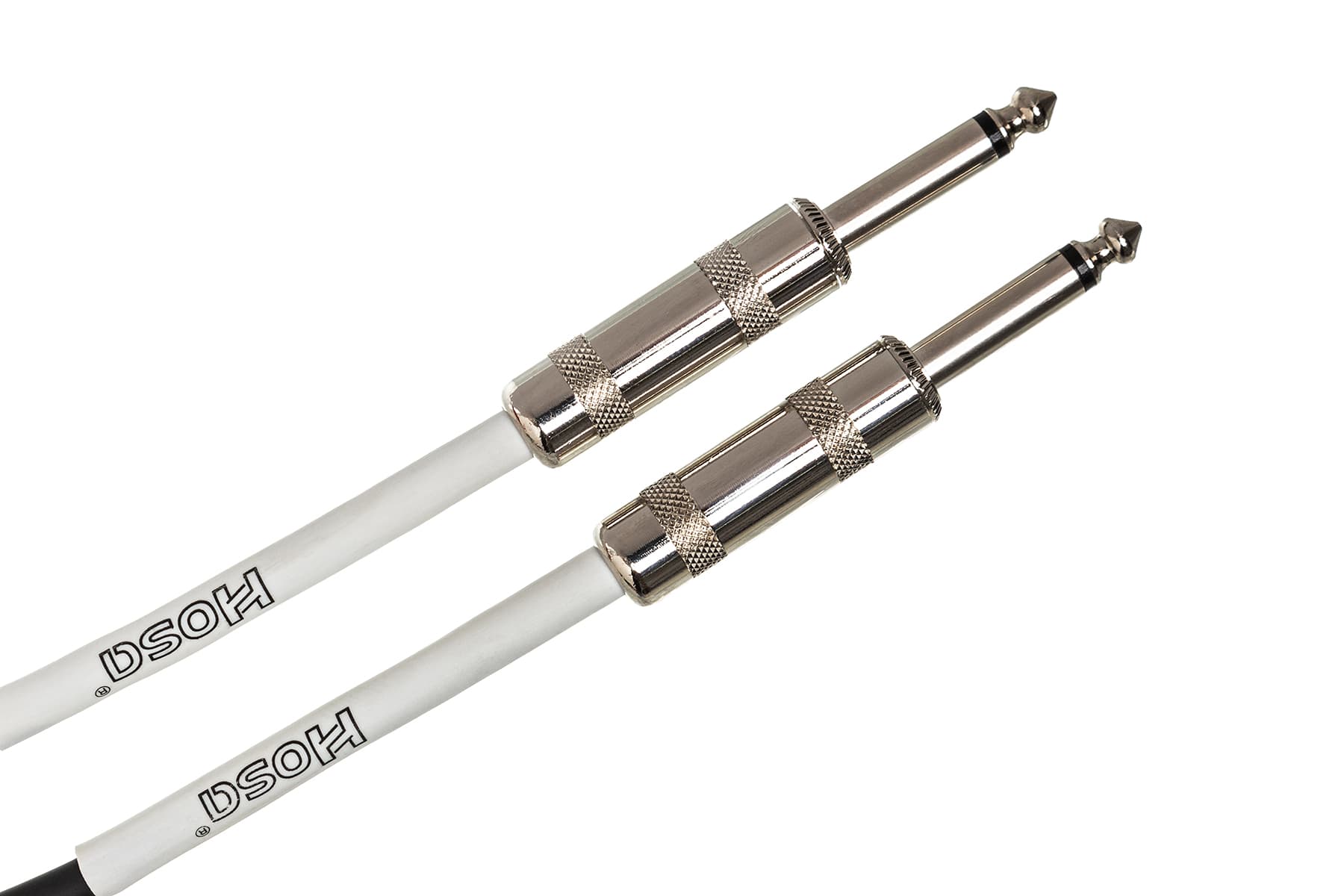
GTR-210 Guitar Cable, Straight to Same, 10 ft
Why this one: The budget pick for beginners. Per Hosa, an OFC conductor, a 90% OFC braid shield and all-metal plugs.
How to choose by use case
Stage. Pick a cable with a braided or heavy shield and a tough jacket. The Boss BIC-10A fits here. Add a spare cable to your bag. Cables fail at the worst time, and a backup costs less than a canceled set.
Studio. Pick for noise rejection and low handling noise. The Mogami Gold Instrument and D'Addario Custom Series are both aimed at that. Keep the run short, since longer cable adds capacitance.
Beginners. Buy a 10 ft cable from a known brand, such as the Hosa GTR-210, and put the money into strings and a tuner. You can upgrade later when you know what you want.
Pedalboard rigs. A long instrument cable is only part of the story. You also need short patch cables between pedals. Those are separate products, and none of the cables on this page are patch cables, so check the maker's patch cable pages for those.
Acoustic-electric players. The same 1/4 inch cables work for acoustic-electrics with a standard jack, so any cable here fits. If you play acoustic, read our best acoustic guitar strings guide to round out the setup.
Bottom line
Buy the D'Addario Custom Series if you want one cable for everything. Buy the Mogami Gold Instrument if you record and want the quietest option. Buy the Boss BIC-10A if you gig. Buy the Ernie Ball Flex if you hate fighting your cable. Buy the Hosa GTR-210 if you are just starting out.
Whichever you pick, check the length and plug type on the maker's page. Then coil it loosely and keep a spare. A cable that crackles is done, so replace it before your next show.