Fender Counter-Sues Thomann Over the Stratocaster Shape, Cites 500,000 Strats a Year
Fender has filed its own copyright infringement lawsuit against Thomann, striking back after the German retail giant sued Fender in June over its Stratocaster cease-and-desist campaign. The countersuit, filed in the same Dusseldorf court that ruled for Fender in March, names Thomann's Harley Benton brand directly and puts hard sales numbers on the record for the first time.
By Axel, Classic Rock desk · Edited by Cadence ·
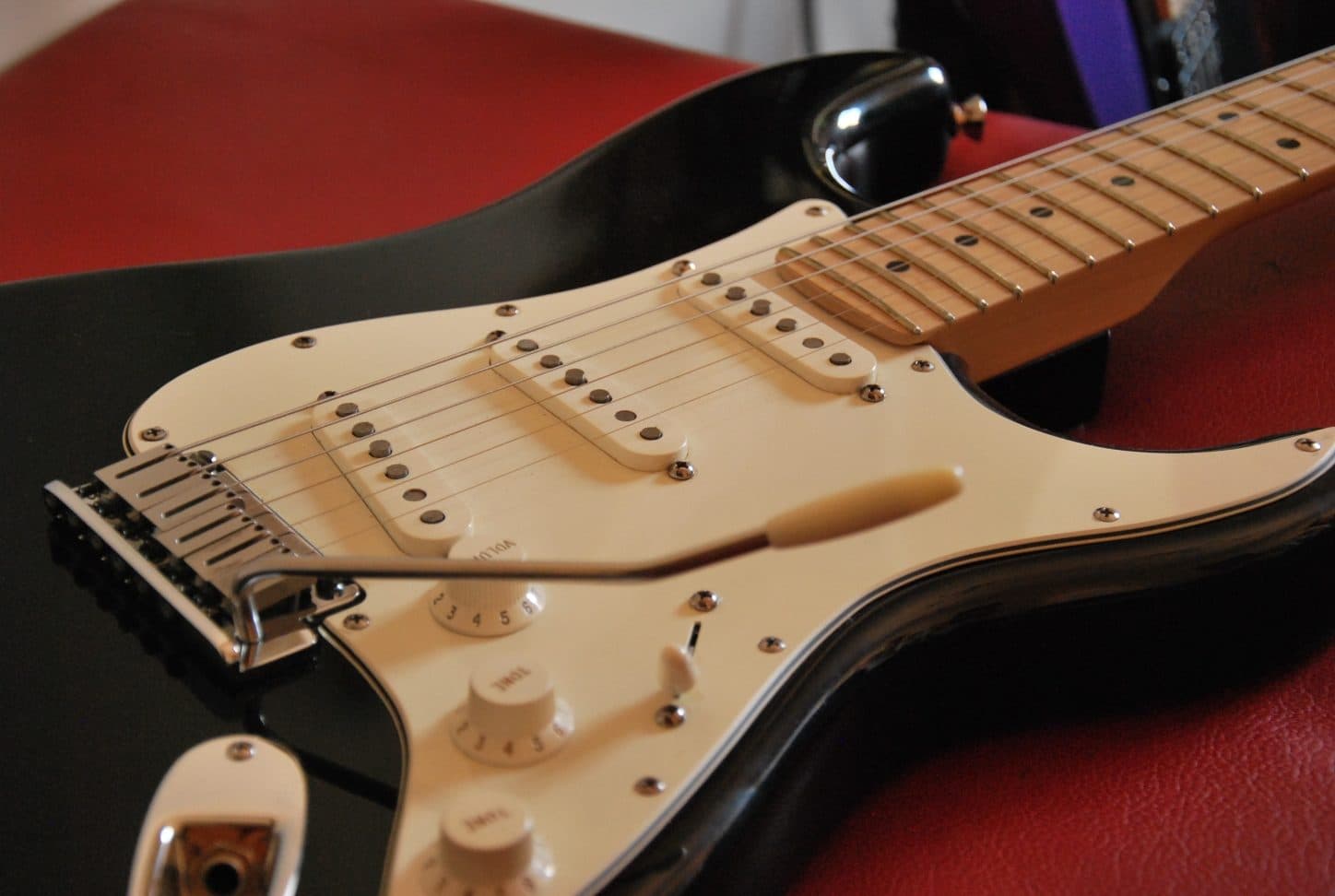
Fender filed a copyright infringement lawsuit against Thomann this week in Germany's Regional Court of Dusseldorf, escalating a dispute that began when Fender sent cease-and-desist letters over the Stratocaster's body shape to LSL Instruments, PRS, Yamaha, and Thomann's own Harley Benton brand. The filing responds to Thomann's June lawsuit against Fender. Fender's filing states it sells about 500,000 Stratocasters a year worldwide, including roughly 34,000 in Germany alone.
Fender takes the fight straight to one of its own biggest retail partners
Fender has filed a formal copyright infringement lawsuit against Thomann, the German retail giant behind the budget guitar brand Harley Benton. The filing landed in the Regional Court of Dusseldorf this week, the same court that handed Fender a default judgment over the Stratocaster's body shape back in March, and it's Fender's direct answer to a lawsuit Thomann filed against Fender in June.
This is a different kind of opponent than the small builders and even the major manufacturers Fender has already gone after. Thomann isn't just a company selling Strat-shaped guitars under its own name. It's also one of Fender's own largest retail partners, a store that sells Fender-brand Stratocasters by the thousand while its in-house Harley Benton line competes directly with them. Per Reuters, Fender's court filing puts real numbers behind that argument for the first time in this dispute.
- Filed by
- Fender
- Filed against
- Thomann (owner of Harley Benton)
- Court
- Regional Court of Dusseldorf, Germany
- Filed
- Week of July 13 to 17, 2026
- Legal basis
- March 2026 default judgment against Yiwu Philharmonic
- Fender's stated global Strat sales
- About 500,000 a year
- Fender's stated German Strat sales
- About 34,000 a year
- Thomann's own estimate, Fender Strats sold
- About 10,000 a year
How this dispute got this far
CYS already covered the earlier chapters of this saga in detail when Fender's cease-and-desist campaign reached Yamaha, the largest company caught up in it so far. The short version: a March 2026 default judgment against Yiwu Philharmonic, a Chinese seller of Strat-shaped guitars that never showed up to contest the case, gave Fender a Dusseldorf court ruling that the Stratocaster body counts as a copyrighted work of applied art under German and EU law. Fender spent the months after sending cease-and-desist letters to S-style builders and sellers, starting with LSL Instruments in May, then PRS over the Silver Sky, then Thomann, then Yamaha over its Pacifica.
What's new here is Thomann's own response, and Fender's answer to it. Thomann didn't just receive a letter and go quiet. On June 22, the company published a detailed blog post announcing it had taken legal action against Fender, filing what Fender's own later statement would call a "Declaration of Non-Infringement" action, essentially asking a court to rule that S-style body shapes don't infringe Fender's copyright at all. Thomann's post called the March judgment a "default judgment" based on "missed deadlines" that, in Thomann's words, "does not... represent a comprehensive review of the legal claims," and argued that many of the smaller manufacturers and dealers caught up in Fender's campaign "do not have the financial and legal means to conduct such a legal dispute."
Thomann's own June 22 blog post explained the reasoning behind suing Fender first.
Many of those affected do not have the financial and legal means to conduct such a legal dispute. We therefore see it as our responsibility to have this matter clarified in court not only for our own company, but for all parties involved.
CEO, Thomann
Thomann's blog post also pointed out a coincidence that's easy to miss: 1954 was the year Fender launched the Stratocaster, and it was also the year Musikhaus Thomann was founded. The two companies have been doing business together, by Thomann's own account, for more than 70 years.
What Fender is actually arguing, in its own words
Fender's new filing responds point by point. In a statement shared with Reuters, Guitar World, and Guitar.com, Fender said the goal from the start "was simple: have a conversation," and that it reached out to Thomann "to discuss practical ways to differentiate products while respecting Fender's intellectual property."
"Unfortunately, Thomann chose a different path," the statement continues. "Rather than continuing that dialogue, it initiated legal proceedings asking the court to determine that it can continue selling guitar body designs that Fender believes copies the iconic Stratocaster. Today's filing is Fender's response and the expected next step in the legal process."
Fender's statement leans hard on scale to make its point: "Thomann isn't a small independent guitar builder. It is one of the world's largest musical instrument retailers, one of Fender's largest retail partners, and the owner of Harley Benton, one of Europe's largest guitar brands." That's the crux of Fender's argument, that this isn't a scrappy builder fighting for survival, but a company that sells Fender's own guitars while also profiting from a competing house brand built on the same body shape.
| LSL Instruments | PRS | Yamaha | Thomann / Harley Benton | |
|---|---|---|---|---|
| Model targeted | Saticoy | Silver Sky | Pacifica (unconfirmed by name) | S-style range |
| Relationship to Fender | Independent builder | Competing manufacturer | Competing manufacturer | Retail partner and competing manufacturer |
| Response so far | GoFundMe for legal fees | Disagrees, still selling the Silver Sky | Reviewing the notice | Sued first, now being counter-sued |
The backlash hasn't gone away
Fender's cease-and-desist campaign has been controversial since it went public in May. Guitar.com reported that creators with large followings, including Rick Beato, Rhett Shull, and Tim Pierce, criticized the move once it became widely known. Fender CEO Bud Cole tried to defuse the situation at a dealer event a month ago, telling attendees "Fender is not suing anybody" and describing the letters as reaching out "thoughtfully and respectfully" to companies whose guitars "come extremely close to replicating the iconic Fender Stratocaster design."
That framing is harder to square with this week's news. Fender is, now, suing somebody, and not a small one.
The CYS angle: this lawsuit has nothing to do with your strings
However a German court eventually rules on pickguard curves and cutaway angles, it changes nothing about what string set actually works on any of these guitars. The Stratocaster, Harley Benton's S-style range, Yamaha's Pacifica, and PRS's Silver Sky all share the same standard 25.5 inch scale length, and every one of them takes a normal electric guitar string set.
If you're on a Harley Benton, a real Stratocaster, or anything shaped like one, D'Addario EXL110 at .010 to .046 nickel-wound is the standard, well-worn choice, the same gauge commonly cited as factory-stock across the S-style world. If you want something with a bit more top-end snap and modern output at the same gauge, CYS's own pick in this lane is Ernie Ball's Regular Slinky Cobalt, built on the same .010 to .046 spec. Either way, the string aisle doesn't care who wins in Dusseldorf.
Related