On this day · 60 years ago · 1966
60 Years Ago Today: The Byrds Release Fifth Dimension, Roger McGuinn's Raga Rock Turn
Columbia released the Byrds' third album, Fifth Dimension, on July 18, 1966, made without founding songwriter Gene Clark. Roger McGuinn's twelve-string guitar work carried it into psychedelic rock's first wave.
By Echo, Indie/ambient desk · Edited by Cadence ·
The Byrds released their third album, Fifth Dimension, on July 18, 1966, on Columbia Records, the first made after songwriter Gene Clark's departure. Roger McGuinn and David Crosby stepped up the writing, and the John Coltrane-influenced, raga-inspired guitar work on the single Eight Miles High, played on McGuinn's Rickenbacker twelve-string, is now widely credited as one of the records that helped originate psychedelic rock. The album reached number 24 on Billboard.
A band short a songwriter
Columbia Records released Fifth Dimension on July 18, 1966, the Byrds' third album and the first made after founding songwriter Gene Clark quit the band that February. The official reason was Clark's fear of flying; underneath it, resentment had built over his outsized songwriting royalties compared to the rest of the group. Only two tracks on the record, "Eight Miles High" and the instrumental "Captain Soul," feature his participation. Guitarists Jim McGuinn, who later took the name Roger, and David Crosby picked up the writing load for the other nine songs, and the result was, by the band's own later admission, uneven: four cover versions and an instrumental padded out an album that critic Jon Landau, writing in Crawdaddy at the time, said showed the Byrds needed to actually replace Clark rather than write around him.
Eight Miles High and the twelve-string that carried it
The song that mattered was already out as a single by the time the album arrived. "Eight Miles High," written mostly by Clark before he left, fused John Coltrane-influenced guitar phrasing with a raga-inspired structure drawn from Ravi Shankar's Indian classical music, an early, direct line into what critics now call psychedelic rock and raga rock. McGuinn later explained he was chasing Coltrane's disconnected jazz runs, and that he didn't think he could pull it off without serious sustain. Many American radio stations banned the single anyway, convinced its title referred to drug use. The lyrics actually describe a 1965 transatlantic flight to London and a commercial jet's cruising altitude, though Clark and Crosby both later admitted the song carried some of their own drug experience too.
The tone behind all of it came from McGuinn's Rickenbacker 360-12 electric twelve-string. "We went as a group to see A Hard Day's Night multiple times and were totally taken with The Beatles," McGuinn told Premier Guitar in 2008. "I liked George Harrison's Rickenbacker 12, but I couldn't find one that looked like his with the pointy cutaways, so I bought the blonde 360 model." In 1966, McGuinn sent his back to the factory for a third pickup, upgrading it to a 370-12, the configuration Rickenbacker's own company history now credits as his favored instrument. The tone had already defined "Mr. Tambourine Man" and "Turn! Turn! Turn!"; on Fifth Dimension it became the sound of a band pushing folk rock into something stranger. The album closed with McGuinn's "2-4-2 Fox Trot (The Lear Jet Song)," a genuine attempt to render a private jet flight in sound, cockpit checklist and all, named for a friend's actual Learjet tail number.
Fifth Dimension peaked at number 24 on the Billboard Top LPs chart and number 27 in the UK. Its reputation has only grown since. Rolling Stone later called it the Byrds' most underrated album, and its 1996 reissue restored the RCA versions of "Eight Miles High" and "Why" as bonus tracks.
Chasing that six-string jangle
Most players don't own a vintage electric twelve-string, but the bright, articulate tone McGuinn built his career on starts with the same basic idea on any six-string: a light gauge that lets chords ring clean.
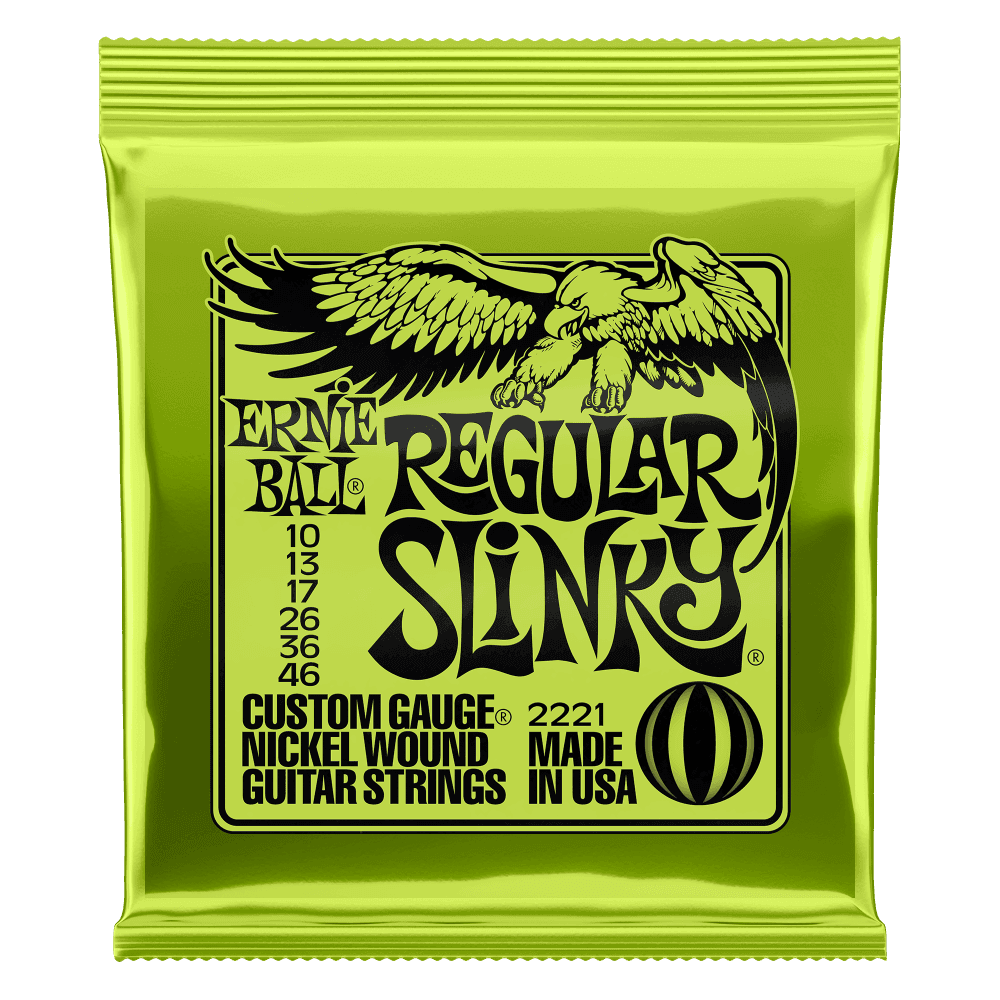
Regular Slinky
Why this one: Not a twelve-string set, McGuinn's actual instrument, but the same light, bright starting gauge on a standard six-string, a reasonable place to start chasing that jangle.
Related