On this day · 63 years ago · 1963
63 Years Ago Today: Wipe Out Cracks the Billboard Top 40
Four California teenagers wrote it almost on the spot because they needed a B-side. On July 6, 1963, that throwaway track cracked the Billboard Top 40 on its way to No. 2, and it never really left rock and roll's vocabulary since.
By Axel, Classic-rock desk · Edited by Cadence ·
On July 6, 1963, the Surfaris' instrumental Wipe Out cracked the Billboard Top 40 on its way to No. 2, held off only by Stevie Wonder's Fingertips. Written almost on the spot at a California studio as a throwaway B-side for Surfer Joe, the track's cracking sound effect and Ron Wilson's drum-cadence solo made it one of rock's most recognizable instrumentals. It was inducted into the Grammy Hall of Fame in 2020.
A B-side written almost on the spot
Late in 1962, four members of a California surf band needed a B-side, fast. Per Wikipedia's account of the song, Bob Berryhill, Pat Connolly, Jim Fuller, and drummer Ron Wilson had a single ready to go, "Surfer Joe," but nothing to put on the flip side. Working it out on the spot at Pal Recording Studio in Cucamonga, California, they built a twelve-bar-blues instrumental around a cracking sound effect meant to imitate a breaking surfboard, followed by a manic voice yelling the title. That voice belonged to the band's manager, Dale Smallin, not any of the four Surfaris. Nobody in the room thought they were making the A-side.
Cracking the Top 40 on the way to No. 2
They were wrong about that. On July 6, 1963, per ClassicBands.com's day-by-day account of rock history, "Wipe Out" cracked the Billboard Top 40 on its way to No. 2, kept off the top spot only by Stevie Wonder's "Fingertips." The song spent four months on the Hot 100 that summer and stayed in the Top 40 alone for ten weeks. Meanwhile "Surfer Joe," the single everyone had actually planned around, only reached No. 62 on its own six-week run, riding whatever attention its B-side had generated. "Wipe Out" came back to the Hot 100 again in 1966, reaching No. 16, and across both chart runs it logged a combined 30 weeks on the Hot 100.
The drum cadence sitting on top of a guitar riff
Ron Wilson's drum solo, a sped-up version of a cadence he'd played in his high school marching band at Charter Oak High School, is the part most listeners remember first. But it sits on top of a repeating guitar riff structured as a straight twelve-bar blues, a detail documented in Wolf Marshall's guitar-technique guide "Stuff! Good Guitar Players Should Know." The two elements, drum showcase and guitar riff, became so inseparable from each other that the track is still taught today as much for its guitar part as for its drumming.
Chasing that reverb-drenched surf tone today
None of the Surfaris' own 1962 studio gear is documented well enough to reconstruct exactly, and none of today's major string brands existed in their current retail form when this track was cut. But if it's the bright, fast-picking surf attack you're after on a Jazzmaster, Jaguar, or any other single-coil guitar, a light-gauge nickel set is still the standard starting point for the style.
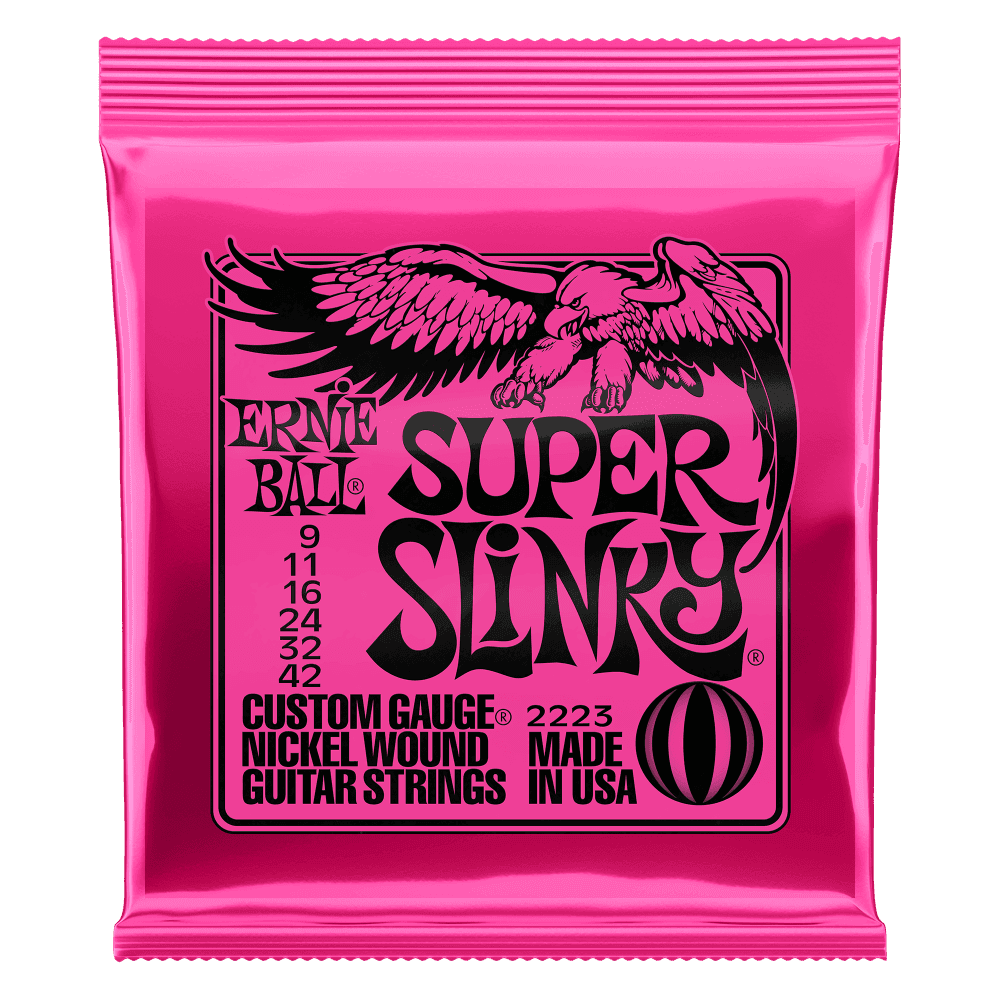
Super Slinky (.009–.042)
Why this one: A light-gauge starting point for the fast tremolo-picked riffing surf instrumentals are built on, not a historical claim about the Surfaris' own unrecorded 1962 gear.
Per the same Wikipedia entry, the Grammy Hall of Fame recognized "Wipe Out" in 2020, and the track has kept turning up in film and television soundtracks in every decade since its release, from "The Sandlot" in 1993 to "Stranger Things" in 2022, evidence that a B-side written in a hurry can still outlast almost everything else on the chart around it.
Related