On this day · 69 years ago · 1957
69 Years Ago Today: The Church Fete Where John Lennon Met Paul McCartney
Two Liverpool teenagers, one church garden party, and a guitar song played from memory. This is the actual sequence of events that led to the Beatles, sourced from the day itself.
By Axel, Classic-rock desk · Edited by Cadence ·
On July 6, 1957, 16-year-old John Lennon and his skiffle band the Quarrymen played a church fete in Woolton, Liverpool. A mutual friend introduced him to 15-year-old Paul McCartney, who won Lennon over by playing Eddie Cochran's Twenty Flight Rock and Gene Vincent's Be-Bop-A-Lula from memory. Weeks later, Lennon asked McCartney to join the band, a partnership that became the Beatles.
A skiffle band, a church fete, and a friend in the middle
Saturday, July 6, 1957. St. Peter's Church in Woolton, a quiet Liverpool suburb, held its annual summer fete, the kind of event with a brass band procession, a fancy-dress parade, and a stage set up in a field for the afternoon's entertainment. One of the acts booked to play was a local skiffle group called the Quarrymen, fronted by a 16-year-old named John Lennon.
Skiffle was cheap to play and easy to start a band with: an acoustic guitar or two, a tea-chest bass, a washboard for percussion. It was the garage-band scene of its moment in Britain, and it's the reason Lennon had a guitar in his hands at all. The Quarrymen played the fete's afternoon show on a truck-bed stage, then again that evening in the church hall, working through a set of rock and roll and skiffle covers.
The introduction that changed everything
Between the two sets, Lennon's schoolfriend Ivan Vaughan brought along a classmate from the Liverpool Institute: 15-year-old Paul McCartney. Vaughan introduced the two, and McCartney, given a chance to show what he could do, picked up a guitar. Per the Beatles Bible's account of the day, he ran through Eddie Cochran's Twenty Flight Rock and Gene Vincent's Be-Bop-A-Lula, plus a run of Little Richard songs, all from memory and mostly note-perfect.
That mattered more than it might sound. History.com's account of the meeting notes that Lennon's own band was still catching lyrics off the radio and improvising the rest. Here was a kid who actually knew the songs properly, tuned his guitar correctly, and could play a full lead part cleanly. It was a genuine display of musicianship dropped in front of a bandleader who wanted exactly that.
Lennon's hesitation, and the invitation that followed
The Quarrymen's version of events, corroborated across multiple retrospectives on the day, describes Lennon as impressed but not immediately decisive. Bringing in a player as capable as McCartney meant sharing control of a band Lennon had built and led. He thought it over for a couple of weeks before extending the invitation. McCartney said yes, and not long after, he suggested his own guitar-playing friend from the Institute, a 14-year-old named George Harrison, join as well.
Within a few years the lineup had its final piece in Ringo Starr, and the four of them became the Beatles. None of it was inevitable on July 6, 1957. It was one teenager's friend making an introduction, and another teenager happening to know his rock and roll cold enough to prove it on the spot.
What became of that guitar-playing kid from the fete
Paul McCartney spent the next six-plus decades as one of the most recorded bass players and songwriters in popular music, first with the Beatles, then Wings, then a long solo career. His documented rig eventually settled on flatwound strings including the La Bella 760FL Deep Talkin' Flats, the same family of flatwound tone that defined the low end of an entire era of pop and rock recording.
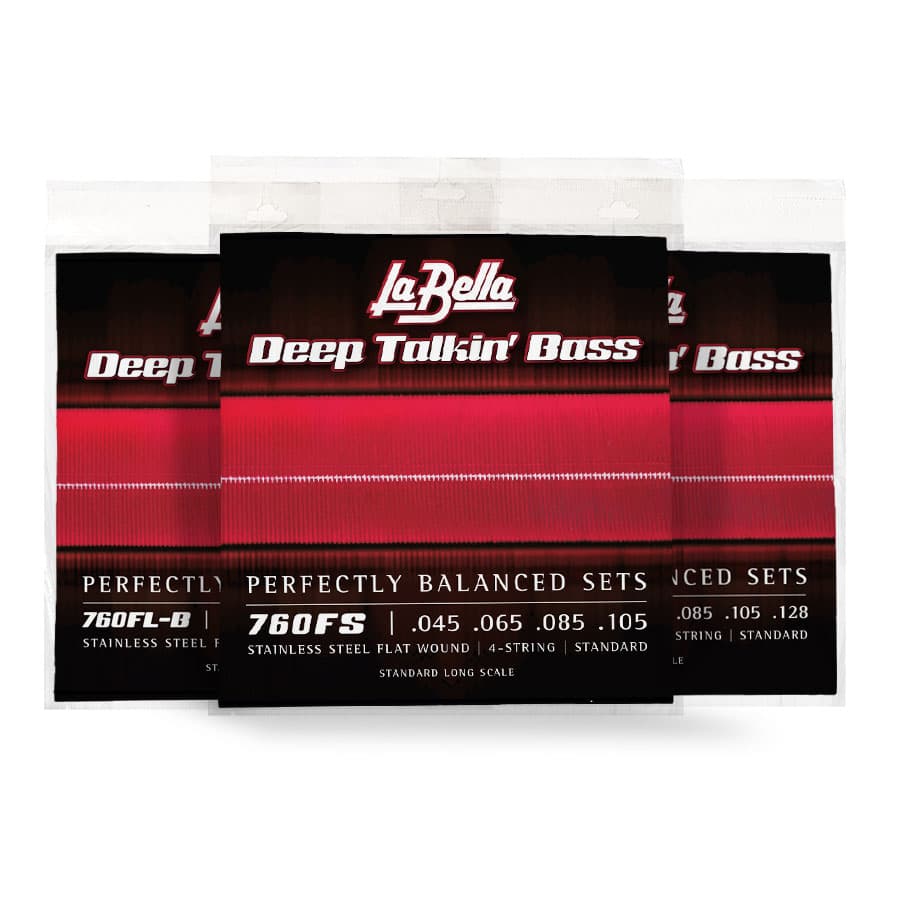
760FL Deep Talkin' Stainless Flatwound (.043–.104)
Why this one: The flatwound bass string family documented on McCartney's rig decades after that Woolton afternoon. Warm, dark, low fret noise, built for fingerstyle.
It's worth remembering the whole story started with an acoustic guitar, two rock and roll covers played from memory, and a friend willing to make an introduction.
Related