On this day · 86 years ago · 1940
86 Years Ago Today: Crickets Bassist Joe B. Mauldin Was Born
He was barely 17 when he started slapping a stand-up bass behind Buddy Holly. Joe B. Mauldin spent the rest of his life proving the Crickets were a band, not a backing act.
By Lowe, Bass desk · Edited by Cadence ·
Joe B. Mauldin, the bassist for Buddy Holly and the Crickets, was born July 8, 1940, in Lubbock, Texas. He joined the band as a teenager on double bass, later switching to a Fender Precision, and played on hits including That'll Be the Day and Peggy Sue. After the Crickets, Mauldin became a recording engineer at LA's Gold Star Studios. The Rock and Roll Hall of Fame inducted him in 2012.
Barely 17, and already the Crickets' bottom end
Joseph Benson Mauldin Jr. was born July 8, 1940, in Lubbock, Texas, and was still a teenager, barely 17 by most accounts, when he started playing with a local hotshot named Buddy Holly. Per Rolling Stone's account of his career, Mauldin played double bass in a country-sideman style, leaning on the root and fifth of each chord rather than busy fills, the same stand-up "doghouse" bass sound that anchored a huge amount of 1950s rockabilly. When other early members of Holly's band dropped out, Mauldin and drummer Jerry Allison became the rhythmic core the Crickets built everything else around.
The rhythm behind the songs that built early rock and roll
That rhythm section is on the record for some of the most foundational songs in rock and roll's early canon, including That'll Be the Day and Peggy Sue. Mauldin later moved from double bass to a Fender Precision electric bass, part of a broader shift happening across the music as the electric bass guitar started replacing the upright in touring and recording rock and roll bands during the late 1950s.
From the stage to the control room
Mauldin's playing career paused for military service: he enrolled in the US Army in 1964 and served until his discharge in 1966. Per Billboard's obituary, he then moved to Los Angeles and became a recording engineer at Gold Star Studios, the room that became the hit factory behind Phil Spector's Wall of Sound productions and a run of major 1960s pop and rock records. It's a quieter second act than his time on stage with Holly, but it kept him inside the machinery of the records that defined the decade after his own.
A Hall of Fame correction, and the tone behind the doghouse bass
The Rock and Roll Hall of Fame inducted Buddy Holly in 1986, but recognized only Holly by name, not the band that played on his records. That was corrected in 2012, when a special committee inducted Mauldin, Allison, and the rest of the Crickets in their own right. Mauldin died February 7, 2015, in Nashville, of cancer, at age 74.
His stand-up bass tone from those Lubbock and New York sessions doesn't map onto a modern catalog string, no manufacturer sells a doghouse bass string today the way Ernie Ball or D'Addario sell electric sets. But the closest modern equivalent to that thumping, rounded low end, once the Crickets and their peers moved to electric basses, is a flatwound set built for warmth over brightness.
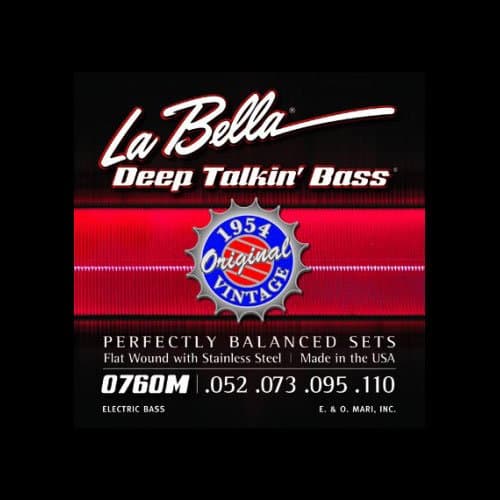
0760M Deep Talkin' Bass Originals (.052–.110)
Why this one: A flatwound bass set built for the warm, rounded, low-fret-noise tone that a Fender Precision needs to stand in for an upright doghouse bass, not a documented claim about Mauldin's own strings.