On this day · 88 years ago · 1938
88 Years Ago Today: The Searchers' Tony Jackson, Who Built His Own Bass, Is Born
Tony Jackson sang lead for the Searchers before he ever played bass, then learned the instrument on a guitar he customized and built himself. He was born July 16, 1938, in Liverpool.
By Lowe, Bass desk · Edited by Cadence ·
Tony Jackson, born Anthony Paul Jackson on July 16, 1938, in Liverpool, sang lead and played a customized bass guitar he built himself in Merseybeat band the Searchers. He fronted their first two UK hits, Sweets for My Sweet and Sugar and Spice, before leaving in July 1964 over the band's softer musical direction. Jackson later led Tony Jackson and the Vibrations. He died August 18, 2003, in Nottingham, at 65.
A singer who taught himself bass
Anthony Paul Jackson was born July 16, 1938, in Dingle, Liverpool, per Wikipedia's sourced biography. (A couple of quick-reference music calendars list 1940 instead, but that's out of step with the "aged 65" reported at his August 2003 death, which only lines up with a 1938 birth.) Inspired by Lonnie Donegan's skiffle sound and then by Buddy Holly, Jackson founded a skiffle group called the Martinis, and was later spotted by guitarists John McNally and Mike Pender, who'd formed a duo in 1959, after they heard him sing and decided he "had a voice like Elvis."
The band needed a bassist when it expanded to a quartet with the addition of drummer Chris Curtis, so Jackson built and learned to play a customized bass guitar himself, a detail Wikipedia's account preserves clearly. Learning the four-stringed instrument from scratch proved demanding enough that he stepped back from lead vocals, handing that role to a new singer, Johnny Sandon, in 1960. The group became the Searchers.
Sweets for My Sweet, and an exit in 1964
Jackson returned to the microphone once Sandon moved on in 1962, and when Pye Records signed the Searchers in 1963, riding the demand for Liverpool acts that the Beatles had created, Jackson sang lead and played bass on the band's breakout UK hits: "Sweets for My Sweet" and "Sugar and Spice," both released that year. He's also featured on "Don't Throw Your Love Away" and "Love Potion No. 9," though he wasn't the vocalist on the Searchers' biggest hit, "Needles and Pins." In 1964, the band toured the United States, including an appearance on The Ed Sullivan Show.
That same year, Jackson left the Searchers in some acrimony, unhappy that the band was drifting from rock and roll toward a softer, more melodic sound and feeling he wasn't getting the attention he wanted. He moved to London and formed a new band, the Vibrations, with an organ-based sound in place of the Searchers' guitars. Later renamed the Tony Jackson Group, the project toured the UK and southern Europe before folding when bookings dried up. Jackson died August 18, 2003, in a Nottingham hospital, at 65; arthritis had already ended his guitar playing by then.
If Merseybeat's bass tone is what brought you here
Jackson built his own instrument to chase that Merseybeat low end; you don't have to. A bright, punchy 4-string set in the same rock lineage is a reasonable modern starting point, not a claim about the strings on Jackson's actual 1960s custom build, which isn't documented.
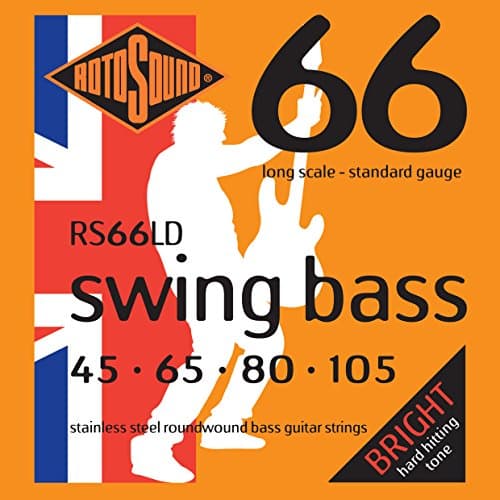
Swing Bass 66 (.045-.105)
Why this one: A bright, British-made stainless bass set from the same UK rock lineage the Searchers came out of, not a documented claim about Jackson's own 1960s strings.
The Searchers weren't the only Liverpool band rethinking bass tone in this era: Paul McCartney's Höfner "Beatle bass", a few streets over, is the other well-documented example. It's one more entry on today's page of July 16 guitar and bass history.
Related