On this day · 101 years ago · 1925
101 Years Ago Today: Bill Haley Was Born. The Guitar Solo That Made Him Immortal Wasn't His.
Bill Haley gets the history-book credit as rock and roll's first star. The guitar solo on his most famous record was played by a jobbing session musician named Danny Cedrone, who took home $21 for the session and never lived to see the song become a hit.
By Axel, Classic-rock desk · Edited by Cadence ·
Bill Haley, widely credited as rock and roll's first star, was born July 6, 1925, in Highland Park, Michigan. His signature hit, Rock Around the Clock, was recorded April 12, 1954, and its famous guitar solo was played by session guitarist Danny Cedrone, who was paid $21 and reused a solo he'd already played on an earlier Haley recording. Cedrone died 10 days after his last session with the band, months before the song became rock and roll's first number-one hit.
The birthday that gets the history-book credit
Bill Haley was born July 6, 1925, in Highland Park, Michigan, and by the mid-1950s he'd become, per Encyclopaedia Britannica's account of his career, the single figure most credited with turning rock and roll from a regional, mostly Black musical current into a mainstream, chart-topping national phenomenon. Bill Haley & His Comets racked up hit after hit: Crazy Man Crazy in 1953 (often cited as the first rock and roll record to chart on Billboard's pop listings), Shake Rattle and Roll, and above all, Rock Around the Clock, which eventually spent seven weeks at No. 1 in 1955 and has sold more than 20 million copies since.
Haley himself played rhythm guitar in ordinary standard tuning and had spent years working the country and western circuit before assembling the band that would make him famous. But the most famous guitar moment in his entire catalog didn't come from him.
The solo, and the guitarist history nearly forgot
Rock Around the Clock was recorded April 12, 1954, at a Decca Records session in New York City. The guitarist on the date was Danny Cedrone, a jobbing session player who wasn't a full-time member of Haley's band at all, he led his own group, the Esquire Boys, on the side. Per Wikipedia's account of the session, citing Jim Dawson's book Rock Around the Clock, Cedrone had missed the rehearsal and wasn't sure what to play for the song's instrumental break. Someone in the room suggested he simply repeat the solo he'd already recorded two years earlier on Haley's Rock the Joint, a fast, jazz-tinged run capped with a lightning down-scale line. He did. Cedrone was paid $21 for the whole session.
That reused solo became one of the most influential guitar breaks in rock history, cited over the years as a direct inspiration by guitarists including Jimi Hendrix, Pete Townshend, and Brian Setzer.
He never knew what he'd made
Cedrone played one more session with Haley's band, recording Shake, Rattle and Roll on June 7, 1954. Ten days later, on June 17, three days before his 34th birthday, he died of a broken neck after falling down a staircase. Rock Around the Clock had already been released as a single, but it was a modest seller at first. It didn't become a nationwide sensation until eight months after Cedrone's death, when the film Blackboard Jungle used it over the opening credits in 1955 and it rocketed to become rock and roll's first number-one hit in the US. Cedrone never lived to see any of it.
His replacement in the band, guitarist Franny Beecher, spent years miming Cedrone's exact solo for the group's TV and film appearances, since the recording itself had already become inseparable from the song. It took until the 2012 Rock and Roll Hall of Fame induction, correcting the band's original 1987 entry that recognized only Haley by name, for Cedrone to be formally credited as a member of the group whose sound he helped define.
A reminder about session players and songwriting credit
Cedrone's story is a useful, slightly uncomfortable footnote to rock and roll's official origin story: the single most influential guitar performance connected to the genre's breakout moment was played by someone paid scale wages for an afternoon's work, reusing a solo from a different, mostly forgotten song, because he hadn't had time to prepare something new. It didn't make the performance any less definitive. It's just a reminder that some of the most important guitar moments in recorded history happened fast, under pressure, and without anyone in the room realizing what they'd just captured.
Cedrone's own guitar and amp from the session aren't documented well enough to reconstruct exactly, decades before any of today's major string manufacturers existed in their current form. But if that raw, twangy rockabilly attack is the tone you're chasing on a Tele or a hollow-body today, a straightforward nickel-wound set is still the standard starting point most players reach for.
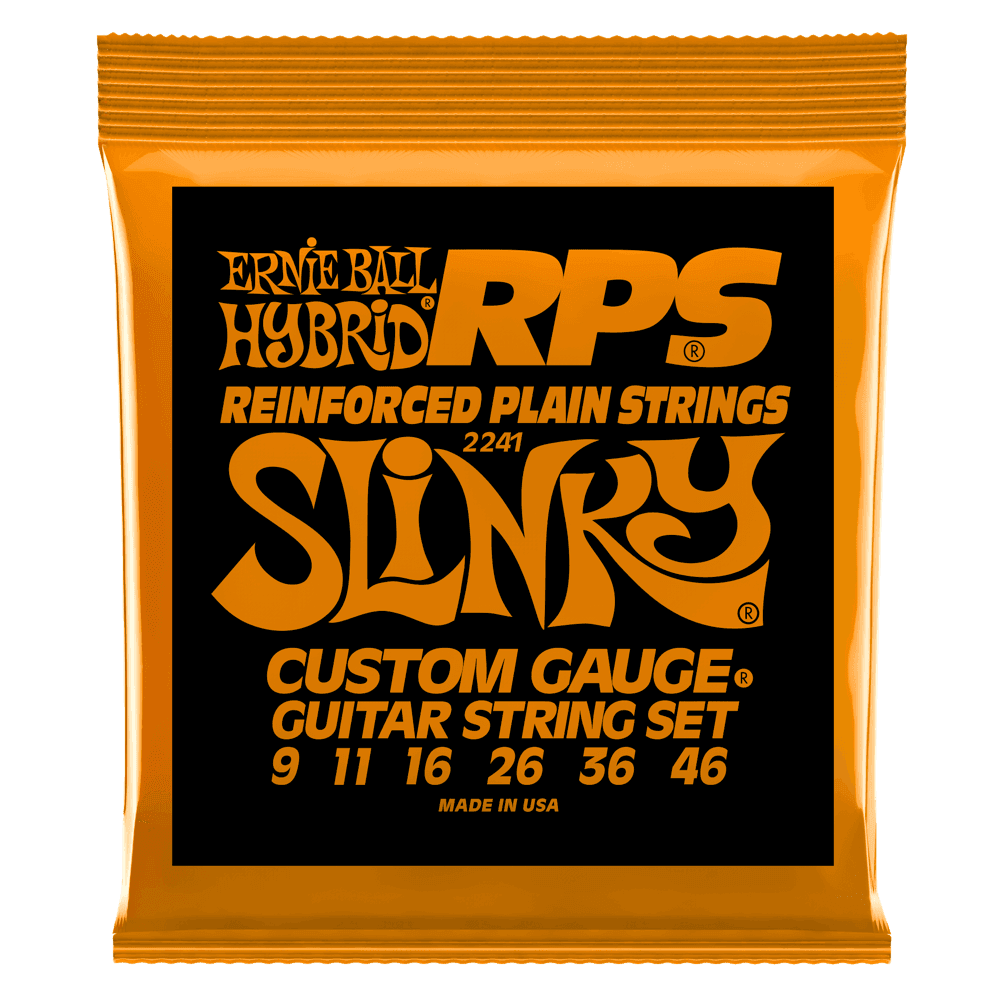
Regular Slinky RPS-2241 Nickel Wound (.010–.046)
Why this one: A general nickel-wound starting point for players chasing that vintage rockabilly-into-rock-and-roll twang, not a historical claim about Cedrone's own unrecorded gear.