Flatwound vs roundwound bass strings: tone, feel, and which to buy
Written with AI help · Updated
Roundwound bass strings are bright, punchy, and textured, the default for rock, funk, and slap. Flatwound strings are smooth, warm, and thumpy, the Motown and jazz sound, with far less finger noise and far longer life. Pick roundwounds for modern attack and slap. Pick flatwounds for vintage warmth, a smooth feel, and a set that lasts years. La Bella runs warmest, D'Addario Chromes brightest among flats.
The short answer
Roundwounds are the modern default: bright, punchy, harmonically alive, and built for rock, funk, and slap. Flatwounds are the vintage voice: warm, smooth, and thumpy, the Motown and jazz sound, with almost no finger noise and a lifespan measured in years instead of weeks.
Pick roundwounds if you want attack, sparkle, and slap response. Pick flatwounds if you want warmth, a glassy-smooth feel, quiet fingering, and a set you almost never replace. Neither is better. They are two different instruments.
How they are built, and why it changes the sound
The names are literal. A roundwound string is wrapped in round wire, which leaves a ridged, textured surface you can feel. A flatwound is wrapped in a flat ribbon and polished smooth. That construction difference, per Sweetwater and Ernie Ball, drives every practical difference: tone, feel, finger noise, fret wear, and lifespan.
Roundwounds expose more surface and more high-frequency content, so they ring bright and gritty. Flatwounds present a sealed, smooth surface that damps the highs and pushes the fundamental forward, which is why Guitar World describes them as warmer, mellower, and mid-focused.
| Roundwound | Flatwound | How big is the difference? | |
|---|---|---|---|
| Tone | Bright, snappy, harmonically rich | Warm, thumpy, mid-focused | Large. The core reason to choose. |
| Best genres | Rock, funk, slap, modern pop | Motown, jazz, soul, reggae, vintage | Genre-defining |
| Feel | Textured, grippy | Smooth, glassy | Obvious on first touch |
| Finger noise | More squeak | Almost none | Significant for recording |
| Fret wear | Higher | Lower | Matters over years |
| Lifespan | Weeks of fresh tone | Months to years | Flats last far longer |
| Price | Lower ($) | Higher ($$) | Flats cost more per set |
The tone, in plain terms
Roundwounds give you the growl and zing. Fresh, they have a piano-like brightness and a strong attack that cuts through a loud band, and they are the only real choice for slap, where the snap against the frets is the whole point. This is the sound of most modern rock, funk, and pop bass.
Flatwounds give you the thump. They roll off the top end and sit in the low mids, producing the round, vocal, supportive tone behind Motown, classic soul, jazz, and reggae. Guitar World sums the flat sound as darker, smoother, and subdued in the harmonics, a feature, not a flaw, when you want the bass to hold the floor rather than grab the spotlight.
The players make the case. James Jamerson built the entire Motown low end on La Bella flats, while Steve Harris of Iron Maiden proves flats can be aggressive, driving his galloping tone with Rotosound Monel flatwounds. On the roundwound side, the bright, articulate rock and prog sound of players like Geddy Lee runs on Rotosound roundwounds.
Feel, finger noise, and lifespan
Beyond tone, the surface changes how the string plays. Flatwounds feel glassy and slide easily, which many players love for smooth position shifts, and they produce almost no finger squeak, the reason engineers reach for them when a track needs a clean, quiet bass. Roundwounds feel grippy and textured, with more audible finger noise.
The biggest practical gap is lifespan. Flatwounds resist the sweat and grime that kill brightness, so they hold a consistent tone for months or years, and plenty of players leave the same set on for a decade. Roundwounds lose their sparkle in a few weeks of steady play.
Run the cost per year, not per set. A roundwound set is cheaper but you replace it often. A flatwound set costs more up front and can outlast a dozen roundwound changes, so for a player who is not chasing fresh-string zing, flats are frequently the cheaper string to own.
Which should you buy
- Slap, funk, modern rock
- Roundwound. Nothing else gives the snap and attack.
- Motown, soul, jazz, reggae
- Flatwound. The warm, thumpy fundamental.
- Studio and quiet fingering
- Flatwound. Almost no finger squeak.
- Hate changing strings
- Flatwound. A set can last years.
- Want bright on a budget
- Roundwound. Cheaper per set, brightest tone.
The warm vintage flat. La Bella Deep Talkin' is the traditional Motown thump, the warmest flat in wide use.
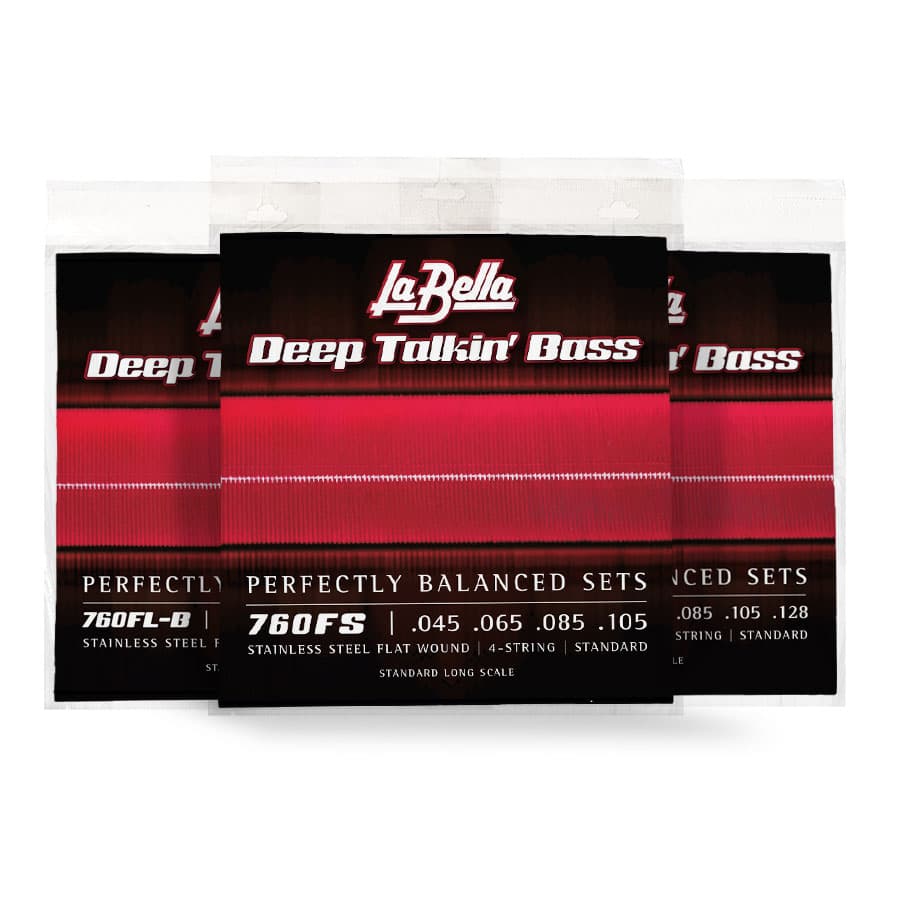
760FL Deep Talkin' Flatwound (.043–.104)
Why this one: The reference vintage flat. Smooth stainless ribbon wrap for the deep, warm, mid-forward thump behind Motown and classic soul, and a set that holds its tone for years.
The aggressive flat. Rotosound Monel is the Steve Harris sound, proof flats can drive hard rock.
SH77 Steve Harris Monel Flatwound (.050–.110)
Why this one: Heavy-gauge Monel flats with grind. The documented Steve Harris set, for players who want the smoothness and longevity of a flat with far more bite than a vintage thump.
The classic round. Rotosound Swing Bass 66 is the bright, articulate roundwound behind a huge slice of rock and prog.
Swing Bass 66 Stainless Roundwound (.045–.105)
Why this one: The bright stainless roundwound that defined the British rock bass sound. Aggressive top end and growl, the go-to when you want the bass to cut.
The funk round. GHS Bass Boomers, in Flea's signature gauge, for slap and funk attack.

Bass Boomers Flea Signature (.045–.105)
Why this one: Punchy nickel-plated roundwounds in the documented Flea gauge. Bright snap and strong fundamental for slap and fingerstyle funk, at a friendly price.
For a budget round to start with, a classic D'Addario ProSteels set delivers bright stainless roundwound tone for less.
Related
- The other string-choice axes: coated vs uncoated and nickel vs steel.
- Documented flatwound rig: James Jamerson and the Motown sound.
- When and how to swap: how to change bass strings.