On this day · 47 years ago · 1979
47 Years Ago Today: Chuck Berry Is Sentenced to Prison for Tax Evasion
Chuck Berry built the electric-guitar riff vocabulary that rock and roll still runs on. He also built a habit of demanding cash upfront from promoters, and on July 10, 1979, that habit caught up with him in a Los Angeles courtroom.
By Axel, Classic-rock desk · Edited by Cadence ·
On July 10, 1979, a Los Angeles federal court sentenced Chuck Berry, rock and roll's foundational guitarist, to four months in prison and 1,000 hours of community service for evading nearly $110,000 in income taxes on his 1973 earnings. Berry's habit of demanding cash payment upfront from promoters, a safeguard against being stiffed, had drawn IRS scrutiny. He served his sentence at Lompoc Prison Camp in California and completed the community service with benefit concerts.
A guilty plea in a Los Angeles courtroom
In June 1979, a St. Louis federal grand jury indicted Chuck Berry on charges of tax evasion. Per American Songwriter's account of the case, Berry chose to stand trial in Los Angeles rather than his Missouri hometown, and pleaded guilty to failing to pay almost $110,000 in income tax owed on his 1973 earnings of $374,982. On July 10, 1979, the court handed down its sentence: four months in prison and 1,000 hours of community service, which Berry went on to fulfill by playing benefit concerts.
Cash upfront: the habit that caught the IRS's attention
The case traced back to how Berry did business on the road. He built a reputation for demanding full payment in cash, frequently in stacks of $100 bills, directly from promoters before he'd set foot on stage, according to the same reporting. It was a defense against being shorted by venues, a real risk for touring Black performers of his era, but the practice also made his gross receipts harder to trace on paper, and a five-year IRS investigation followed. Berry later reflected on the fallout to a St. Louis Magazine interview cited in coverage of the case: "My philosophy of 'as long as you know you have it why bother where it is' was proving to be incompatible with reality."
Four months at Lompoc, then back on stage
Berry served his four-month sentence at Lompoc Prison Camp in Santa Barbara County, California. Per American Songwriter's account, it wasn't his first legal trouble, he'd already served time tied to a 1959 Mann Act case, and it wouldn't be his last: a 1990 police raid on his home turned up marijuana and led to a suspended sentence for possession. But the 1979 tax case remains the one most tied to his working habits as a touring musician, a cash-only caution that, taken to its logical extreme, became a federal case.
The guitarist whose riffs came first
None of it dented Berry's standing as rock and roll's foundational guitarist. The double-stop riff that opens Johnny B. Goode is still the most-imitated electric-guitar riff in modern music, and his catalog of Gibson semi-hollow archtops, played through clean tube combos in standard tuning, set the template that the early Beatles, Rolling Stones, and Who all built their own live sets on. Read the full breakdown of Chuck Berry's guitar and string setup for the specifics.
Berry's own documented gauge sits in light nickel-wound .010-.046 territory, the same range most players still reach for on a semi-hollow electric today.
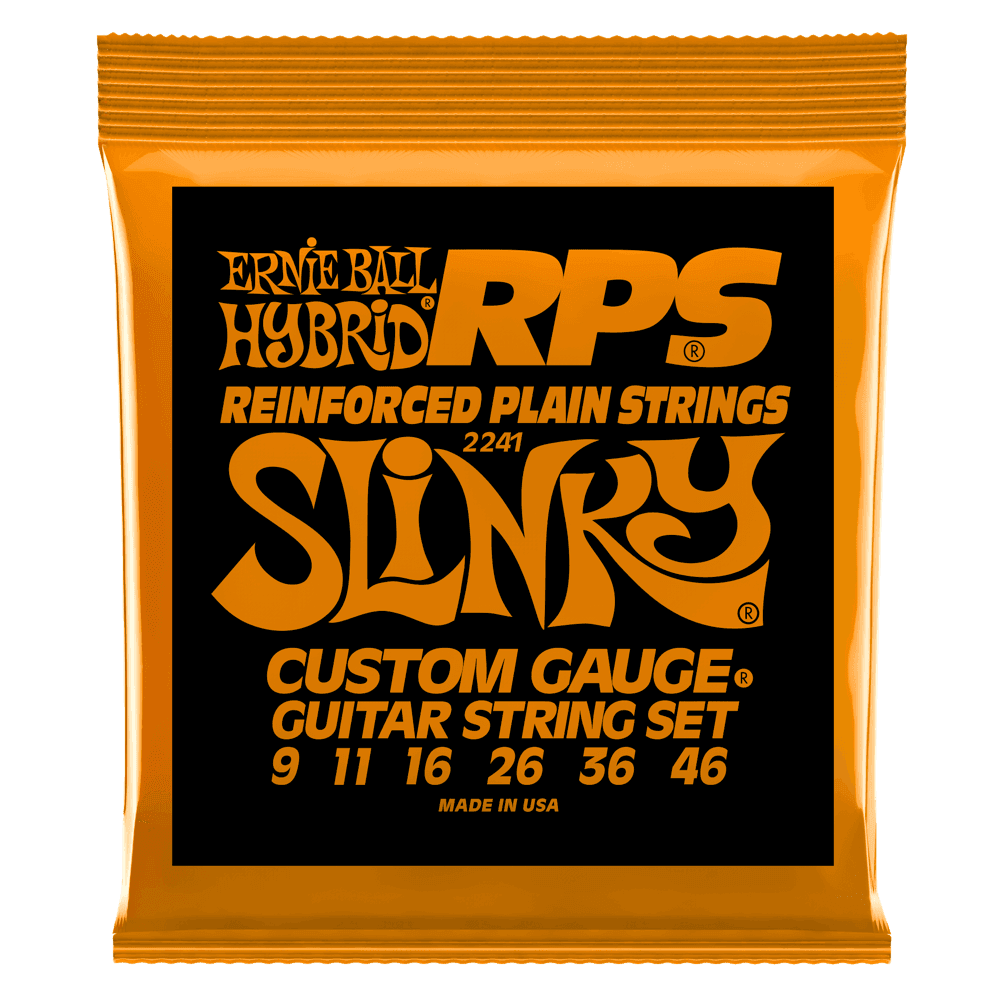
Regular Slinky RPS 2241 Nickel Wound (.010–.046)
Why this one: A light nickel-wound set in the .010-.046 territory Berry's own documented gauge sits in, a general starting point rather than a claimed exact match to any specific era of his rig.
Related