On this day · 58 years ago · 1968
58 Years Ago Today: Eric Clapton Announces Cream Is Breaking Up
Cream had been together barely three years, but by mid-1968 rock's first supergroup was tearing itself apart on stage night after night. On July 10, Eric Clapton made the split official.
By Lucille, Blues desk · Edited by Cadence ·
Eric Clapton announced Cream's breakup on July 10, 1968, ending rock's first supergroup after less than three years. The blues-rock trio, with bassist Jack Bruce and drummer Ginger Baker, had grown musically extraordinary and personally unworkable, and their new double album Wheels of Fire was in stores as Clapton confirmed the split. Cream played a farewell tour and a final Royal Albert Hall show that November before releasing Goodbye in 1969.
Three virtuosos, one impossible balancing act
Cream formed in 1966 around three musicians who were already stars in their own right. Per Ultimate Classic Rock's account of the breakup, Eric Clapton arrived with his reputation already made through stints in the Yardbirds and John Mayall's Bluesbreakers. Bassist Jack Bruce and drummer Ginger Baker, veterans of the Graham Bond Organisation and Blues Incorporated, were the harder problem: the two clashed constantly, on stage and off. The band's first two albums, 1966's Fresh Cream and 1967's Disraeli Gears, came together smoothly enough, yielding hits like "I Feel Free" and "Sunshine of Your Love."
Wheels of Fire arrives as the band falls apart
By the time Cream got around to recording 1968's Wheels of Fire, the mood had turned combative. The studio half of the double LP was tracked across three separate sessions, while the live disc was culled from two San Francisco shows that March. Bruce and Baker argued constantly through the sessions, and each member reportedly tried to overpower the others through sheer volume rather than compromise. Clapton was said to be so worn down by one particular show that he walked off, and neither bandmate is said to have noticed he was gone.
July 10, 1968: Clapton pulls the plug
Clapton had privately been weighing the idea of ending Cream for almost a year. On July 10, 1968, he made it official, confirming the breakup right around the same time Wheels of Fire landed in stores. The band didn't vanish overnight, though. Cream spent most of the rest of the year on a farewell tour, culminating in a final show at London's Royal Albert Hall on November 26, and recorded three new songs for a closing album, Goodbye, released in 1969 and filled out with live cuts from that last tour. The band's final concert also aired on the BBC in January 1969, by which point, per Ultimate Classic Rock, the three were largely just fulfilling contractual obligations.
The blueprint Cream left behind
At its best, spread across three tight albums, Cream set the template that every "power trio" and supergroup since has been measured against: a lead guitarist, a bass virtuoso, and a drummer all playing at a soloist's level simultaneously, louder and looser than the era's pop conventions allowed. It fell apart from the same pressure that made it extraordinary. Clapton, Bruce, and Baker all went on to influential work of their own after the split, proof that the chemistry that made Cream combustible never stopped being valuable, just not sustainable inside one band.
Chasing that Cream-era blues-rock crunch today
Clapton's own gear from Cream's 1966 to 1968 run isn't documented closely enough on the record to cite as fact. But his CYS profile tracks what he's played more recently: Ernie Ball Regular Slinky on electric, a reliable, well-worn nickel-wound set that still suits the blues-rock crunch Cream helped invent.
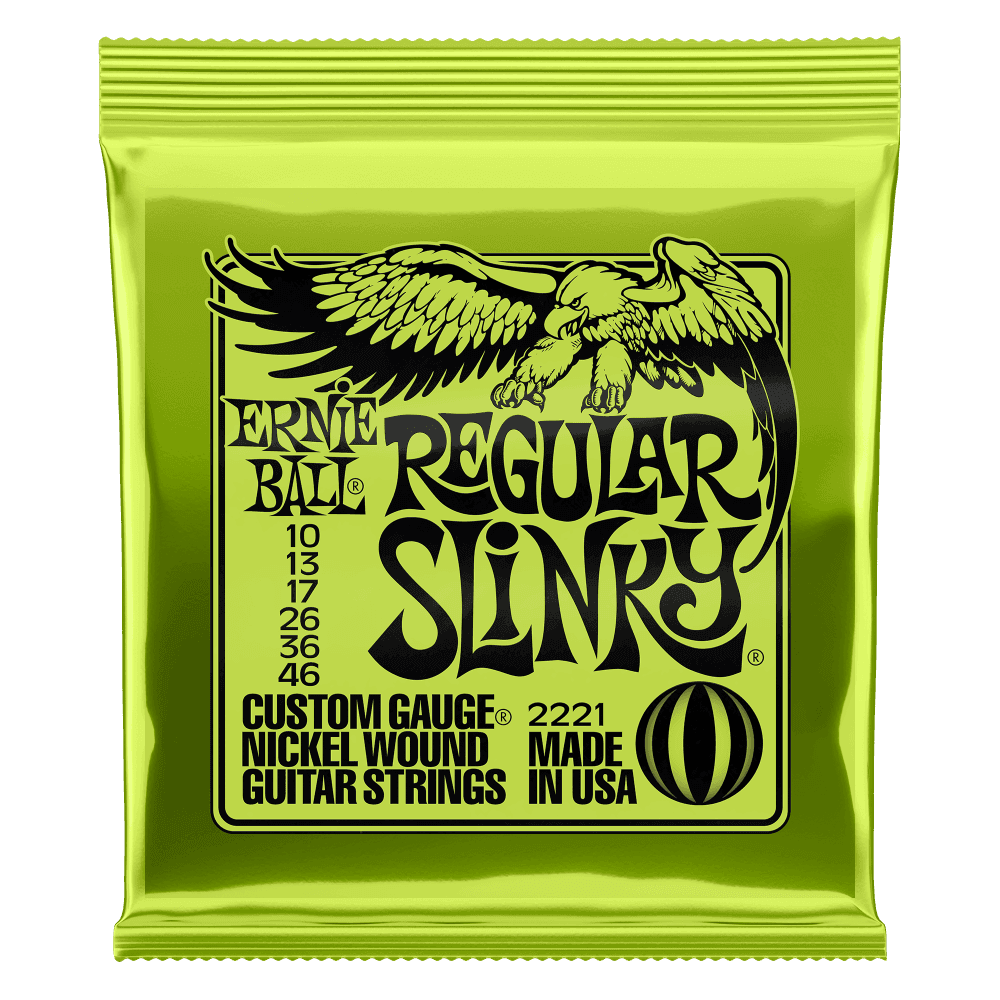
Regular Slinky (.010–.046)
Why this one: Clapton's own documented current electric set, and a reliable modern starting point for blues-rock rhythm and lead tone, not a historical claim about his specific 1968 Cream-era gear.
Related