On this day · 59 years ago · 1967
59 Years Ago Today: Jimi Hendrix Opens for the Monkees, and Rock's Strangest Tour Pairing Begins
A psychedelic guitarist who'd just set his Stratocaster on fire at Monterey opened for a band built for 12-year-olds. It went about how you'd expect, and the reason everyone remembers for why it ended isn't the real one.
By Axel, Classic-rock desk · Edited by Cadence ·
On July 8, 1967, the Jimi Hendrix Experience opened for the Monkees at the Jacksonville Coliseum, the first date of a tour Micky Dolenz pushed for after seeing Hendrix at the Monterey Pop Festival. Preteen fans screaming for Davy Jones drowned out Hendrix's psychedelic rock, and he quit after about a week. The famous claim that the Daughters of the American Revolution got him pulled was a hoax invented by a critic.
A guitar-burning at Monterey, then an odd idea
A month before this tour started, the Jimi Hendrix Experience played the Monterey International Pop Festival and closed with Hendrix setting his Fender Stratocaster on fire, an act that turned him into an instant underground legend on the American West Coast. Monkees drummer Micky Dolenz was in the crowd, and per the official Jimi Hendrix site's account of how the tour came together, he came away convinced the Experience would be a great opening act for the Monkees' first big US tour. The Monkees pushed the idea on tour promoter Dick Clark, who agreed largely because the band, not Clark, wanted it that way.
Jacksonville, July 8, 1967
The tour opened on July 8, 1967, at the Jacksonville Coliseum in Jacksonville, Florida, per Best Classic Bands' account of the date. The crowd was pure Monkeemania: preteen fans, homemade Davy Jones t-shirts, parents chaperoning. Jimi Hendrix, Noel Redding, and Mitch Mitchell walked out into that room and played a set built around fuzzed-out blues and feedback, the same psychedelic rock that had floored an adult, stoned Monterey crowd weeks earlier. It landed nowhere. Per Guitar Player's interview with Dolenz, the audience spent Hendrix's sets chanting for Davy Jones instead of listening.
Out in about a week
Hendrix played roughly seven dates, including a run of shows at Forest Hills Tennis Stadium in Queens, New York, before the pairing ended, his last night on the tour usually dated to July 16 or 17, 1967 depending on the source. Both sides agreed the booking wasn't working, and Hendrix's manager, Chas Chandler, called Dick Clark to arrange the split, according to the official Hendrix site's account. It wasn't hostility so much as a scheduling mistake nobody had fully thought through: an act built for adult, altered-state festival crowds opening for a band built for kids who wanted bubblegum pop.
The story everyone remembers is a hoax
Ask most people why Hendrix left the Monkees tour and they'll say the Daughters of the American Revolution got him thrown off for being "too erotic." That story is fiction. Per Ultimate Classic Rock's account of the myth, music critic Lillian Roxon was traveling with the tour and wrote a joke press release claiming the DAR had complained about Hendrix's stage act and pressured promoters into dropping him. Newspapers printed it as a straight news story, and the invented explanation has outlived the real one for more than fifty years. The actual reason was simpler and less dramatic: a psychedelic guitarist and a teen-pop band drew completely different crowds, and someone finally admitted it wasn't working.
The gear behind those seven strange nights
At the time, Hendrix was playing a right-handed Fender Stratocaster restrung and flipped upside-down for left-handed playing, strung with Fender Rock 'n' Roll light-gauge strings (.010-.038) and tuned down a half step to Eb standard, per his full sourced gear profile.
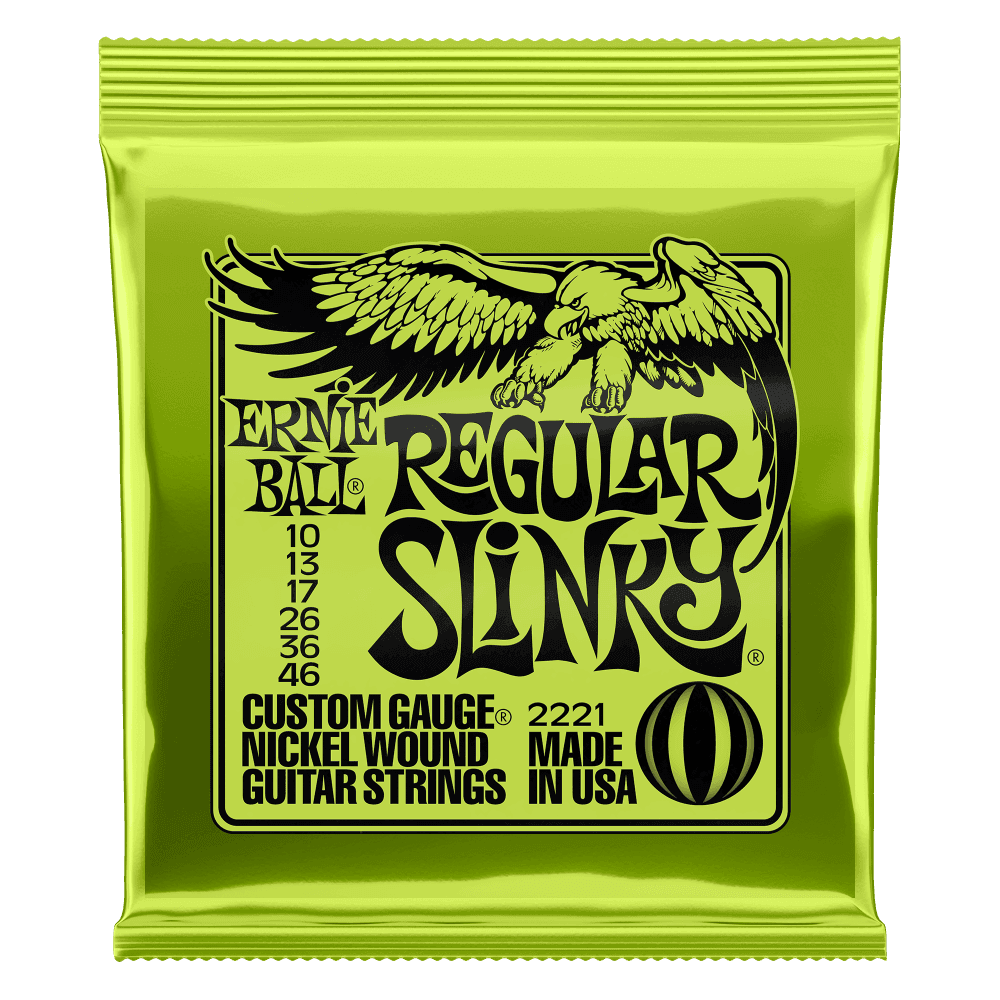
Regular Slinky (.010–.046)
Why this one: The modern equivalent of the light Fender set Hendrix played in 1967. Tuned down a half step to Eb, a .010 sits at the same slack, bend-friendly tension that defined his sound that summer.
Related