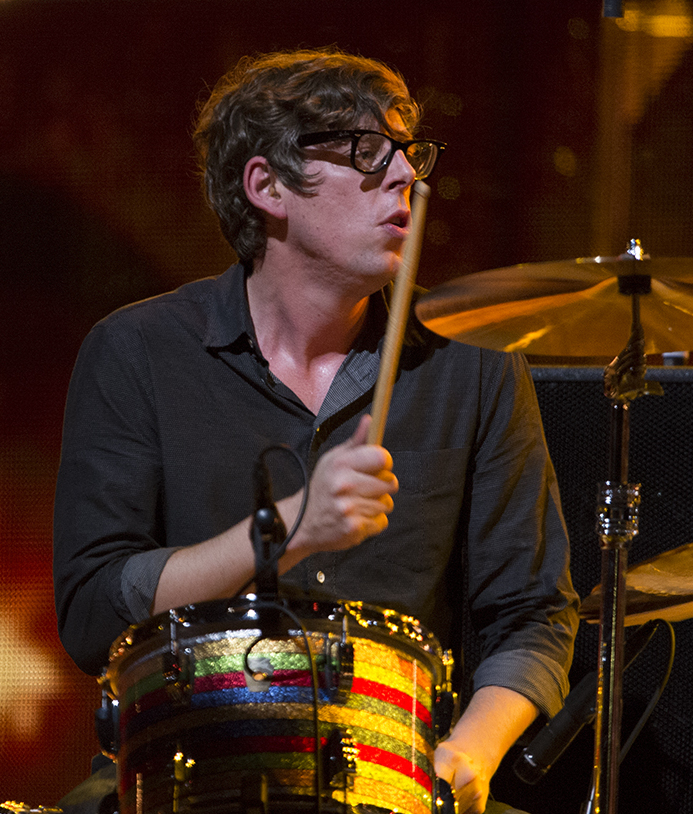
Patrick Carney: The Black Keys drummer, decoded
Patrick Carney has anchored The Black Keys since 2001. Ludwig Vintage kit, Paiste cymbals, the indie-rock + blues-rock drumming canon's most identifiable garage-pocket signature.
The Black Keys · written with AI help · updated
Patrick Carney (born April 15, 1980, Akron, Ohio) co-founded The Black Keys with Dan Auerbach in 2001 and has been the band's only drummer across 12 studio records. Vintage Ludwig kit (a documented Vistalite-series artist), Paiste cymbals since 2008 (Giant Beat hi-hats, a 2002 Ride and Crash). Defining indie + blues-rock pocket: Brothers (2010), El Camino (2011), Turn Blue (2014). Three Grammy Awards for the band's 2010-2014 run.
Who Patrick Carney is
Patrick James Carney, born April 15, 1980, in Akron, Ohio, co-founded The Black Keys with Dan Auerbach in 2001. Across 12 studio records (the most recent: Ohio Players, 2024), his drumming has defined what 2000s-2020s blues-rock + indie-rock can sound like when the production stays raw + the pocket runs slightly behind the beat.
Three Grammy Awards (Best Rock Performance, Best Rock Song, Best Rock Album) for the band's 2010-2014 commercial-peak run.
Style signatures
Three things across The Black Keys catalog you can identify as Carney's:
-
Behind-the-beat swing. The pocket is closer to early-60s blues drumming (Ringo Starr, Charlie Watts) than to modern alt-rock precision; the swing is what makes the catalog feel like blues-rock + not garage-rock pastiche.
-
Cymbal-forward arrangement. Hi-hat + ride patterns drive the songs; kick + snare support rather than lead.
-
Lo-fi capture aesthetic. The drums on Rubber Factory (2004) through Brothers (2010) were tracked deliberately raw; the capture is part of the band's identity.
Documented gear
- Paiste 2002 Ride (22-inch). Catalog #1061622. Paiste artist since August 2008; the Ride anchors his documented Setup Cymbals list alongside a matching 2002 Crash and Giant Beat hi-hats. Full review at /gear/paiste-2002-classic-ride-22.
- Paiste 2002 Crash (18-inch) + Giant Beat hi-hats/multi. Also listed on Paiste's own artist page for Carney: an 18-inch 2002 Crash, a 14-inch Giant Beat Hi-Hat, and an 18-inch Giant Beat "Multifunction." Brand-level documented; no dedicated CYS gear page yet for the Giant Beat models specifically.
- Ludwig vintage kits + Vistalite series. Pre-1970s estate-sale and collector-market Ludwig shells for most recording work; Ludwig's own artist roster separately names him a featured Vistalite-series artist. No dedicated CYS gear page yet for a specific shell pack.
- Vic Firth American Classic 5A (wood tip). Named directly in Carney's own 2014 Reddit AMA when asked what sticks he uses. Full review at /gear/vic-firth-american-classic-5a. Buy on Amazon
Related
The catalog. The Black Keys, The Big Come Up (2002) through Ohio Players (2024).
Documented gear. Paiste 2002 Ride 22-inch, Vic Firth American Classic 5A.
Drummer hub. Drummers index. Blues-rock canon parallel: Charlie Watts (Rolling Stones). Same Paiste 2002 lineage: Ian Paice (Deep Purple).