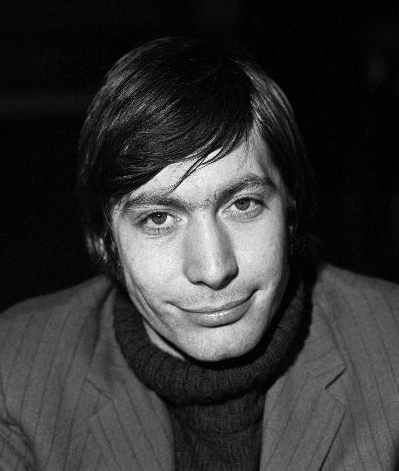
Charlie Watts: The Rolling Stones' drummer, decoded
Charlie Watts anchored The Rolling Stones from 1963 through his 2021 death. Gretsch jazz kit, an 18-inch UFiP flat ride, and a Zildjian Swish Knocker built the jazz-influenced rock pocket that defined the band's groove for nearly six decades.
The Rolling Stones · written with AI help · updated
Charlie Watts (born Charles Robert Watts, June 2, 1941, London; died August 24, 2021, age 80) anchored The Rolling Stones from January 1963 through his death. Gretsch '57 Round Badge jazz-style kit (he played a small 4-piece configuration his entire career, refusing the larger touring kits other rock drummers adopted). His own account names an 18-inch UFiP flat ride and a Zildjian Swish Knocker (the model tied to jazz drummer Mel Lewis), not the blanket 'Zildjian K' cymbals often assumed. Outside the Stones he led multiple jazz projects (Charlie Watts Quintet, Tentet, ABCD Boogie Band). The defining rock pocket that pulls slightly behind the beat, his jazz-influenced approach gave the Stones a groove that no other 1960s rock band had. Modern Drummer Hall of Fame (2006). Rock and Roll Hall of Fame with the Stones (1989).
Who Charlie Watts was
Charles Robert Watts, born June 2, 1941, in Bloomsbury, London, anchored The Rolling Stones from January 1963 through his death on August 24, 2021. His 58-year continuous tenure with the band is one of the longest single-drummer relationships in rock history.
Before the Stones he played in London's blues + jazz scene from the late 1950s, most notably Blues Incorporated with Alexis Korner. Mick Jagger, Keith Richards, and Brian Jones recruited him into the early Stones in January 1963. From the band's first single ("Come On" / "I Want to Be Loved", 1963) through Tattoo You (1981) and beyond, his pocket is the band's foundation.
Outside the Stones he led multiple jazz projects continuously from 1985 onward: the Charlie Watts Quintet, Tentet (a 10-piece big band), and the ABCD Boogie Band. His jazz devotion was lifelong; he authored a Charlie Parker tribute book (Ode to a High Flying Bird, 1965), kept a legendary record collection, and was a documented fixture of the London jazz scene.
Modern Drummer Hall of Fame (2006). Rock and Roll Hall of Fame with The Rolling Stones (1989).
The current rig (historical, sourced)
What's documented in the historical record
- Drum kit
- Gretsch, in a 4-piece jazz configuration. 22-inch kick (sometimes 20-inch), 12-inch rack tom, 16-inch floor tom, 14-inch snare. The same kit configuration for nearly his entire career, the jazz approach to rock drumming.
- Cymbals
- Not primarily Zildjian K. His own account names an 18-inch UFiP flat ride and UFiP China as his main voice, plus a Zildjian Swish Knocker he called his 'special cymbal.' The vintage-jazz character still fits the small Gretsch kit and the slightly-behind-the-beat groove even though the primary ride isn't Zildjian.
- Sticks
- Vic Firth Signature Series Charlie Watts (SCW): hickory, 16 inch, 0.585 inch diameter, medium taper, elongated oval wood tip built for a dark cymbal voice. Vic Firth has kept it in production since his 2021 death.
Style signatures
Three things across The Rolling Stones' catalog you can identify as Watts's:
-
Slightly-behind-the-beat pocket. The Stones' groove pulls behind the beat in a way most rock bands don't; Watts's hand timing on the snare and hi-hat is consistently a few milliseconds behind a metronomic placement.
-
The 'jazz drag' hi-hat technique. Watts often skipped the 8th-note on beat 4 (lifting the right hand at the moment most rock drummers would hit the hat). The skip gives the groove a pulled-back feel that's the band's identity; songs like 'Brown Sugar' and 'Honky Tonk Women' demonstrate the technique.
-
Single-snare-drum fills. Watts's fills were usually single-snare figures rather than tom rolls. The simplicity emphasizes the song over the drummer; the fills are taste markers, not technical displays.
Documented gear
- Zildjian A Swish Knocker (22-inch, A0315). The current version of the special-effects cymbal tied to jazz drummer Mel Lewis. Watts named it directly as "a special cymbal, a Zildjian Mel Lewis Swish Knocker" that "Zildjian gave me," in a 2012 DRUM! Magazine interview. Full review at /gear/zildjian-a-swish-knocker-22.
- UFiP 18-inch flat ride + China. His main ride cymbal since the late 1970s, in his own words: "I've never found one as good as it." UFiP also supplied his primary China cymbal. No dedicated CYS gear page yet for UFiP products.
- Gretsch '57 Round Badge kit. Confirmed directly on Gretsch's own artist page for Watts: natural maple, 8x12 rack tom, 16x16 floor tom, 14x22 bass drum. For jazz gigs he used a second 1960 Gretsch round badge kit in black, which he nicknamed "The Tony Williams": in his own words, "it's the one Tony used, it was like his signature drum kit when he was with Miles."
- Vic Firth Signature Series Charlie Watts (SCW). His namesake Vic Firth stick, still in production: hickory, 16 inch, 0.585 inch diameter, elongated oval tip built for a dark cymbal voice. Full review at /gear/vic-firth-charlie-watts-signature.
Related
The catalog. The Rolling Stones, Out of Our Heads (1965) through Hackney Diamonds (2023, recorded with Watts on some tracks before his death). Plus the Charlie Watts jazz catalog (1985-2021).
Documented gear. Zildjian A Swish Knocker 22-inch, Vic Firth Signature Series Charlie Watts drumsticks.
Drummer hub. Drummers index.