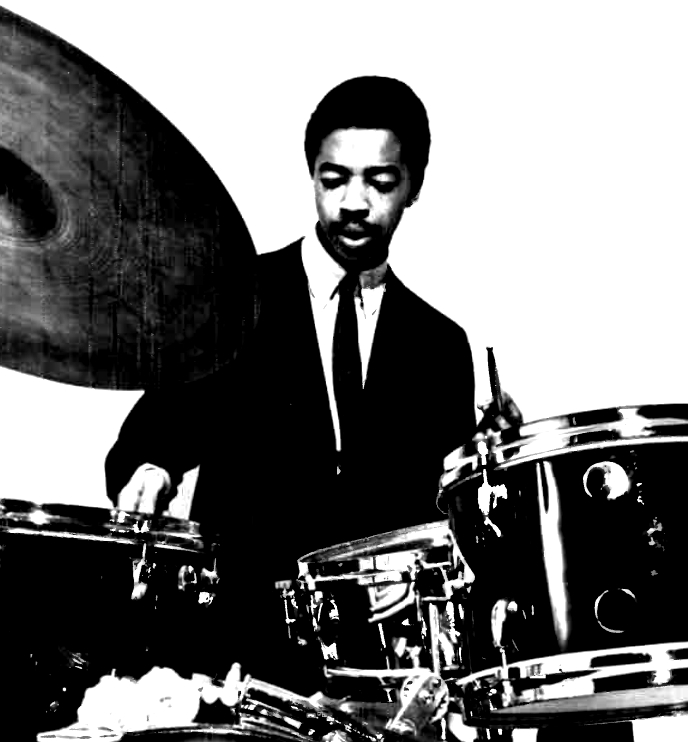
Tony Williams: Miles Davis Quintet drummer, decoded
Tony Williams was the youngest member of Miles Davis's Second Great Quintet (1963-1968), joining at 17. Pioneer of modern jazz drumming + jazz-fusion. Lifetime + The New Tony Williams Lifetime founder, the Mahavishnu Orchestra adjacent jazz-fusion canon.
Miles Davis Quintet (1963–1968) + Lifetime · written with AI help · updated
Tony Williams (born Anthony Tillmon Williams, December 12, 1945, Chicago, Illinois; died February 23, 1997, age 51) was the youngest member of Miles Davis's Second Great Quintet (1963-1968), joining at age 17. With Miles, Herbie Hancock, Wayne Shorter, and Ron Carter, the quintet's catalog (E.S.P., Miles Smiles, Nefertiti, plus Williams's contributions to In a Silent Way and Bitches Brew) defined post-bop jazz drumming. After Miles he founded Lifetime (1969, with John McLaughlin + Larry Young), one of the foundational jazz-fusion bands. Modern Drummer Hall of Fame. Among the most influential post-Roach jazz drummers.
Who Tony Williams was
Anthony Tillmon "Tony" Williams, born December 12, 1945, in Chicago, Illinois (raised in Boston), joined Miles Davis's Second Great Quintet at age 17 in May 1963 and stayed through 1968. With Miles, Herbie Hancock, Wayne Shorter, and Ron Carter, the quintet's catalog (E.S.P., Miles Smiles, Nefertiti, plus contributions to In a Silent Way and Bitches Brew) defined post-bop jazz drumming.
After Miles he founded Lifetime (1969, with John McLaughlin + Larry Young), one of the foundational jazz-fusion bands. The New Tony Williams Lifetime (1975-1976) was a later iteration. He played in V.S.O.P. (1976-1977 + reunions, with Hancock + Shorter + Carter + Freddie Hubbard) and across the broader jazz session canon through the 1990s.
He died February 23, 1997, age 51, of a heart attack following gallbladder surgery.
Style signatures
Three things across his catalog you can identify as Williams's:
-
Ride-cymbal patterns that play around the beat. The technique gives the Second Great Quintet's catalog its sense of constant rhythmic uncertainty; subsequent jazz drummers (Jack DeJohnette, Brian Blade) inherited the approach.
-
Snare-drum displacement. Rim shots and snare hits in shifting positions that don't land where conventional jazz backbeats expect them.
-
Aggressive jazz-fusion drive. Lifetime's catalog (Emergency!, 1969) shows the post-Miles direction: rock-energy drumming applied to jazz harmonic vocabulary. The fusion bridge between Miles's late-1960s direction and the Mahavishnu Orchestra's early-1970s explosion.
Documented gear
- Zildjian Tony Williams Artist Series drumstick (SKU ASTW). A real, current, purchasable signature stick: U.S. hickory, 16 inches, .625 inch diameter, hefty 2B dimensions with a thinner neck, angular wood tip. Zildjian's first-ever royalty-per-pair signature drumstick deal, built from Williams's own Gretsch 2B sticks and launched at Winter NAMM in January 1991. Full review at /gear/zildjian-tony-williams-artist-series.
- Gretsch kit (1959-1993). Gretsch's own artist page documents Williams on a Gretsch Round Badge kit (early USA Custom), later USA Custom, across more than three decades. Brand-level documented; no dedicated CYS gear page for this specific vintage configuration.
- Drum Workshop (DW) kit (later years). Zildjian's own former VP of Artist Relations, John DeChristopher, who toured with Williams, dates the switch from Gretsch to DW at 1995, two years later than Gretsch's own artist page. No dedicated CYS gear page for this configuration either.
Related
The catalog. Miles Davis Second Great Quintet (1963-1968), Lifetime (1969-1971), V.S.O.P. (1976-1977), Tony Williams's own catalog through the 1990s.
Documented gear. Zildjian Tony Williams Artist Series drumstick.
Drummer hub. Drummers index. Bebop / hard-bop / post-bop canon parallel: Max Roach, Art Blakey, Elvin Jones, Gene Krupa.